

More news on this day
Swan Hellenic is extending its footprint in Antarctica through 2028, unveiling new long-range expedition cruises after reporting record results for the 2024–2025 season and surging global demand for polar travel.
Get the latest news straight to your inbox!
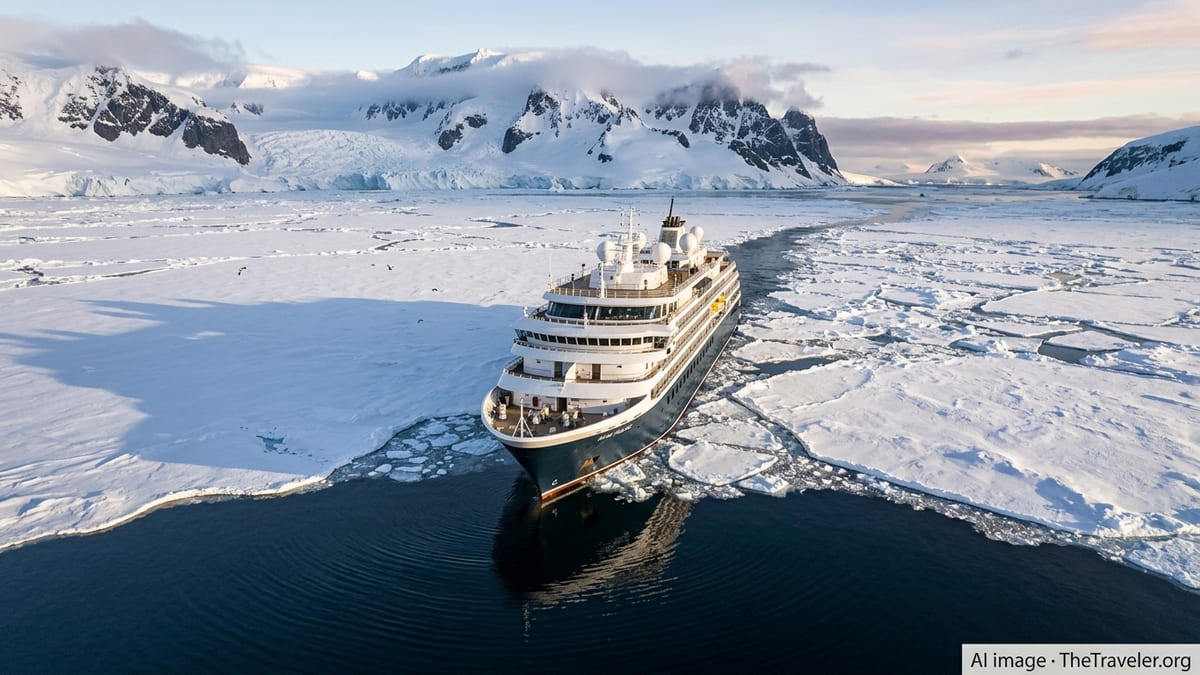
New Long-Haul Voyages Stretch Antarctic Offering to 2028
According to published coverage and information on the company’s own channels, Swan Hellenic is building on its existing 2025–2026 polar program with freshly unveiled itineraries that now run through 2028. The expanded schedule includes a series of extended “grand voyage” expeditions that link the Antarctic Peninsula with remote sub-Antarctic islands and onward repositioning legs into the South Pacific and South America.
Key to the new program are ultra-long sailings branded as ultimate Antarctic adventures, including back-to-back segments from Ushuaia that continue across the Southern Ocean to ports such as Cape Town, Valparaíso and Dunedin. Reports indicate that these itineraries are being positioned as once-in-a-lifetime journeys for experienced travelers seeking in-depth exploration rather than introductory visits to the White Continent.
The line’s three ice-strengthened boutique ships, SH Minerva, SH Vega and SH Diana, are slated to share the expanded workload, with Minerva returning to regular service alongside Vega and Diana. Publicly available information describes the trio as small-capacity vessels designed for fewer than 200 guests, a scale that enables them to comply with strict Antarctic landing rules while still offering a high level of comfort.
By publishing details of 2026–2028 sailings well ahead of departure, Swan Hellenic appears to be targeting travelers who plan polar trips several years in advance. Industry observers note that this is increasingly common in the expedition segment, where complex logistics, limited berths and strict environmental regulations encourage early booking.
Record 2024–2025 Season Sets the Stage
The multi-year expansion follows what trade reports describe as a record-breaking 2024–2025 Antarctic season for Swan Hellenic. According to figures cited in cruise industry coverage, the line achieved around a 25 percent increase in guest numbers and a roughly 35 percent rise in net revenue compared with the previous Antarctic season.
This performance reflects a broader rebound in high-end expedition cruising as travelers return to long-haul international trips and seek more immersive experiences. Antarctica, with its limited visitor capacity and dramatic scenery, has benefited disproportionately from this trend, drawing passengers willing to invest in longer voyages and premium cabins.
Reports also indicate that early demand for Swan Hellenic’s 2025–2026 Antarctic sailings has been particularly strong, with some departures filling up months earlier than anticipated. This booking pattern appears to have given the company confidence to commit ship capacity further into 2027 and 2028, locking in deployment for multiple seasons at the southern end of the globe.
For the wider market, Swan Hellenic’s results serve as another signal that the post-pandemic recovery in polar tourism is solidifying. Other operators have also reported healthy load factors and rising yields, but Swan Hellenic’s relatively young fleet and tight focus on cultural expedition cruising have helped it stand out in a crowded field.
Itineraries Focus on Depth, Science and Cultural Context
The newly unveiled 2026–2028 program continues Swan Hellenic’s emphasis on combining wildlife viewing and ice navigation with scientific and cultural interpretation. Voyage descriptions highlight repeated landings on the Antarctic Peninsula, visits to wildlife-rich islands such as South Georgia and the Falklands, and collaborations with guest lecturers and expedition specialists.
Longer itineraries, some stretching beyond 30 nights, are designed to spend additional time in regions that shorter cruises typically skim. Published materials reference extended exploration of the Weddell Sea, known for heavy pack ice and historical ties to early polar expeditions, as well as opportunities to follow migratory routes of whales, penguins and seabirds across multiple ecosystems.
The ships themselves are configured as small floating base camps, with mud rooms, zodiac fleets and observation lounges that prioritize panoramic views. Reports from recent seasons highlight a program of onboard talks, photography workshops and science-led briefings, aligning with a wider industry move to frame Antarctic travel as educational as well as experiential.
Several itineraries scheduled into the late 2020s also tie Antarctica to broader cultural themes, linking polar voyages with visits to South American ports, Pacific islands and New Zealand. This approach is intended to attract guests interested in both remote nature and the human history of exploration, migration and trade around the Southern Ocean.
Rising Global Demand and Capacity Constraints
The timing of Swan Hellenic’s 2026–2028 Antarctic announcement reflects a travel landscape in which demand for polar journeys continues to climb while capacity remains tightly regulated. Data and commentary from polar travel organizations point to steady growth in visitor numbers to Antarctica in recent years, driven by new ships and new markets, especially in North America, Europe and parts of Asia.
At the same time, environmental rules and international guidelines limit how many passengers can go ashore at any one landing site, and how often ships can visit sensitive areas. This regulatory backdrop means that operators cannot expand indefinitely and must commit berths carefully, often years ahead, to match demand and comply with oversight frameworks.
Industry analysis suggests that these constraints are likely contributing to upward pressure on prices, particularly for peak-season departures and longer itineraries. However, Swan Hellenic and its competitors are also using a mix of early-booking discounts, solo traveler incentives and bundled inclusions to manage yield while keeping cabins filled.
For travelers, the result is a polar market that is both more competitive and more complex. The introduction of 2026–2028 sailings by Swan Hellenic provides additional choice at the upper end of the expedition segment, but also reinforces the need to plan far in advance, especially for travelers with fixed vacation windows or specific wildlife priorities.
Implications for the Luxury Expedition Segment
Swan Hellenic’s decision to lock in multi-year Antarctic deployment through 2028 underscores how central the White Continent has become to the luxury expedition business model. With three purpose-built ships cycling in and out of Ushuaia during the southern summer, the company is effectively using Antarctica as a seasonal hub that supports its year-round global operations.
The strategy aligns with a broader shift among boutique cruise brands toward smaller vessels, higher per-diem fares and destination-focused itineraries. By concentrating capacity where pricing power and guest interest are strongest, operators aim to offset rising operating costs, including fuel, crew, insurance and compliance with evolving environmental standards.
Observers note that the arms race in new tonnage and advanced ice-class ships shows no sign of slowing, with yards in Europe and Asia continuing to deliver specialized expedition vessels. Swan Hellenic’s trio, built to modern polar specifications and equipped for extended remote cruising, positions the line to remain competitive as new entrants arrive.
For now, the unveiling of 2026–2028 Antarctic voyages signals confidence that global demand for high-end, small-ship exploration will remain robust over the coming years. As travelers increasingly seek meaningful, low-density experiences far from crowded urban centers, Antarctica appears set to retain its place at the pinnacle of aspirational adventure travel.