

More news on this day
Swansea is moving closer to a sweeping rail and metro overhaul that planners say could reshape everyday travel across South West Wales, underpin thousands of new jobs and unlock long-term economic growth across the wider Swansea Bay region.
Get the latest news straight to your inbox!
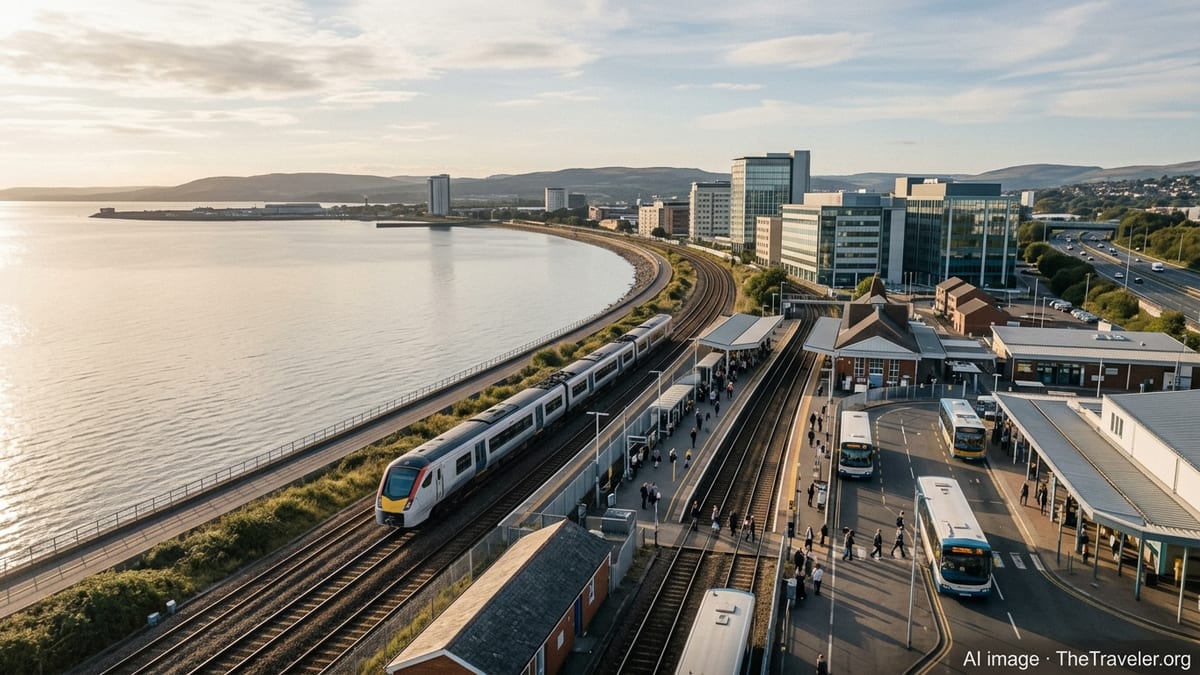
A Metro Vision at the Heart of a New Transport Era
The Swansea Bay and West Wales Metro concept is evolving from a high-level proposal into a structured programme of rail, bus and active-travel upgrades that would knit together Swansea, Neath Port Talbot, Llanelli, Carmarthenshire and Pembrokeshire into a single, high-frequency transport network. Publicly available information describes the metro as a multi-modal system built around existing heavy rail lines, enhanced bus corridors and better interchange hubs, rather than a single new railway line.
Transport for Wales project material indicates that the Swansea Bay Metro is being developed in parallel with wider South Wales Mainline improvements, including ambitions to electrify the railway between Cardiff and Swansea and to increase service frequencies along key commuter corridors. Proposals outlined in Welsh Government and regional planning documents point to more regular Cardiff to Swansea services, new stations around the M4 corridor and better connections into West Wales, positioning Swansea as a pivotal hub between the capital and the western counties.
The initiative mirrors the approach taken in the South Wales Metro in and around Cardiff, where a combination of electrification, new rolling stock and integrated ticketing is being used to deliver metro-style turn-up-and-go services. In Swansea’s case, the emphasis is on making far better use of existing rail alignments through the city and along the bay, while connecting those routes more tightly with local bus networks and cycling infrastructure.
Major Investment in Rail Infrastructure and Stations
Recent rail investment is already laying the groundwork for a full metro-style system. Network Rail reports that around 130 million pounds is being invested in modernising signalling on the South Wales Mainline between Swansea and Llanelli, as well as on associated district lines and the Heart of Wales Line as far as Pontarddulais. This renewal programme is designed to boost reliability and capacity on a 68-mile stretch of railway, with new control facilities at Port Talbot providing more efficient management of train movements.
Alongside signalling upgrades, the South West Wales Regional Transport Plan sets out a pipeline of station improvements at key locations such as Neath, Llanelli, Swansea and Whitland, many of which are explicitly linked to the Swansea Bay Metro proposals. Enhancements are expected to focus on accessibility, passenger facilities, integration with bus services and better provision for active travel, making it easier for people to complete door-to-door journeys without relying on private cars.
Transport for Wales policy documents also reference plans to support electrification of the South Wales Mainline to Swansea as part of a broader programme of decarbonising rail. While full funding for electrification between Cardiff and Swansea has yet to be confirmed, the aspiration is that a future electric railway, paired with modern signalling and upgraded stations, would deliver faster, quieter and more energy-efficient services, preparing the corridor for metro-level frequencies.
Regional Transport Plan Signals a Step Change
Welsh Government approval of the South West Wales Regional Transport Plan for 2025 to 2030 marks an important milestone for Swansea’s rail and metro ambitions. The plan, developed by the regional Corporate Joint Committee, establishes a shared framework for improving public transport, reducing congestion and cutting emissions across Swansea, Neath Port Talbot, Carmarthenshire and Pembrokeshire. It explicitly supports development of a South West Wales metro system that links bus and rail services and improves connections to strategic employment sites.
The plan highlights how projects such as the Swansea Bay Metro will complement other major initiatives, including the Swansea Bay City Deal and the Celtic Freeport. Together, these programmes are expected to expand advanced manufacturing, marine energy, digital industries and port-related activities across the region, substantially increasing the demand for reliable, high-capacity public transport to move workers, visitors and freight sustainably.
Regional documents describe a future network in which rail stations function as integrated hubs with coordinated bus departures, secure cycle parking and improved walking routes into nearby communities. Proposals for a new bus hub at Mumbles and for reconfigured services on key corridors into Swansea city centre are early examples of this hub-and-spoke model, intended to make public transport more intuitive and competitive with car travel.
Economic Growth and Job Creation Across Swansea Bay
Economic planning work undertaken by Swansea Council and regional partners underscores the scale of potential gains tied to transport modernisation. The local development evidence base for Swansea’s new planning framework points to ambitions for thousands of additional jobs and billions of pounds in added economic output across the county and wider bay area by the mid-2030s, supported by better connectivity and more sustainable travel choices.
The Swansea Bay City Deal, a 1.3 billion pound investment package backed by the UK and Welsh governments, is already funding high-profile regeneration projects including new office, innovation and digital infrastructure in and around Swansea city centre. Analysts argue that a high-capacity metro and upgraded rail mainline would amplify the impact of these schemes by widening labour market catchments, cutting commuting times and improving access to education, healthcare and leisure opportunities throughout South West Wales.
Transport and infrastructure-related employment is also expected to benefit directly. Work on signalling renewals, station refurbishments, active-travel corridors and future electrification would support skilled jobs in construction, engineering and maintenance, while ongoing operation of a more complex metro-style network is likely to increase demand for transport planning, digital systems and customer service roles across the region.
Greener Journeys and a More Connected Future
The Swansea metro and rail overhaul is positioned as a central tool in meeting national and local climate targets. Policy documents from Transport for Wales and Welsh Government consistently link metro investment with goals to reduce car dependency, improve air quality and cut transport emissions, which currently account for a significant share of Wales’s carbon output. By providing more frequent, reliable services and simplifying transfers between modes, planners aim to make public transport the default choice for many everyday journeys.
Enhancements to active-travel infrastructure are designed to reinforce this shift. The Regional Transport Plan places strong emphasis on safe walking and cycling routes to stations, schools and employment centres, aligning metro development with a broader move toward healthier and more liveable neighbourhoods. In coastal areas such as Swansea Bay and Mumbles, better integration of buses, walking paths and potential tram or rail corridors could also strengthen the visitor economy by making it easier for tourists to explore without a car.
Although many key elements of Swansea’s rail and metro overhaul still depend on future funding decisions, planning work has advanced significantly. With signalling renewals under way, a regional transport blueprint in place and metro plans embedded in economic and land-use strategies, the city and its neighbours are positioning themselves for a long-anticipated transport transformation that could reshape South West Wales for decades to come.