

More news on this day
Sweden’s drive to strengthen its regional rail network has taken a significant step forward as Alstom secures a new maintenance contract for the Västtågen fleet, underlining the country’s focus on reliable, climate-friendly transport across western Sweden.
Get the latest news straight to your inbox!
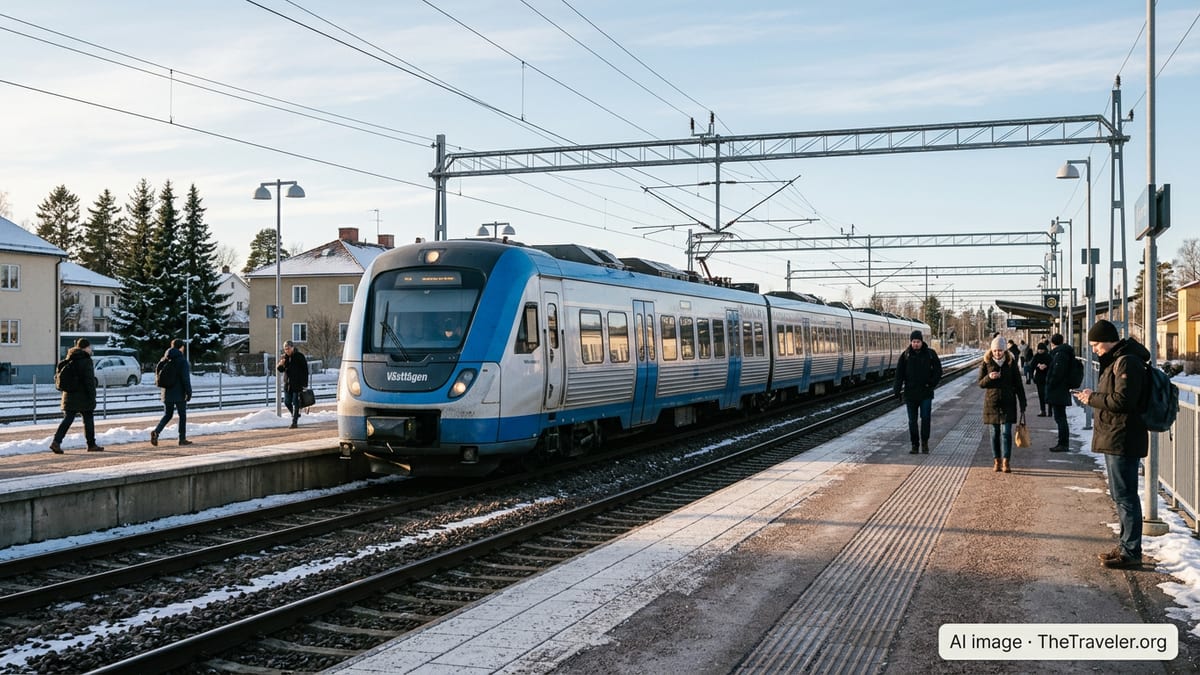
Strategic Contract Underpins Western Sweden’s Rail Ambitions
The new maintenance contract for the Västtågen fleet marks another chapter in Sweden’s broader strategy to shift more passengers from road to rail. Västtågen services link key cities and communities across western Sweden, and the agreement is intended to provide long-term stability for this expanding regional network.
Publicly available information indicates that Swedish regional authorities have increasingly paired long-duration operating contracts with dedicated rolling-stock maintenance agreements. This approach is designed to secure predictable lifecycle costs and higher train availability, both of which are considered essential to coping with rising ridership on core commuter and intercity corridors.
The Västtågen contract aligns with recent trends in the Swedish market, where Alstom has added multiple regional and night-train maintenance deals in cooperation with operators such as SJ and VR Sverige AB. Together, these contracts are gradually building a national framework of specialized depots and service hubs focused on keeping modern electric trains in service for longer hours each day.
For passengers, the impact is expected to be felt less in headline-grabbing new routes and more in the day-to-day reliability of existing services. Fewer short-notice cancellations, more consistent punctuality and better-managed rolling stock during harsh winter conditions are among the anticipated outcomes.
Growing Maintenance Footprint Across Sweden
Alstom’s role on the Västtågen fleet comes on top of a series of recent maintenance contracts across Sweden, indicating a deepening footprint in both regional and long-distance segments. Public documents show that in Gävleborg, for example, Alstom is set to maintain X-trafik trains under a long-term contract operating from its workshop in Gävle, while in the north of the country the company has renewed agreements covering Norrtåg and night-train services linking Stockholm with Umeå, Luleå and Narvik.
These contracts add to earlier Swedish deals involving Coradia Nordic regional trains and new high-speed and intercity fleets, placing Alstom in a central position within the country’s passenger-rail ecosystem. The company’s Swedish maintenance network now spans multiple depots, from larger hubs aligned with big-city corridors to smaller workshops serving regional and cross-border services.
By linking the Västtågen fleet into this national maintenance structure, Swedish transport authorities aim to benefit from standardized processes, shared spare parts pools and specialist engineering expertise. This can improve resilience when individual depots face capacity pressures or when specific technical issues emerge on a particular vehicle type.
Industry observers note that Sweden’s approach mirrors a broader European shift toward integrated fleet-support models. Rather than treating maintenance as a separate, short-term cost, long contracts seek to embed performance incentives and encourage continuous upgrades to diagnostic tools, staff training and component design.
Improved Reliability for Commuters and Regional Travelers
For western Sweden’s travelers, the Västtågen contract is primarily about reliability. Regional trains on these routes provide everyday mobility for commuters heading into Gothenburg and other urban centers, as well as essential links for students, healthcare access and leisure trips. Any sustained improvement in train availability can therefore have immediate and visible benefits.
In practice, enhanced maintenance is expected to translate into more robust timetables, particularly during the winter months when Swedish railways face snow, ice and sub-zero temperatures. Modern rolling stock is built for Nordic conditions, but it still depends heavily on preventative maintenance regimes, rapid fault diagnosis and responsive repair capacity.
Publicly available coverage of similar Swedish contracts indicates that operators have reported higher fleet availability after transitioning to structured, long-term agreements with industrial partners. For Västtågen, a comparable outcome would support regional development goals by making public transport more attractive than car travel for medium-distance journeys.
The contract may also support minor service improvements over time, as better-managed maintenance windows free additional units for peak-hour operation. While significant timetable changes typically depend on separate political and planning decisions, having a reliably available fleet is a prerequisite for any future frequency increase.
Operational Synergies With SJ’s Västtågen Operating Deal
The maintenance agreement for the Västtågen fleet dovetails with the decision by regional transport authorities to award SJ a long-term contract to continue operating the Västtågen network from December 2027. That operating deal, running for more than a decade, is structured to give the operator scope to plan crew, rolling-stock usage and passenger services over a stable horizon.
Aligning an experienced operator with a dedicated industrial maintenance provider is intended to create operational synergies. With clear responsibilities on both sides, fleet planning can be optimized around maintenance cycles, reducing the risk that trains stand idle for avoidable reasons. Shared performance metrics, such as punctuality and train availability, further incentivize close coordination between operator and maintainer.
According to publicly available contract information, Swedish regions have increasingly moved to such combined models where long-term operating and maintenance frameworks are synchronized. For passengers, this typically appears in the form of more consistent rolling stock quality, from functioning onboard Wi-Fi to heating, lighting and information systems.
For the regional authorities funding Västtågen, the integration of operating and maintenance contracts may also improve budget predictability. Fixed or indexed maintenance pricing over a multi-year term can shield local budgets from abrupt cost spikes, supporting more strategic planning for future investments in additional rolling stock or infrastructure upgrades.
Supporting Sweden’s Climate and Mobility Goals
The Västtågen maintenance deal contributes to Sweden’s long-term climate and mobility strategies, which prioritize rail as a low-emission backbone for domestic transport. By keeping electric multiple units in service for more hours each day, with fewer disruptions, the contract helps maximize the carbon savings generated by existing infrastructure and rolling stock.
Sweden has set ambitious targets for greenhouse-gas reductions, and transport remains one of the more challenging sectors to decarbonize. Expanding and stabilizing regional rail networks like Västtågen is seen as a practical way to reduce car dependency, especially along busy corridors where trains can offer competitive journey times and comfort.
Maintenance-focused investments may appear less visible than new-line openings or brand-new train launches, but they form a critical part of the policy toolkit. High fleet availability allows for better use of track capacity and supports the introduction of integrated timetables that connect regional trains with long-distance and high-speed services.
As Sweden prepares for the arrival of new high-speed and intercity fleets from manufacturers such as Alstom and CAF in the coming years, a robust maintenance ecosystem for existing regional fleets like Västtågen provides an important foundation. The latest contract signals that regional authorities and industry partners are aligning around a shared goal: a resilient, reliable and attractive railway network that can carry more of the country’s growing travel demand.