

More news on this day
Finland is heading into what travel analysts describe as one of its strongest summer seasons in years, as visitors from Sweden join growing numbers of travelers from Germany, the United States, France and Spain booking flights into Helsinki and crowding hotels across the country, helped by aggressive airline expansion and a headline-grabbing free travel campaign.
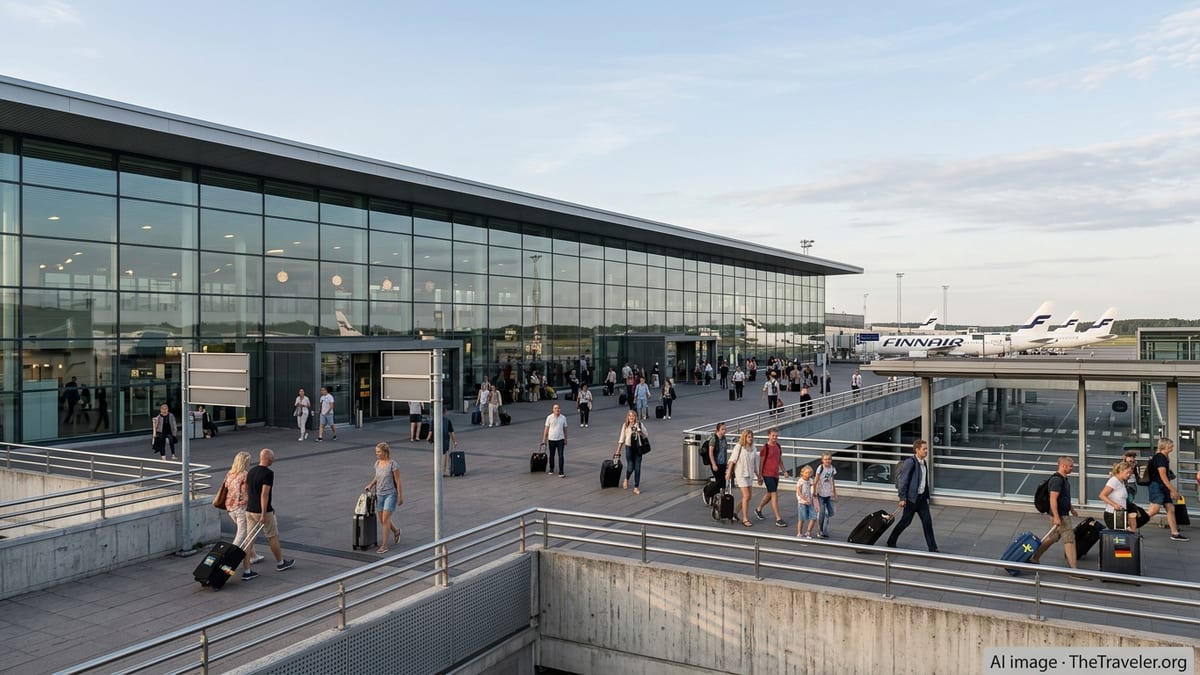
Finnair’s Expanded Summer Network Fuels Nordic Travel Boom
Publicly available booking and capacity data for the 2026 summer season point to a sharp increase in demand for flights into Finland, with Finnair at the center of the trend. The carrier has announced a broad expansion of its summer network from Helsinki, adding a dozen new European destinations and restoring long-haul links, which together are expected to lift inbound tourism from key markets including Germany, France, Spain and the United States.
Finnair’s latest schedule updates for summer 2026 include new or additional services to Southern European cities such as Florence, Catania, Valencia and Kos, on top of an already dense network across Italy, Spain and Greece. Industry reporting notes that the airline is also ramping up capacity on North American routes and strengthening Nordic connections, moves that are designed to capture both leisure travelers and those using Helsinki as a transfer hub between Europe and Asia or North America.
Tourism analysts point out that these network decisions have a direct impact on inbound flows to Finland. By offering more one-stop options from major European and US gateways, Finnair effectively lowers the barrier for travelers in Germany, France, Spain and the United States who may be combining Finland with other European destinations. Sweden, which already benefits from strong regional links, is increasingly feeding short-break and long-weekend traffic into Helsinki and coastal Finland as flight frequencies rise.
Market commentary suggests that the additional capacity may also help moderate peak-summer fares, which have been elevated in recent years. Travel management firms tracking long-haul and intra-European prices expect the broader Finnair schedule to support higher volumes during the June to August period, particularly on routes connecting large hubs in Germany, France, Spain and the United States with Helsinki.
Helsinki Airport Braces for One of Its Busiest Summers
Helsinki Airport, the country’s primary international gateway, is preparing for another heavy summer as passenger volumes continue to recover. Recently published statistics show that Finnish airports handled more than 20 million passengers in 2025, with Helsinki accounting for the overwhelming majority and recording double-digit growth in international transfer traffic compared with the previous year. The figures indicate that the airport is steadily consolidating its role as a northern European hub.
Finavia, the airport operator, has repeatedly highlighted that Helsinki sees its highest traffic levels in the core holiday months, when the number of daily movements rises and early morning and late afternoon peaks become more pronounced. Operational briefings ahead of the 2025 and 2026 summer seasons have emphasized both the increase in scheduled flights and the need for travelers to allow extra time during the busiest departure waves.
Travel industry observers note that the recent upswing is not limited to Finnish residents heading abroad. The recovery of transfer traffic and the expansion of Finnair’s network suggest that a larger share of passengers are international visitors transiting through or arriving in Helsinki for leisure stays. Airlines and tour operators in Germany, France, Spain and the United States are marketing Finland more actively as a nature-focused destination that can be paired with city breaks, while Swedish travelers are taking advantage of short flight times and frequent services for spontaneous summer trips.
At the same time, Helsinki Airport is benefiting from multi-year terminal upgrades that have improved passenger flows and transfer times. These changes, combined with expanded route options, have made it easier for travelers from North America and Western Europe to reach secondary Finnish destinations after a short layover in the capital region.
Hotel Occupancy Surges as Free Travel Campaign Grabs Attention
Accommodation statistics and tourism reports for Finland show hotel occupancy climbing steadily, with several regions recording some of their best summer and shoulder-season performance on record. Sector analyses describe particularly strong results in 2024 and 2025, setting the stage for further gains in 2026 as international arrivals recover and domestic travel remains robust.
A notable driver of recent interest has been a widely publicized free travel initiative in parts of Finland, where local authorities introduced periods of free public transport to stimulate both resident mobility and tourism. One such campaign in the coastal city of Rauma, for example, offered complimentary local bus travel across June and July, coinciding with peak holiday travel. Municipal communications on the program linked the free rides to broader goals of supporting local businesses and making it easier for visitors to explore the city without a car.
Travel marketing specialists say that campaigns of this type, amplified on social media and in regional press, have helped push Finland into the spotlight as a wallet-friendly summer destination at a time when many travelers from Germany, France, Spain and the United States are facing higher prices elsewhere in Europe. By removing or reducing local transport costs, such initiatives can encourage longer stays and higher hotel occupancy, particularly in compact city centers where visitors rely heavily on buses and trams.
Industry presentations on tourism trends for 2026 have cited Finnish case studies where playful, community-driven campaigns coincided with some of the highest hotel occupancy rates recorded nationally. While analysts caution against attributing performance to a single factor, many point to the combination of creative local initiatives and improved air connectivity as a powerful draw for price-sensitive travelers, especially those arriving from neighboring Sweden and other European Union countries.
Nordic Neighbors and Long-Haul Markets Drive New Demand
Travel demand from Sweden to Finland is strengthening in parallel with interest from larger source markets such as Germany, the United States, France and Spain. In the Nordic region, shorter distances, shared cultural ties and frequent flights have long supported cross-border travel. Recent airline schedule adjustments between Finnish and northern Norwegian destinations, as well as additional services within the Nordic network, are making it easier for Swedish travelers to incorporate Finland into summer itineraries focused on outdoor activities, archipelago landscapes and Arctic experiences.
In continental Europe, Germany, France and Spain are emerging as particularly important engines of growth, helped by Finnair’s broadened coverage of Southern Europe and by tour operator packages that combine Finland with Mediterranean stays. Analysts tracking air-based package holidays point out that while outbound Finns are traveling south in large numbers, the same flow of capacity opens up more seats for inbound visitors from those markets, who are increasingly looking for cooler, nature-heavy alternatives during heat-prone summer months.
From across the Atlantic, long-haul markets in the United States are also contributing to the surge. Restored and expanded North American routes into Helsinki, together with competitive fares and growing awareness of Finland’s national parks, sauna culture and design scene, are widening the pool of potential visitors. The hub structure at Helsinki Airport allows travelers from US cities to reach not only the capital but also northern destinations in Lapland with a single connection.
Tourism boards and regional marketing organizations are seizing on this momentum, positioning Finland as a convenient northern gateway that feels both exotic and accessible. Promotional material emphasizes midnight sun experiences, lakeside cottages and modern urban amenities, themes that resonate strongly with visitors from Sweden, Germany, France, Spain and the United States seeking a mix of comfort and wilderness.
Outlook: Strong Summer Ahead for Finland’s Tourism Sector
Looking ahead to the core summer months of 2026, sector forecasts point to continued growth for Finland’s tourism economy. Airlines have already committed to higher seasonal capacity, airports are preparing for heavier traffic peaks and hotels in key destinations report solid advance bookings. While broader economic conditions and potential labor disruptions remain variables, the underlying demand trend from Sweden, Germany, the United States, France and Spain appears firmly positive.
Analysts highlight several structural advantages that could support Finland’s appeal beyond a single strong season. These include a diversified route map at Helsinki Airport, a reputation for reliable and efficient airport operations, and a growing ecosystem of city and regional campaigns designed to make local transport and attractions more accessible. The recent free travel initiatives are seen as part of a broader experimentation with pricing and public services aimed at enhancing the visitor experience.
With climate considerations increasingly shaping traveler decisions, Finland’s cooler summer climate and expansive natural environments are also becoming key selling points. Industry observers expect that as heatwaves and overcrowding challenge more southerly destinations, a portion of European and North American travelers will continue to pivot northward, reinforcing the flows now visible in booking data.
For now, the combination of surging airline bookings, busy airport forecasts, rising hotel occupancy and attention-grabbing free travel campaigns has placed Finland firmly on the radar of holidaymakers across Sweden, Germany, the United States, France and Spain. If current trends hold, the coming summer could mark a new high point for the country’s modern tourism era.