

More news on this day
Travel to one of Switzerland’s most celebrated alpine playgrounds is being streamlined as SWISS expands its Air Rail program to include a through-ticketed connection from Zurich to Grindelwald, creating a smoother path to the Jungfrau region for international visitors touching down at Zurich Airport.
Get the latest news straight to your inbox!
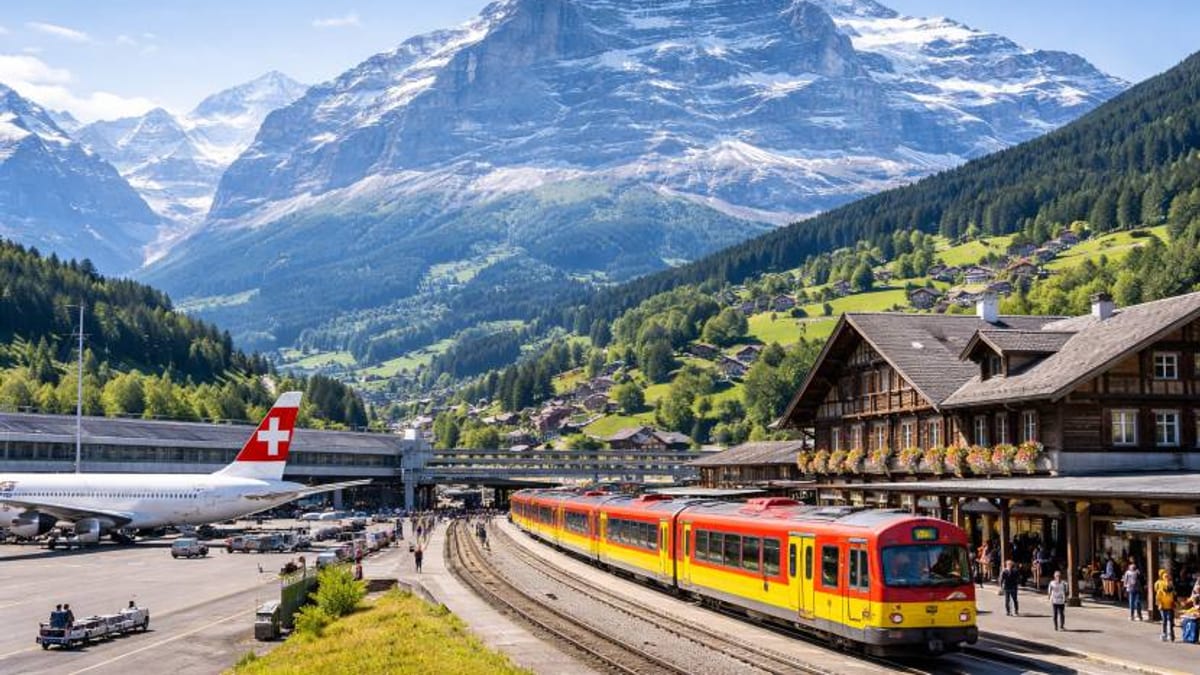
Image by Latest International Railway News, Global Rail Industry News
Integrated Air Rail Journey From Plane to Mountain Village
The enhanced SWISS Air Rail offer allows passengers arriving in Zurich on SWISS flights to continue their trip to Grindelwald on the national rail network using a single combined booking. Publicly available information shows that the program links SWISS flight numbers with specific long-distance services leaving Zurich Airport and Zurich main station, removing the need for separate rail purchases and simplifying itinerary planning for travelers with luggage and tight schedules.
Reports indicate that the Zurich Airport rail hub remains the central gateway, with frequent departures toward Bern and Interlaken before onward travel into the Jungfrau region. With the Air Rail integration, travelers can reserve their preferred flight and rail combination at the time of booking, ensuring that connections are aligned and documented on one ticket. For long-haul visitors connecting from North America or Asia, this structure is designed to reduce uncertainty around how to reach the mountains after landing.
According to published coverage of the service concept, SWISS Air Rail passengers receive a dedicated booking reference for the train segment and can rely on national timetable coordination between air and rail operators. While standard Swiss public transport tickets remain available to any traveler, the new through-ticketing brings airline-style convenience to those who prefer to keep all transport under one reservation.
The inclusion of Grindelwald adds a high-profile alpine destination to the Air Rail portfolio. The village already functions as a major rail and cableway hub, and its appearance on airline ticketing platforms positions it more clearly as an extension of Zurich Airport’s catchment area for leisure and winter sports travelers.
Faster Access to Jungfraujoch via Grindelwald Terminal
Once in Grindelwald, the onward journey toward the Jungfraujoch summit is significantly shorter than in past decades. Over recent years, the opening of the Grindelwald Terminal rail and gondola complex and the high-capacity Eiger Express tricable gondola has reshaped access to the high-alpine section of the route. Public timetables and regional transport maps show that passengers can now travel from Interlaken Ost to Grindelwald Terminal by train, then transfer directly to the Eiger Express for a swift ascent to Eigergletscher, where they board the historic cogwheel railway to Jungfraujoch.
This intermodal arrangement has cut travel times to the “Top of Europe” and increased capacity during peak seasons. The link between SWISS Air Rail’s Zurich–Grindelwald connection and the Grindelwald Terminal node means that a long-haul passenger can move from aircraft seat to summit-bound gondola with a comparatively small number of transfers. For visitors trying to maximize a short stay in Switzerland, this has practical implications for how many alpine experiences can be fit into a single day.
Travel information platforms focusing on Swiss rail journeys highlight that Zurich Airport to Jungfraujoch can now be completed in under four hours in favorable connections, typically following the route Zurich Airport – Zurich main station – Bern – Interlaken Ost – Grindelwald Terminal – Eigergletscher – Jungfraujoch. By embedding at least part of this itinerary into an air-rail ticket, SWISS is effectively promoting the Jungfrau region as an accessible same-day destination after landing.
For Grindelwald itself, the timing of the Air Rail extension aligns with growing demand for year-round alpine tourism, including hiking, mountain biking and scenic excursions outside the traditional ski season. Easier access from Zurich is expected to support both overnight stays and day trips originating in the city.
Ticketing, Seat Reservations and Pass Integration
While the SWISS Air Rail ticket covers the designated rail segment between Zurich and Grindelwald, onward travel to Jungfraujoch remains subject to separate mountain railway fares and, in busy months, mandatory seat reservations. Travel advisories and rail products for 2025 and 2026 note that visitors often must reserve a time slot on the Eiger Express and the Jungfrau Railway during summer and holiday peaks, with a supplemental fee added to the standard excursion price.
Information from Swiss travel pass distributors indicates that popular products such as the Swiss Travel Pass, Interrail and Eurail continue to provide coverage or discounts on the Interlaken–Grindelwald leg, with reduced-price upgrades required for the final high-alpine section. For holders of these passes arriving in Grindelwald on an Air Rail ticket, the combination can lower the overall cost of accessing the Jungfraujoch excursion compared with purchasing all segments at full fare.
Advisory sites recommend that travelers planning to use SWISS Air Rail to reach Grindelwald review the interaction between airline tickets, national rail passes and regional Jungfrau products in advance. Because validity rules can differ between the lowland and mountain portions of the network, clarity on where each ticket applies helps avoid duplicate purchases and confusion at transfer stations such as Interlaken Ost and Grindelwald Terminal.
Publicly available planning tools also stress the value of checking weather and operational updates before committing to a Jungfraujoch ascent. In some conditions, same-day adjustments to time slots or even route choices may be advisable, and the flexibility of Swiss rail ticketing can sometimes accommodate these changes without major penalties.
Impact on Visitor Flows and Regional Tourism
Tourism analysts and local coverage suggest that a direct appearance of Grindelwald in airline booking systems could shift some visitor flows within Switzerland. Travelers who might previously have booked into larger hubs and organized separate day trips may now view the Jungfrau region as a primary base accessible directly after landing, especially during winter and peak hiking periods.
Destination marketing organizations highlight the Jungfrau region’s extensive lift and trail infrastructure, as well as attractions such as Grindelwald First, Schynige Platte and the Jungfraujoch plateau itself. The Air Rail extension effectively shortens the perceived distance between these sites and global departure cities feeding into Zurich, particularly when promoted as part of combined flight and rail campaigns.
At the same time, the increased visibility of Grindelwald in air-rail packaging reinforces Switzerland’s broader positioning as a “rail first” destination, where visitors are encouraged to rely on public transport rather than private cars. This approach aligns with national sustainability goals and ongoing investments in rail and cableway upgrades throughout the Bernese Oberland.
Local reports note that infrastructure such as the V-Cableway project and the modernized Grindelwald Terminal were conceived with exactly this kind of integrated travel in mind, accommodating higher passenger volumes while improving transfer comfort. The arrival of SWISS Air Rail as a booking layer on top of this hardware suggests that the long-term strategy of blending aviation, rail and mountain transport into a single journey is beginning to reach maturity.
What Travelers Should Watch in the Coming Seasons
For travelers, the most immediate effect of the Zurich–Grindelwald Air Rail connection is logistical simplicity. Having flights and onward rail travel tied together reduces language barriers at ticket machines, minimizes the chance of booking incompatible connections and provides a clearer overview of total journey time from departure airport to alpine base.
However, publicly available guidance emphasizes that specific train times and seasonal timetables remain subject to change. Travelers planning to rely on a tight connection between flight arrival and Jungfraujoch excursion are advised, in widely shared planning resources, to build in a margin for delays, especially in winter or during major rail maintenance projects on the Interlaken–Grindelwald route.
Interest in the Jungfrau region is projected to remain strong into 2026, supported by updated pricing structures, regional passes and promotional campaigns focused on high-alpine experiences. Against this backdrop, the integration of Grindelwald into SWISS Air Rail is likely to become a familiar feature in trip-planning discussions, particularly among first-time visitors seeking a straightforward path from intercontinental flights to one of Europe’s most iconic mountain viewpoints.
As more travelers test the new connection over upcoming seasons, feedback on convenience, reliability and value for money is expected to shape how airlines, rail operators and local tourism boards refine the combined offer. For now, the Zurich–Grindelwald Air Rail link stands as a prominent example of how Switzerland continues to weave its air gateways and mountain railways into a single, continuous travel experience.