

More news on this day
A fresh wave of delays at Switzerland’s main airports has rippled across Europe’s aviation network, disrupting 164 flights and adding pressure to an already fragile spring travel season.
Get the latest news straight to your inbox!
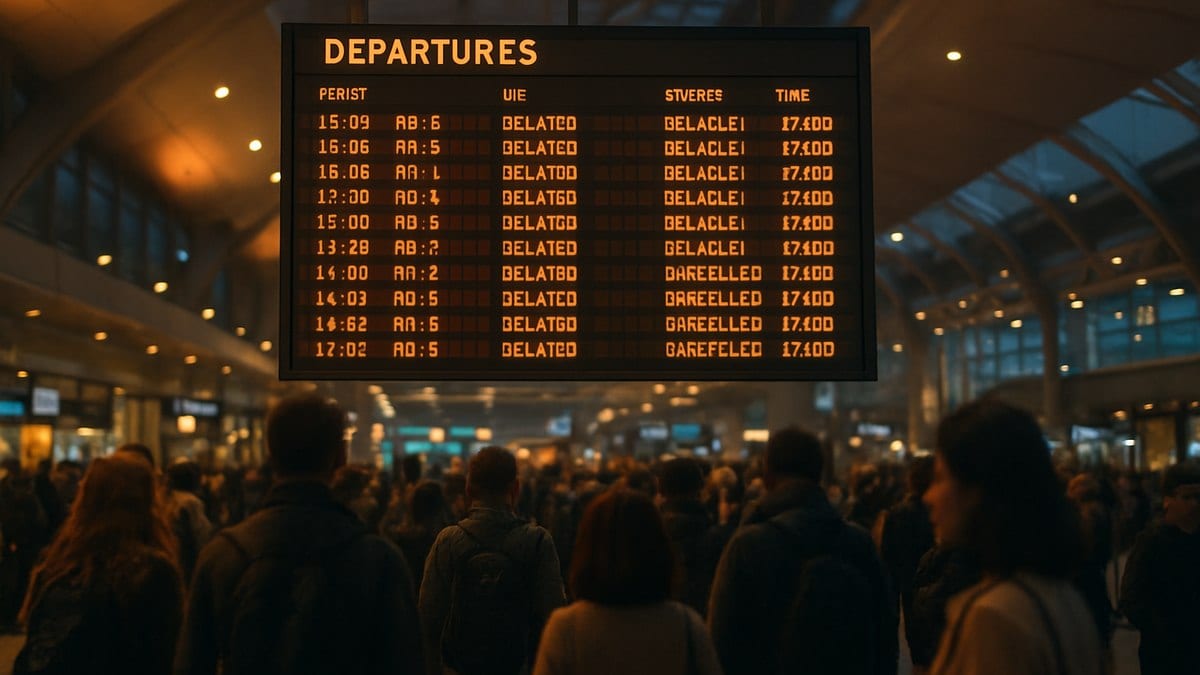
Swiss Hubs Trigger Network-Wide Knock-On Disruption
Published flight-tracking data and operational updates indicate that delays originating at Zurich and Geneva have cascaded through Europe’s interconnected route map, affecting departures and arrivals far beyond Swiss borders. The disruption has concentrated on intra-European services, but has also pushed some long haul flights off schedule as aircraft and crews failed to arrive on time for their next rotations.
Reports show that the 164 affected flights are scattered across multiple airlines using Swiss airports as hubs or key spokes, with services to Germany, France, Italy, the United Kingdom and the Iberian Peninsula among those hit. The majority of impacted services appear to be delayed rather than cancelled, yet even moderate delays have created tight connections, missed onward journeys and overnight rebookings for some passengers.
Operational statistics published by Eurocontrol and airport punctuality reports have repeatedly identified reactionary delays as a core weakness in Europe’s air transport system. When a morning wave of flights is disrupted at a major hub, that delay frequently propagates across the continent for the rest of the day as aircraft and crews work through congested schedules.
Data for recent travel periods already showed Swiss airports struggling with punctuality compared with pre-pandemic norms, particularly at peak times. The latest wave of disruption has underlined how limited spare capacity at Zurich and Geneva can quickly translate into a broader network problem once knock-on effects are taken into account.
Strain From New EU Entry Rules and Border Processing
The latest delays come as European border infrastructure adjusts to the roll-out of the Entry/Exit System, which requires many non-EU travelers to submit fingerprints and photographs on arrival. Switzerland participates in the Schengen zone, so Zurich and Geneva are implementing the same biometric checks as airports in neighbouring countries.
Recent coverage of the system’s early operation has pointed to particularly long lines at passport control in Geneva on busy days, with some travelers reporting waits of several hours at peak weekend periods. Airport management and commentators have linked parts of the congestion to the extra time required for biometric processing, especially when multiple full flights arrive close together and staffing or space is constrained.
While the current disruption affecting 164 flights appears to be multi-factorial, the additional friction at border checkpoints is widely seen as one more stress point within complex airport operations. Longer processing times for arriving passengers can slow the flow of people through terminals, affect boarding times on departing services and complicate the choreography of buses, gates and ground staff.
European aviation and travel groups have previously warned that, without sufficient staffing and infrastructure upgrades, the new entry regime could amplify existing choke points at border control. The pattern now emerging in Switzerland suggests that even when flight programmes are not dramatically expanded, procedural changes at the border can have visible knock-on consequences for punctuality.
Weather, Strikes and Structural Capacity Limits
The immediate causes of the Swiss delays are varied, according to publicly available reporting. Recent weather systems over central Europe have constrained takeoff and landing rates at times, while separate industrial action at major hubs in neighbouring countries has disrupted aircraft and crew positioning on routes that feed into Switzerland.
In Germany, strike action at Lufthansa has triggered cancellations and schedule changes at Frankfurt and Munich, two key partners for Swiss and other carriers operating into Zurich and Geneva. When flights into Switzerland are cancelled or heavily delayed because of problems abroad, aircraft may be out of position for subsequent legs, creating new delays at departure. This type of reactionary disruption has been a recurring feature of European aviation since traffic volumes recovered from the pandemic.
Beyond episodic factors such as strikes or storms, structural capacity limits also play a role. Air traffic control restrictions over parts of Europe have left airports operating close to their maximum sustainable throughput during busy periods, with relatively little room to absorb disruption. Swiss airports, with limited runway capacity and tight noise rules, often have less flexibility than larger multi-runway hubs when schedules begin to slip.
Industry analyses over recent years have repeatedly highlighted that en route air traffic control delays and airport constraints have grown faster than overall traffic, particularly on popular trunk routes. The latest wave of delays tied to Swiss airports appears to fit within that broader pattern, where even modest shocks in one corner of the network can lead to widespread schedule disruption.
Impact on Travellers and Passenger Rights
For travelers, the practical impact of the Swiss disruption has ranged from missed meetings and shortened holidays to unexpected overnight stays. With 164 flights affected across the network, thousands of passengers are likely to have encountered longer-than-planned journey times, rebookings or changes to their routing as airlines worked to patch schedules back together.
Under European air passenger rights rules, including Regulation EC 261/2004 and corresponding Swiss provisions, travelers on many of the affected routes may be entitled to assistance such as meals, hotel accommodation and rebooking when delays stretch over several hours. Eligibility for financial compensation, however, depends on the specific cause of the disruption, the length of the delay at arrival and whether the airline can point to extraordinary circumstances beyond its control.
Consumer advocates note that passengers often remain unaware of their rights when delays cascade across multiple legs, particularly when disruptions originate in one country but are felt on onward journeys in another. The dispersed nature of the current Swiss-centered disruption, with flights affected at airports across Europe, may make it harder for some travelers to understand whether their case falls within the rules for compensation or care.
Specialist claim firms and national enforcement bodies in Switzerland and EU member states provide information on how to pursue claims, but passengers are typically required to start by contacting the airline directly. Observers say the uptick in network-wide delays this spring is likely to generate another wave of inquiries and complaints from travelers seeking to reclaim costs incurred during their disrupted journeys.
Outlook for Spring and Summer Travel
The timing of the latest delays at Swiss airports has sharpened concerns about Europe’s readiness for the heavier traffic expected later in spring and over the summer peak. Airlines have already been operating fuller schedules compared with recent years, and several carriers, including Swiss International Air Lines, have announced selective capacity cuts on specific routes to manage resource constraints.
Airports and air traffic management bodies are engaged in a delicate balancing act, seeking to accommodate strong travel demand while keeping pressure on punctuality and service levels. Analysts note that the combination of new border procedures, potential further industrial action and ongoing capacity bottlenecks in the air and on the ground could produce additional waves of disruption if not carefully managed.
Travel industry planners are advising passengers with itineraries involving Swiss hubs to build in extra buffer time for connections, particularly on days when weather, strikes or major events elsewhere in Europe are likely to strain operations. Early-morning departures are often identified as less vulnerable to knock-on delays, as aircraft and crews are more likely to begin the day in the correct location.
For now, the 164 flights disrupted across the European network serve as another reminder of how interdependent the region’s aviation system has become. A cluster of delays in Zurich or Geneva can quickly echo through airports from Lisbon to Stockholm, underscoring the thin margin for error facing airlines, airports and passengers as Europe heads into another busy travel season.