

More news on this day
Swiss International Air Lines (SWISS) has reported a strong operating result of CHF 502 million for the 2025 financial year, underscoring sustained travel demand, network expansion and disciplined cost control across its global operations.
Get the latest news straight to your inbox!
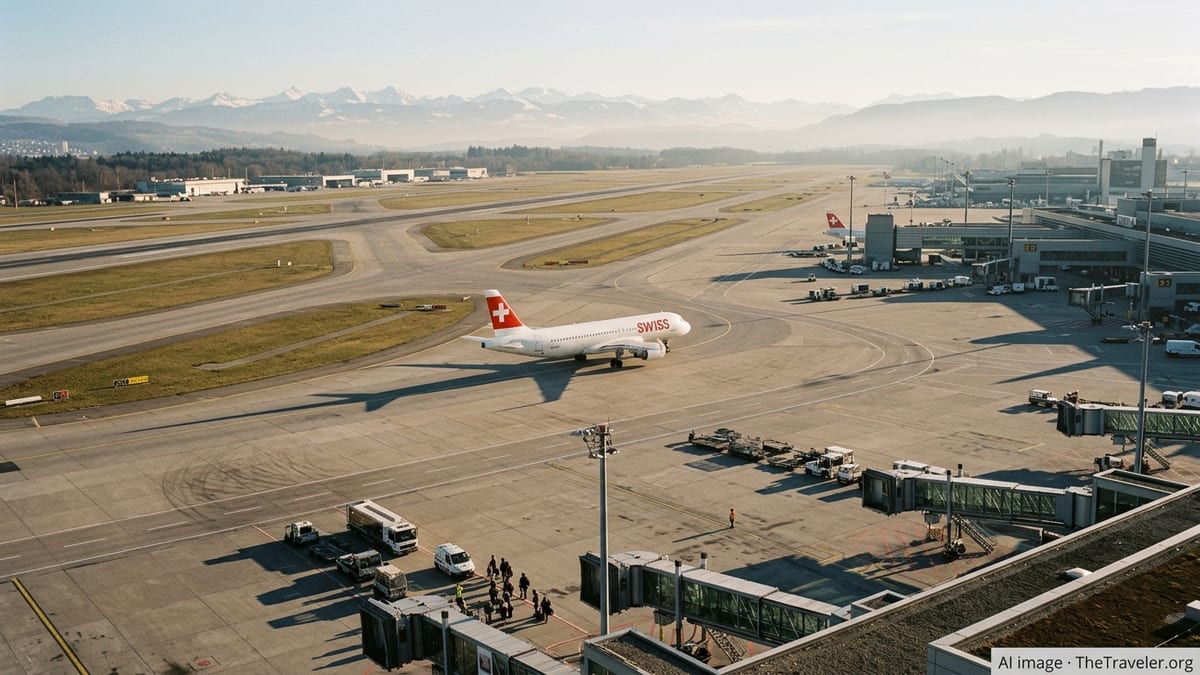
Solid Financial Performance Anchored in Travel Demand
Publicly available information from the Lufthansa Group’s latest financial reporting indicates that SWISS closed 2025 with an operating result of CHF 502 million, marking another profitable year after its sharp recovery from the pandemic downturn. The result situates the Zurich-based carrier among Europe’s better-performing network airlines, even as competitive pressure and higher operating costs remain pronounced across the sector.
While the operating result was lower than the record highs reported in 2023 and 2024, the figure reflects a normalization of yields and capacity as markets recalibrate after the initial surge in post-pandemic demand. Reports indicate that SWISS continued to benefit from resilient premium and corporate travel on key intercontinental routes, particularly between Zurich, North America and Asia, alongside sustained leisure demand into Southern Europe and the Mediterranean.
Passenger volumes remained high, supported by strong load factors similar to those achieved in 2024, when SWISS carried more than 21 million travelers and maintained a load factor in the mid‑80 percent range. Early commentary around the 2025 performance suggests that the airline held onto much of this momentum, even as growth moderated and unit revenues came under pressure from expanding capacity in Europe and beyond.
The CHF 502 million operating result also reflects continued cost discipline, including ongoing efficiency gains in fleet deployment, digitalization and network planning. At the same time, higher personnel costs and inflation-linked expenses, as well as investments in new aircraft, weighed on margins compared with peak post‑recovery years.
Network Expansion and Strong Hub Performance
SWISS’s 2025 performance was closely linked to the strength of its Zurich and Geneva operations, where the airline has focused on high‑yield connecting traffic and carefully selected point‑to‑point routes. According to published coverage, the carrier continued to refine its schedule at Zurich, optimizing wave structures to capture transfer traffic between Europe and long‑haul markets while minimizing ground times and improving aircraft utilization.
In 2025, travel demand remained robust across core European business destinations such as London, Frankfurt, Berlin and Paris, with SWISS benefiting from its role within the Lufthansa Group network. Leisure‑oriented routes to Mediterranean islands, Greek destinations, Spain and Portugal again played a key role in filling aircraft during peak summer months, underpinning both load factors and ancillary revenues.
Reports also point to continued development of long‑haul services, with North America remaining a cornerstone of the carrier’s strategy. Routes to cities such as New York, Chicago and San Francisco, as well as select destinations in Asia and the Middle East, have provided a stable mix of corporate, premium leisure and cargo demand. The airline’s ability to balance frequencies and capacity on these long‑haul sectors has been an important contributor to the 2025 operating result.
In Geneva, SWISS maintained a more focused portfolio, emphasizing point‑to‑point services tailored to the region’s business and diplomatic community as well as seasonal leisure flows. Although Geneva represents a smaller share of total capacity than Zurich, its profitability and strategic importance for the Swiss market supported the broader travel growth narrative in 2025.
Fleet Modernization and Product Investments
The 2025 operating result of CHF 502 million is closely tied to SWISS’s ongoing fleet and product strategy, which aims to enhance efficiency while improving the travel experience. Public filings and group reporting highlight the continued integration of more fuel‑efficient aircraft types, which have gradually reduced per‑seat fuel burn and operating costs, particularly on European routes.
On short and medium‑haul services, the airline has benefited from newer narrow‑body aircraft that offer improved economics and cabin comfort. These jets, configured with a flexible business and economy layout, have given SWISS additional agility to match capacity with demand across weekdays, weekends and seasonal peaks.
On long‑haul routes, the focus has been on maintaining a modern wide‑body fleet with competitive premium cabins. According to available information, the carrier has continued to invest in cabin refurbishments, including updated business class seating, enhanced in‑flight entertainment and connectivity, and refreshed soft‑product elements such as catering and amenities. These upgrades have supported higher yields and strengthened SWISS’s positioning as a premium European carrier.
Customer‑facing improvements on the ground, including digital check‑in tools, more efficient airport processes and upgraded lounges in Zurich and other key locations, have also played a part in sustaining customer loyalty. Together, these product and fleet investments represent a substantial multi‑year expenditure that affects short‑term margins but is designed to reinforce SWISS’s competitive stance and operational resilience.
Travel Market Context and Competitive Landscape
SWISS’s 2025 performance unfolded against a backdrop of strong, though gradually normalizing, global air travel demand. International travel flows into and out of Europe remained elevated compared with pre‑pandemic levels for much of the year, driven by pent‑up leisure demand, structurally higher remote‑work flexibility and the continued return of corporate trips and major events.
At the same time, the competitive environment intensified. European network carriers, low‑cost airlines and long‑haul operators all expanded capacity in 2025, particularly on popular city pairs and holiday routes. This growth placed pressure on yields and required SWISS to rely on its hub strength, product quality and schedule reliability to defend market share and pricing power.
Macroeconomic conditions were mixed, with inflation and interest rates still influencing consumer spending and corporate travel budgets. Nevertheless, demand for premium cabins and flexible fare options remained relatively resilient on SWISS’s core long‑haul routes, helping to support the CHF 502 million operating result despite rising costs.
Industry observers note that the carrier’s integration within the Lufthansa Group has continued to offer advantages in purchasing, joint network planning and alliance partnerships. These factors have enabled SWISS to participate in broader group initiatives around sustainability, digitalization and revenue management while retaining a distinct Swiss brand identity that resonates strongly in its home market and among international travelers.
Outlook: Capacity Discipline and Sustainable Travel Growth
Looking beyond the 2025 financial year, publicly available guidance and commentary suggest that SWISS is prioritizing measured capacity growth rather than aggressive expansion, with an emphasis on profitability and operational reliability. The airline is expected to continue fine‑tuning its schedule from Zurich and Geneva, focusing on markets with structurally strong demand and attractive yield characteristics.
Sustainability has also become a central pillar of the carrier’s medium‑term strategy. Reports indicate that SWISS is engaging in initiatives linked to more efficient flight operations, fleet renewal and the gradual use of sustainable aviation fuel in cooperation with partners and the wider Lufthansa Group. These measures are intended to reduce emissions intensity per passenger while responding to growing traveler and corporate interest in lower‑impact flying.
Digital innovation is likely to further shape the customer journey, from more personalized offers and ancillaries to smoother airport experiences and post‑travel services. Such enhancements are seen as important tools to strengthen ancillary revenue streams and differentiate the airline in a crowded European market.
With a CHF 502 million operating result underscoring its healthy 2025 performance, SWISS enters the next phase of its strategy with a solid financial base, an increasingly efficient fleet and a clearly defined role within the broader Lufthansa Group. For travelers, that combination is expected to translate into a stable schedule, modern aircraft and a consistently premium product on key routes to and from Switzerland.