

More news on this day
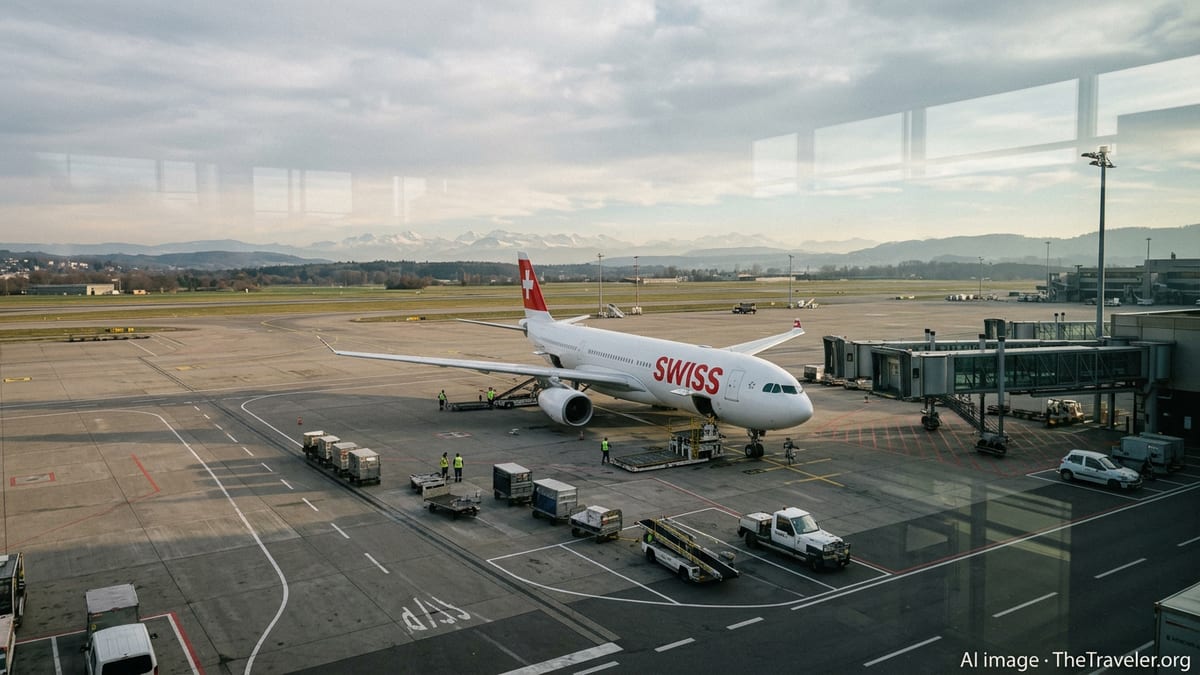
Swiss International Air Lines has extended its suspension of flights to and from Tel Aviv until 9 April, as continuing unrest and security concerns in the Middle East keep pressure on international airline operations and travellers’ plans.
Get the latest news straight to your inbox!
Extension Reflects Prolonged Regional Volatility
Publicly available information from European aviation and business media indicates that SWISS, part of the Lufthansa Group, has pushed back the planned restart of its Tel Aviv services to at least 9 April. The airline had already been operating with a reduced or suspended schedule on the route following repeated episodes of regional tension and missile activity affecting Israeli airspace.
The latest extension aligns SWISS with other major European carriers that have lengthened their own suspensions to Israel and parts of the wider region in recent weeks. Reports show that Lufthansa and Air France have also prolonged their Tel Aviv suspensions into early April, underscoring how airlines are still treating the situation as highly fluid rather than fully stabilised.
Ben Gurion Airport near Tel Aviv remains operational, with Israel’s flag carrier El Al and a limited number of foreign airlines still serving the market. However, recurring flare-ups and long-range attacks targeting Israel and shipping lanes in the Middle East have prompted periodic reviews of risk assessments by international operators.
Aviation analysts note that such extensions typically reflect a combination of state-issued security guidance, the carrier’s internal safety thresholds, and commercial considerations such as demand patterns and insurance costs, all of which remain affected by the broader conflict environment.
Impact on Zurich Hub and Connecting Traffic
For travellers, the extended suspension means that SWISS’s Zurich hub will remain without direct connectivity to Tel Aviv at least through the busy early April period, which includes school holidays in parts of Europe and the run-up to the spring and Passover travel season. Passengers who would ordinarily rely on SWISS for point-to-point travel between Switzerland and Israel, or for onward connections across Europe and North America, will need to use alternative routings.
Travel industry coverage indicates that some itineraries are being rebooked via partner airlines within the Lufthansa Group or through other hubs that still maintain limited Tel Aviv operations. However, reduced capacity across the market has led to tighter seat availability and, in many cases, higher fares on remaining services.
Corporate travel managers in Europe are also contending with the prolonged outage of a key route for business links between Israeli technology hubs and financial and pharmaceutical centres in Switzerland and Germany. Many companies have shifted to virtual meetings or routed essential trips through carriers that are still operating, often at the cost of longer travel times and less convenient schedules.
For Zurich Airport itself, the suspension removes a formerly important regional destination from the departure boards, contributing to a patchwork recovery pattern in the Middle East segment that contrasts with steadier growth in European and North Atlantic traffic.
How SWISS Is Handling Bookings and Passenger Options
According to booking system information and travel agency briefings, passengers holding SWISS tickets to or from Tel Aviv during the suspension period are being offered rebooking or refund options, depending on fare type and itinerary. Many travellers can rebook for dates after 9 April or reroute via other gateways, subject to seat availability.
Industry reporting on recent Middle East unrest shows that airlines in the region, including SWISS and its partners, have applied flexible rebooking policies when routes are affected for security reasons. These policies often allow at least one change without a fee for travel within a defined time window, though any fare differences on alternative dates or routes may still apply.
Travel experts advise passengers to monitor their booking status in the airline’s app or through their travel agent, as schedules can change again if conditions deteriorate or, conversely, if the security outlook improves sooner than expected. In some cases, carriers reopen bookings incrementally, adding flights back into the timetable in stages rather than restoring full schedules at once.
Passengers with onward connections on other airlines should also verify that all segments of their journey have been re-protected, especially if travel involves separate tickets. If a SWISS-operated leg to Tel Aviv has been cancelled, connections issued on different tickets may not automatically be adjusted.
Tel Aviv Remains a Patchwork of International Services
While SWISS and several other European carriers maintain suspensions, Tel Aviv continues to be served by a mix of local and foreign airlines that have chosen to operate under revised risk assessments and adjusted flight paths. Coverage from regional business and aviation outlets highlights that carriers based in Israel, along with a limited number of long-haul and regional operators, are providing a reduced but active schedule.
Capacity at Ben Gurion Airport remains significantly below pre-crisis levels, and schedules can still see last-minute adjustments when alerts or security developments occur. Some airlines have introduced additional operational measures such as modified routings to avoid certain airspace segments, changes to crew layover patterns, or aircraft swaps to optimise fleet deployment.
The result for travellers is an uneven landscape. Those who must fly can often find options, but may face a narrower selection of departure times, longer connections, or the need to route through unfamiliar hubs. Leisure travellers in particular are weighing whether to postpone trips to Israel or switch to alternative destinations entirely until there is clearer evidence of sustained stability.
Tourism bodies in Israel have been working to reassure visitors and highlight that many attractions, especially in Tel Aviv and along the Mediterranean coast, remain open. However, international arrival figures remain closely tied to airlines’ ongoing risk calculations and timetable decisions.
What Travellers Should Consider Now
With SWISS flights to Tel Aviv off the schedule until at least 9 April, travellers are being urged by industry observers to plan conservatively. Those with flexible plans may wish to avoid booking new itineraries to the region for dates immediately following the suspension period, in case the pause is extended again or capacity remains constrained.
Prospective passengers are also encouraged to pay close attention to fare rules, particularly around changes and cancellations, and to consider travel insurance products that specifically cover disruptions linked to conflict or security events. Policy wording can vary considerably, and some products exclude events in regions already subject to official travel advisories.
For travellers who must make the journey, experts recommend allowing additional time for security procedures at departure and arrival airports, as well as building longer layovers into multi-leg itineraries to absorb potential delays. Monitoring regional news and airline advisories in the days leading up to departure remains essential.
As of mid-March 2026, the extension of SWISS’s suspension is another signal that, despite some carriers gradually rebuilding their Israel networks, the broader Middle East remains a challenging environment for international aviation, and that schedules to Tel Aviv can still change at short notice.