

More news on this day
Swiss International Air Lines has introduced a voluntary severance package worth the equivalent of about 19,000 dollars for cabin crew, as the carrier works to rebalance staffing levels amid fluctuating demand and wider operational challenges affecting European aviation.
Get the latest news straight to your inbox!
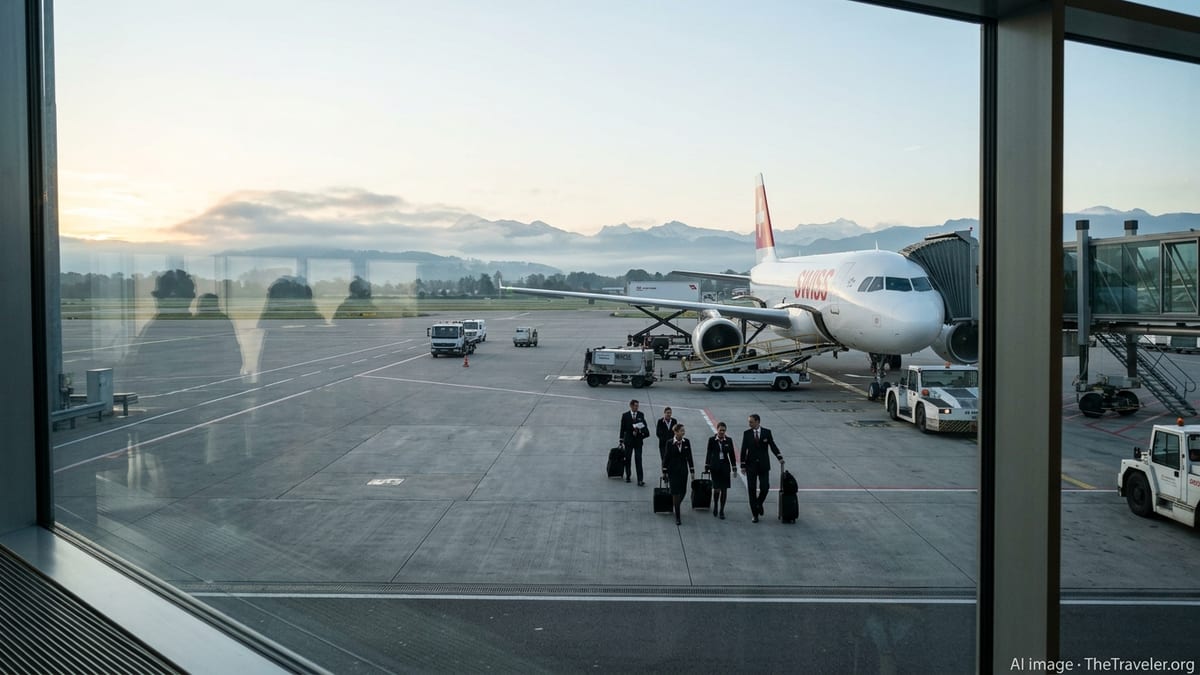
Voluntary Severance Aimed at Reducing Cabin Crew Surplus
According to recent media coverage and union documentation on workforce restructuring at Swiss International Air Lines, the airline has opened a new round of voluntary departures for cabin crew, anchored by a severance offer reported at roughly 19,000 dollars per eligible employee. The package is structured as a one-time payment for staff who choose to leave, and is being presented as a way to avoid or limit compulsory layoffs while the carrier aligns its headcount with revised schedules.
Publicly available information indicates that the offer is targeted at a surplus in the cabin crew corps that has emerged as growth projections have been recalibrated and some capacity has been redeployed within the Lufthansa Group network. While SWISS has been hiring in certain roles and promoting its long-term career paths, it is also managing localized overstaffing in specific bases and seniority groups where flying hours have not recovered at the pace initially forecast.
The 19,000 dollar figure places the SWISS proposal in the middle range of European airline severance plans for cabin crew, which often combine a lump-sum payout with support measures such as job-search assistance or internal transfer options. Reports suggest that the SWISS package is being framed as a limited-time opportunity and may be adjusted depending on uptake and subsequent staffing needs.
Details referenced in Swiss social plans and labor documents show that the airline has long maintained formal frameworks for severance payments and redeployment when network changes produce staff surpluses. The current initiative appears to draw on those established mechanisms, updating payment levels and eligibility criteria to reflect recent wage increases and changes in working patterns under new collective labor agreements.
Operational Pressures Behind the Offer
The severance initiative comes at a time when SWISS is navigating a complex operational environment. Across Europe, carriers are contending with aircraft delivery delays, evolving demand on short-haul and long-haul routes, and continuing bottlenecks at key airports. Industry reports point to recurring constraints in air traffic control capacity and ground handling that have forced airlines to adjust schedules and deploy aircraft and crew more conservatively.
For SWISS, these pressures intersect with the airline’s broader post-pandemic recovery strategy. In recent years the company has invested in new collective labor agreements for cabin crew, cockpit personnel and ground staff, increasing base salaries, adding inflation-linked adjustments and offering more predictable rosters and part-time options. These measures were designed to stabilize the workforce after a period of uncertainty and to make the profession more attractive in a tight labor market.
However, as post-crisis growth has settled into a more moderate trajectory, the combination of higher staffing levels, improved pay and tighter scheduling buffers has raised unit cost sensitivity. Aviation analysts note that even modest schedule reductions or seasonal demand dips can create imbalances between planned flying hours and available crew, particularly in smaller fleets such as that of SWISS where redeployment options are more limited than at larger group peers.
In that context, a voluntary severance scheme offers management a flexible tool to trim surplus positions without immediately resorting to compulsory dismissals, while also preserving industrial relations gains achieved through recent bargaining rounds. The approach allows the airline to match staffing more closely to currently scheduled capacity, and potentially to free up budget for targeted hiring in roles or bases where shortages persist.
Implications for Cabin Crew Careers and Working Conditions
The offer underscores the volatility that still characterizes cabin crew employment in Europe, even at network airlines that have returned to profitability. On one hand, SWISS has been promoting cabin crew roles as a stable, well-compensated career path, pointing to improved starting salaries, clearer promotion tracks and enhanced roster planning in information material and recruitment campaigns. On the other, the need to address surplus positions through severance signals that long-term stability can be disrupted by shifts in capacity and cost structures.
For existing crew, the 19,000 dollar package represents a potentially attractive opportunity for those considering a career change, early retirement or a move into ground-based roles. Given typical SWISS cabin crew earnings, the lump sum can equate to several months of net pay, depending on seniority and flying patterns. Employees with shorter service times may view the offer differently from those with many years of tenure, as senior crew often benefit from higher salaries and more favorable rosters that could outweigh a one-time payment.
Union and employee representatives have historically pressed for transparent criteria and fair treatment when voluntary severance schemes are opened, arguing that staff should have access to complete financial and contractual information before making a decision. Public coverage of earlier social plans at SWISS highlights the importance of clear communication regarding how severance interacts with notice periods, pensions and eligibility for unemployment benefits under Swiss regulations.
Prospective cabin crew and jobseekers watching the development may perceive mixed signals. While the airline continues to advertise new cabin crew positions and highlight career events, the coexistence of recruitment in certain segments and surplus reductions in others illustrates how narrowly workforce planning is calibrated to route profitability, fleet changes and seasonal demand.
Broader Impact on Swiss and European Aviation
The SWISS severance initiative also reflects broader structural changes in European aviation. Airlines across the continent are refining fleets, renegotiating labor agreements and reconfiguring route networks, as competition from low-cost carriers on short-haul routes and premium-focused rivals on long-haul services intensifies. Full-service airlines operating from high-cost hubs such as Zurich face particular pressure to maintain on-time performance and service quality while keeping labor and operational expenses in check.
Industry observers note that workforce flexibility is becoming a central lever in this process. Voluntary separation programs, expanded part-time schemes and cross-training for multi-functional roles are increasingly deployed as carriers adjust to demand patterns that can swing sharply between peak and off-peak seasons. For an airline of SWISS’s size, even relatively small overstaffing can have an outsized financial impact, prompting proactive measures such as the current severance offer.
The move is likely to be watched by neighboring European flag carriers that have faced similar dilemmas over crew numbers. If the SWISS program attracts strong uptake without visible disruption to service levels, it may serve as a reference point for other airlines considering comparable proposals. Conversely, if acceptance is limited, the company may need to rely more heavily on natural attrition, schedule growth or deeper restructuring to resolve its surplus.
For travelers, the immediate impact is expected to be limited, as voluntary departures can be phased in and backfilled where necessary. Nonetheless, the episode highlights how staffing strategies, wage structures and industrial relations remain tightly linked to the reliability and quality of air service, especially in an environment where airlines and airports are still recalibrating after several years of disruption.
What Passengers and Prospective Staff Should Watch
Passengers following developments at SWISS may be primarily concerned with whether staffing changes affect punctuality, onboard service and route offerings. Available data and reporting indicate that the airline continues to invest in cabin product upgrades and fleet modernization, particularly on long-haul services, while refining its schedule to protect operational resilience. Any reduction in surplus crew is likely to be managed behind the scenes, with priority placed on maintaining service reliability during peak travel periods.
Prospective cabin crew, meanwhile, may wish to pay attention to how the severance program interacts with future hiring and training plans. If the voluntary departures are concentrated among longer-serving staff, the airline could open more opportunities for new entrants once the immediate surplus has been resolved, although overall headcount growth will remain closely tied to network decisions and aircraft deliveries.
More broadly, the SWISS case illustrates the importance of understanding the cyclical nature of aviation careers. Cabin crew roles can offer unique travel opportunities, competitive total compensation and clear progression, but they are also exposed to macroeconomic shifts, regulatory changes and airline-specific restructuring. Voluntary severance schemes such as the one now on offer form part of that landscape, providing both risk and opportunity for those considering a long-term future in the skies.
As the program unfolds, further public information from SWISS, labor groups and industry analysts is likely to clarify how many employees ultimately opt for the 19,000 dollar package and how the airline’s cabin crew complement evolves in the coming seasons.