

More news on this day
A Swiss hospitality startup is pushing artificial intelligence deeper into the travel back office, promising to take the friction out of complex group bookings for hotels, cruises and flights by automating the long email threads and quote negotiations that still dominate the sector.
Get the latest news straight to your inbox!
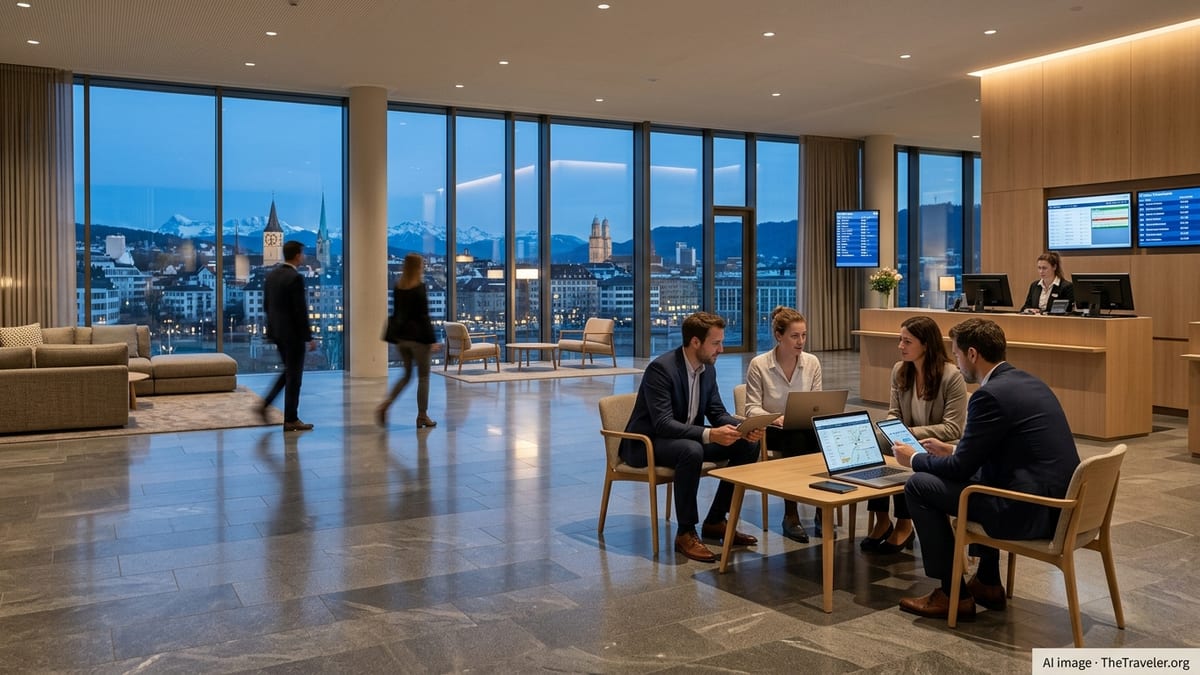
AI Steps Into the Group Booking Back Office
Zurich based startup Lobby has emerged as one of the most recent Swiss travel technology ventures to focus on the operational side of hospitality, positioning its platform as an automation layer that can interpret and respond to booking emails in seconds. Publicly available company information describes Lobby as an AI system that reads incoming reservation requests, cancellations and modifications and then connects directly to hotel reservation software to generate accurate offers without human staff having to manually retype details.
Reports on Swiss startup databases indicate that Lobby was founded in early 2025 and is part of the EHL Innovation Hub network, which supports young companies working on technology for hotels and restaurants. Early descriptions of the product highlight its focus on “email first” workflows, reflecting how many corporate travel planners, event organisers and group coordinators still rely on direct email rather than self service booking engines when negotiating room blocks, meeting packages and combined travel arrangements.
Lobby’s positioning reflects a wider shift in the industry toward using AI tools to bridge the gap between older legacy systems and modern distribution channels. While many travelers book flights and individual hotel rooms through consumer facing apps, large groups and cruise charters often require custom itineraries and negotiated rates, which generate long chains of messages that staff must process manually. By inserting an AI layer into that workflow, companies such as Lobby aim to cut response times and reduce the risk of missed revenue opportunities when requests sit unanswered.
Industry observers note that this type of back office automation is increasingly seen as a way to support over stretched hotel teams. With staffing levels still under pressure in many destinations, interest has grown in tools that can take on repetitive administrative tasks while still allowing humans to supervise complex or high value decisions.
From Hotel Inbox to Multi Segment Itinerary
Lobby’s core product is currently framed around hotel reservation workflows, but company materials and accelerator programme summaries describe a broader ambition to support multi segment itineraries that can include cruise cabins, meeting space and connecting flights as part of one negotiation. The idea is that an AI agent can receive a detailed request for a corporate offsite or incentive trip, identify key parameters such as dates, passenger numbers and budget, and then assemble and adjust offers across several suppliers.
Travel industry analyses show that the most time consuming group bookings tend to involve multiple room categories, pre and post nights around a cruise departure, and transport connections that must line up with embarkation and disembarkation windows. In many cases, sales teams at hotels and cruise lines manage these scenarios in spreadsheets and email threads, checking availability in core systems while copying rates and restrictions into proposals. Automating that process offers a clear opportunity to shorten turnaround times and improve accuracy.
According to coverage of European travel technology trends, platforms that can broker group bookings across hotels, cruises and flights are drawing attention from both traditional tour operators and newer digital agencies. Travel providers are experimenting with AI driven engines that can read unstructured requests and connect them to structured inventory, much in the way that online travel agencies already match searches to real time availability for individual travelers.
Lobby’s stated approach includes human in the loop safeguards, in which hotel staff or revenue managers can validate and adjust offers before they are sent out. This model is designed to maintain control over pricing and availability decisions while still capturing the productivity gains of automation.
Swiss Travel Tech Ecosystem Fuels Innovation
Lobby’s emergence reflects the broader momentum of Switzerland’s travel technology ecosystem, which in recent years has produced ventures ranging from sustainable adventure booking platforms to blockchain based distribution networks for tour operators. Investment reports and accelerator announcements describe a growing cluster of startups that focus on smarter booking processes, dynamic packaging and data driven personalisation for travelers.
Within this landscape, Lobby is positioned at the operational core of hospitality rather than at the consumer interface. By concentrating on the flows between corporate buyers, travel agents and hotel sales teams, the company is targeting a part of the market that often remains hidden from leisure travelers but is crucial for conferences, incentives and large group movements.
Analysts covering European travel innovation point out that Switzerland’s mix of hospitality management schools, financial expertise and established travel groups has created favourable conditions for business to business platforms. Programmes such as MassChallenge Switzerland and sector focused innovation hubs have highlighted AI tools for hotels among their recent cohorts, with group travel automation frequently cited as a pain point that technology could address.
Public information on these programmes indicates that participating startups benefit from mentoring and exposure to potential pilot partners, including hotel groups and travel management firms. For companies like Lobby, these connections can provide access to real world booking data and complex use cases required to train and refine AI models.
Automation Targets Email, RFPs and Rate Negotiations
Travel industry benchmarks often show that manual handling of group requests for proposals, or RFPs, can stretch to hours per enquiry when staff must confirm availability, apply negotiated rates, and coordinate with revenue management teams. Lobby’s value proposition, as described in startup profiles, is to compress that cycle to a matter of seconds or minutes by letting AI extract key details from emails, consult connected systems and draft responses automatically.
The platform is designed to process tasks such as rooming lists, date changes, and cancellation requests that currently require staff to move back and forth between inboxes and property management systems. By automating those steps, the company argues that hotels can respond to a higher volume of leads and avoid losing business when planners turn to competitors who reply first.
Sector wide research indicates that similar AI tools are beginning to appear across other parts of the travel chain, including dynamic pricing systems for airlines, cabin allocation software for cruise lines and smart contract distribution platforms for tour operators. Lobby’s focus on email and document based workflows aligns with this broader push to apply machine learning to unstructured information that has historically been difficult to digitise.
Observers also note that automation in reservations must contend with strict accuracy and compliance requirements, particularly when group travel involves complex payment terms or contracted attrition clauses. The inclusion of human review steps and audit trails within platforms like Lobby is seen as important for maintaining trust with both buyers and suppliers.
Implications for Travel Managers and Group Organisers
For corporate travel managers, event planners and cruise group coordinators, tools such as Lobby could change expectations around how quickly proposals are delivered and revised. If hotels and other suppliers can turn detailed requests around in near real time, planners may be able to compare more options and iterate on itineraries without the delays that currently accompany each change in dates, room counts or cabin categories.
Analysts suggest that faster, more accurate responses could influence how group buyers structure their tenders, potentially encouraging smaller, more frequent RFPs rather than a single large negotiation at the start of a planning cycle. This shift could benefit suppliers that invest in automation, as they may be better positioned to react to late breaking opportunities, last minute ship charters or additional meeting dates that open up.
For hotels, cruise lines and airline partners, the rise of AI automation layers raises strategic questions about where to place control over pricing, inventory and customer relationships. Platforms like Lobby typically operate as behind the scenes engines that sit between email inboxes and reservation systems, which allows brands to maintain their own sales channels while improving efficiency.
Industry commentators note that the next phase of innovation is likely to involve deeper integrations between these AI engines and existing global distribution systems, revenue management tools and customer relationship platforms. As Swiss travel technology firms and their international counterparts experiment with these connections, group travel organisers could see a gradual shift from slow, manual negotiations toward a more seamless, data driven booking experience.