

More news on this day
Swiss International Air Lines closed the 2025 financial year with an operating result of CHF 502 million, a solid profit that marks a step down from its record 2023 and near-record 2024 performance but still reflects robust demand for air travel to and from Switzerland.
Get the latest news straight to your inbox!
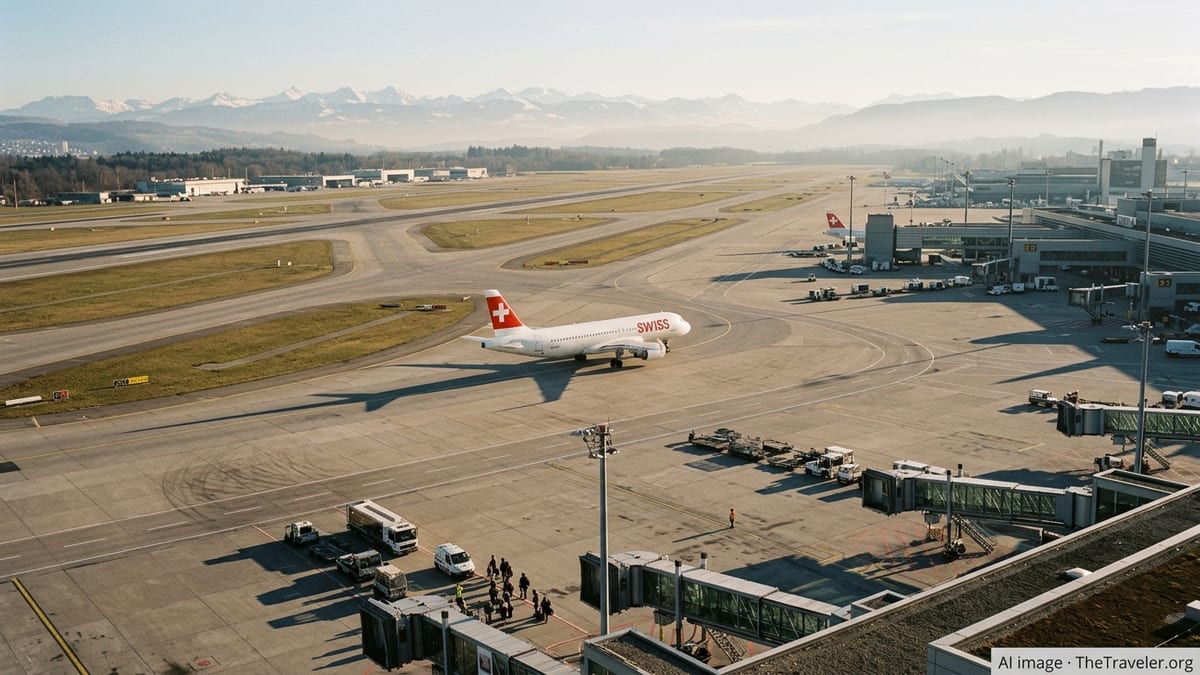
From Record Highs to a Normalised Profit Landscape
Recent financial disclosures show that SWISS generated an adjusted operating profit of around CHF 502 million in 2025, a decline of roughly 26 percent compared with its CHF 684 million result in 2024. The airline also reported a 2.6 percent dip in revenue to about CHF 5.5 billion, following an all-time high of CHF 5.6 billion the previous year. Publicly available figures indicate that after two exceptional years in 2023 and 2024, the carrier is now operating in a more normalised market environment with slimmer margins.
Industry coverage notes that SWISS had entered 2025 from a position of strength, with the 2024 result described as the second-best in the company’s history. That momentum has moderated, but the airline remains clearly profitable, underlining sustained appetite for both business and leisure travel. For the broader travel market, a CHF 502 million operating result signals that Switzerland’s flag carrier is still generating significant cash to reinvest in fleet, cabins and customer experience.
Analysts following European aviation point out that the size of the 2025 profit also matters in context. Even with the year-on-year decline, SWISS remains among the stronger-performing network airlines in its region, particularly given its relatively compact size and its heavy concentration on premium traffic flows through Zurich and Geneva. The result illustrates how the airline is transitioning from a post-pandemic boom phase into a more measured expansion cycle.
Cost Pressures and Capacity Constraints Reshape Strategy
Reports on the 2025 outcome highlight several structural headwinds behind the profit drop. Higher airport charges, more expensive maintenance and persistent labour-market tightness have all weighed on earnings. At the same time, supply bottlenecks in the aircraft and spare-parts markets have constrained capacity, limiting how quickly SWISS can add flights on high-demand routes even as demand remains firm.
Coverage of the airline’s 2025 half-year and full-year figures underscores that these challenges emerged progressively. In the first half of 2025, SWISS posted an operating result of about CHF 195 million, already down by more than a quarter from the same period a year earlier. As the year progressed, rising costs and a softer transatlantic market continued to erode margins, particularly in the busier summer quarter when airlines typically generate a large share of their profits.
Travel observers note that SWISS has responded with a combination of selective capacity growth and disciplined cost management rather than aggressive expansion. This approach aims to defend profitability while preserving network connectivity that is vital for Switzerland’s export industries and for inbound tourism. The full-year CHF 502 million result suggests that, despite pressure on yields, the airline has been able to maintain a profitable balance between ticket prices, load factors and cost control.
Travel Demand to and from Switzerland Remains Robust
Passenger statistics associated with the 2024 and 2025 reporting periods indicate that demand for travel on SWISS services has remained high. In 2024 the carrier transported around 18 million passengers, and while more detailed 2025 traffic figures are still being digested, published information shows broadly stable or slightly higher passenger numbers combined with marginally softer unit revenues.
For travelers, this translates into continued high seat availability on core European and intercontinental routes, even as the airline fine-tunes its schedule. Travel media reports point out that SWISS has kept frequencies strong on key business corridors such as Zurich to London, Frankfurt and major North American gateways, while also maintaining links to tourism-heavy destinations in Southern Europe, the Middle East and Asia.
Industry commentary notes that Switzerland’s position as a global financial hub and high-value export economy continues to underpin premium demand in business and first class cabins, particularly on long haul routes. At the same time, resilient leisure traffic into Zurich and Geneva, especially for alpine tourism in both winter and summer, supports high load factors in economy cabins. The combination helps explain how the airline can still post a CHF 502 million operating profit in a more challenging cost environment.
Investment in Fleet, Cabins and Sustainability
While profitability has eased, SWISS is continuing to invest heavily in its product, pointing to confidence in long-term travel growth. Published corporate information shows ongoing introduction of new-generation aircraft and cabin retrofits, including the gradual arrival of Airbus A350-900 aircraft from 2025 onward as part of a wider long haul fleet renewal strategy. These aircraft offer lower fuel burn and reduced emissions per seat, which improves both environmental performance and long-term operating economics.
Travel industry coverage also highlights the carrier’s large-scale cabin upgrade program across its existing long haul fleet, aiming to sharpen its positioning as a premium airline. New business and premium economy cabins, redesigned seating and refreshed inflight entertainment systems are designed to appeal to both corporate travelers and high-spending leisure guests. Such investments support higher average fares and help defend market share against growing competition from European and Gulf carriers.
On the sustainability front, SWISS continues to be cited in reports as a key participant in the Lufthansa Group’s broader decarbonisation plans, which include increased use of sustainable aviation fuel, more efficient flight operations and investments in modern, quieter aircraft. These efforts are directly linked to the airline’s ability to maintain strong relationships with corporate clients whose own climate targets increasingly influence airline procurement decisions.
Implications for Travelers and Switzerland’s Tourism Economy
The 2025 financial result has important implications for travelers planning trips to and from Switzerland. A solid, though lower, profit gives SWISS room to keep expanding selectively, maintain high service levels and invest in operational reliability. Travel analysts note that strong finances are particularly important at Zurich Airport, where SWISS is the dominant carrier and where punctuality and connectivity play a critical role in the overall travel experience.
For Switzerland’s tourism industry, SWISS’s continued profitability and investment program support stable capacity into key inbound markets. Reliable year-round links from North America, Europe, the Middle East and Asia underpin visitor flows to destinations such as Zurich, Geneva, the Bernese Oberland and Graubünden. Tourism boards and local businesses benefit from the visibility and marketing reach of a financially healthy national airline.
Looking ahead, reports suggest that the airline will face another testing year in 2026 as cost pressures and competitive intensity persist. However, the CHF 502 million operating result for 2025 demonstrates that SWISS remains on a firm financial footing, with sufficient strength to navigate headwinds while continuing to support Switzerland’s role as a global travel, business and tourism hub.