

More news on this day
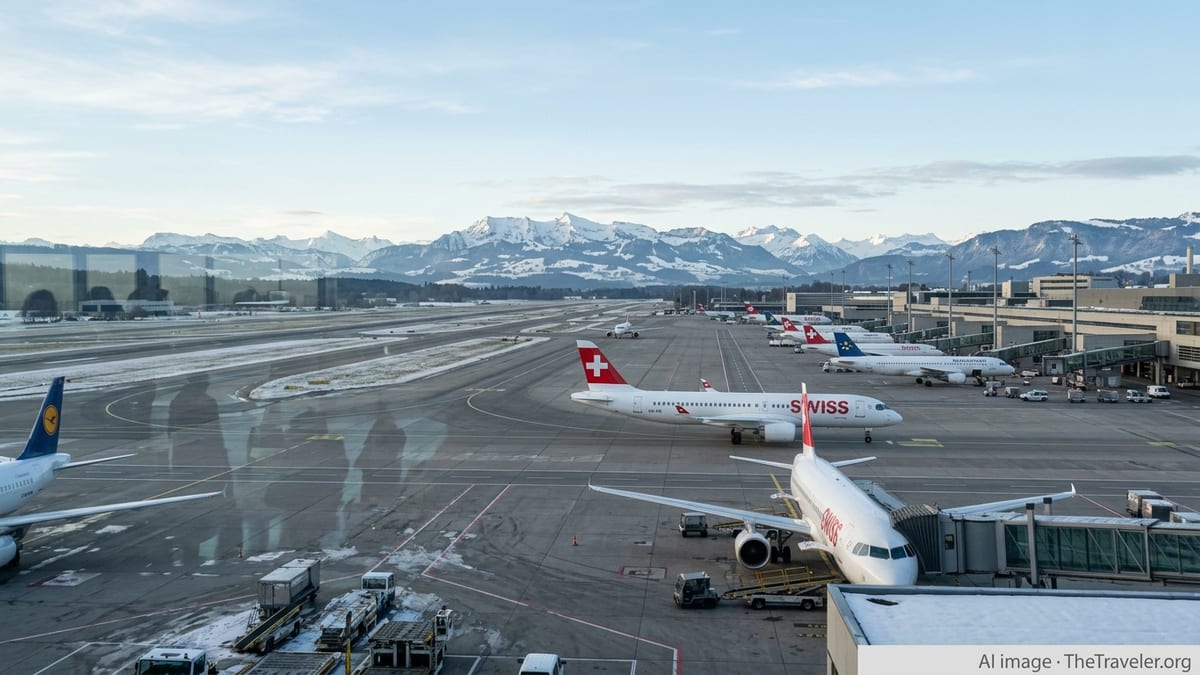
Switzerland is stepping up calls for a comprehensive rethink of how the European Union’s Emissions Trading System (EU ETS) applies to aviation, arguing that the current design risks weakening European airlines in global competition while falling short of what is needed to accelerate worldwide decarbonization of air travel.
Get the latest news straight to your inbox!
Linked Carbon Markets Under Growing Strain
Switzerland’s aviation sector has been closely intertwined with the EU’s carbon market since the Swiss Emissions Trading System was formally linked to the EU ETS in 2020. The linkage means that flights within Switzerland and flights between Switzerland and the European Economic Area are effectively subject to a single, interconnected carbon price, with emission allowances recognized on both sides of the border. Publicly available documentation from Swiss federal authorities shows that aviation is now firmly embedded in this shared framework, alongside stationary industrial and power installations.
As climate policy in Europe tightens, the effective cap on aviation emissions in both systems is falling more rapidly. Recent updates to Swiss law brought the national ETS into even closer alignment with revised EU rules, including a linear reduction factor for aviation allowances of more than 4 percent per year and a progressive shift from free allocation to auctioning. Policy papers from Switzerland emphasize that the aim is to preserve the integrity of a common carbon market, but they also note that these parallel reforms magnify the impact of EU ETS decisions on Swiss-based carriers.
Swiss officials and industry stakeholders increasingly frame aviation ETS reform as a European competitiveness issue rather than a purely domestic concern. Because the Swiss ETS is linked to the larger EU system, any structural imbalance that disadvantages European airlines relative to long-haul competitors from other regions is quickly transmitted into the Swiss market. This has prompted calls in Switzerland for a more strategic overhaul of aviation carbon pricing at European level, rather than piecemeal technical adjustments.
Concerns Over Competitive Distortions on Long-Haul Routes
One of Switzerland’s central concerns is the emerging disparity between how the EU ETS treats European airlines and how other jurisdictions regulate international flights. Under the current design, EU carbon pricing applies to flights within the European Economic Area and to departures to a limited number of destinations, while international climate rules under the global CORSIA scheme remain comparatively modest. European airlines operating from hubs such as Zurich, Geneva, Frankfurt or Paris face rising carbon compliance costs on large parts of their networks, even when direct competitors from non-European hubs do not face comparable carbon prices for similar long-haul journeys.
Industry analyses cited in Swiss policy debates highlight the risk that long-haul passengers could be nudged to re-route itineraries through non-European hubs to avoid higher ticket prices associated with EU ETS costs. For a transfer-focused market like Switzerland, where many intercontinental travelers connect via Zurich, such a shift could erode traffic volumes and profitability for European carriers while doing little to reduce global emissions if passengers simply change routing rather than flying less.
Swiss stakeholders therefore argue that a deeper overhaul of the EU ETS should seek to minimize carbon leakage in aviation, where emissions are displaced rather than reduced. Suggestions discussed in public consultations include more globally aligned coverage of international flights, better coordination with CORSIA to avoid double regulation, and mechanisms that level the playing field between European and non-European hubs. The objective, according to published Swiss documents, is to design carbon pricing that genuinely changes fleet and fuel choices worldwide instead of merely redistributing traffic flows.
Driving Investment in Sustainable Aviation Fuels
Another pillar of Switzerland’s push for change is a stronger link between carbon pricing revenues and concrete decarbonization measures, particularly sustainable aviation fuels. The revised Swiss CO2 Act, which entered into force in 2025, created an aviation and climate funding programme that channels proceeds from auctioned aviation allowances into projects such as the production and deployment of renewable jet fuels. Official programme descriptions emphasize that such targeted use of ETS revenues is intended to accelerate technology shifts rather than simply increase operating costs for airlines.
At European level, the EU ETS has also begun to support sustainable aviation fuels, with new rules defining how allowances can be used to incentivize fuel switching. Switzerland’s position papers indicate that an overhauled ETS architecture should greatly expand this approach, ensuring that higher carbon prices on fossil kerosene go hand in hand with predictable, long-term support for low carbon alternatives. Advocates in Switzerland argue that this is essential if European airlines are to renew fleets, sign long-term offtake agreements for sustainable fuels and maintain connectivity, rather than respond to rising costs by cutting marginal routes.
For travelers, these policy shifts are likely to be most visible in ticket pricing and in the growing presence of sustainable aviation fuel surcharges across European networks. Swiss-based carriers have already begun integrating the cost of sustainable fuel quotas into freight and passenger pricing. An ETS overhaul that hardwires stronger SAF incentives could make such surcharges a permanent feature, but supporters in Switzerland contend that this would help secure the long-term viability of European hubs by anchoring green innovation in the region.
Balancing Climate Ambition With Tourism and Connectivity
Switzerland’s aviation sector underpins a significant share of the country’s tourism economy, from alpine resorts to city-break destinations such as Zurich, Geneva and Basel. European travelers arriving by air generate substantial revenue for hotels, ski operators and cultural attractions, while outbound Swiss travelers rely on competitive air links to reach destinations across the continent and beyond. Policymakers in Bern have increasingly framed their ETS concerns in this broader context, warning that poorly calibrated carbon rules could reduce direct connectivity for smaller regional airports and tourism-dependent regions across Europe.
Analyses from aviation and tourism bodies suggest that the combination of higher carbon prices, full auctioning of emissions allowances and parallel obligations to blend sustainable aviation fuels could place particular strain on short-haul and seasonal routes that are important for leisure travel. If costs rise more quickly than demand can absorb, airlines may concentrate capacity on a smaller number of high-volume routes, leaving peripheral destinations with fewer frequencies or no direct service. Switzerland is urging EU partners to factor these knock-on effects into any overhaul of the ETS, arguing that a well-designed system should preserve essential connectivity while still sending strong decarbonization signals.
Travel industry observers note that these concerns are not limited to Switzerland. Many European regions dependent on air access for tourism, including mountain, island and rural areas, face similar vulnerabilities. From Switzerland’s perspective, recalibrating the EU ETS to account for these realities is not a plea for weaker climate policy, but rather a call for more nuanced instruments that distinguish between discretionary emissions growth and routes that provide critical access to remote destinations.
Positioning Europe in a Global Decarbonization Race
Switzerland’s push for a comprehensive EU ETS overhaul ultimately reflects a wider question about Europe’s role in shaping global aviation decarbonization. European climate law is among the most stringent in the world, and the EU ETS has become a reference point for carbon markets on other continents. Swiss climate strategies emphasize that this leadership can only be sustained if the system is perceived as both environmentally effective and economically fair, particularly in sectors exposed to global competition such as aviation.
By advocating clearer coordination between the EU ETS, the Swiss ETS and international schemes like CORSIA, Switzerland is effectively arguing for a more outward-looking European carbon regime. Publicly available Swiss planning documents point to scenarios in which aviation emissions continue to grow globally despite regional carbon pricing, unless major markets converge around similar rules and incentives for clean technologies. A more strategic EU ETS design, they argue, could catalyze this convergence by demonstrating how robust carbon pricing can go hand in hand with industrial competitiveness and reliable air connectivity.
For travelers and the wider tourism industry, the outcome of these debates will shape the cost, availability and climate footprint of air journeys across Europe over the coming decade. Switzerland’s call for a complete overhaul of the aviation chapter of the EU ETS highlights the growing realization that carbon markets are no longer a niche technical tool, but a central driver of how, where and how often Europeans fly.