

More news on this day
Switzerland is moving into line with Europe’s strictest holiday hotspots, reinforcing a web of local rules and fines that now puts it alongside Turkey, Italy, Portugal, Spain and France in using financial penalties of more than €250 to rein in problem tourism, protect historic sites and support more sustainable travel.
Get the latest news straight to your inbox!
Europe’s New Era of High Fines for Misbehaving Tourists
Across Europe, popular destinations are rapidly expanding a patchwork of tourist restrictions, with fines that can easily exceed €250 for behavior once dismissed as holiday high jinks. Travel industry reports show a clear trend: cities and resort regions are turning to steep penalties to address overtourism, noise, litter, overcrowded heritage sites and disrespect for local norms.
In Italy, measures range from Venice’s controls on day-trippers and bans on swimming in canals to rules at Rome’s Spanish Steps, where sitting, eating or dragging luggage on the fragile marble can lead to fines in the hundreds of euros. In Spain, beach destinations and city centers have introduced sanctions for public drunkenness, wearing only swimwear away from the seafront, reserving sunbeds and other nuisance behavior, with penalties commonly starting around €200 to €250 and rising sharply for repeat offenders.
Portugal and France have followed similar paths. Coastal hotspots in Portugal now levy some of Europe’s highest tourist penalties, with reports of fines climbing into four figures for inappropriate dress or disruptive conduct in towns near beaches. In France, new national tobacco rules and local by-laws in resort areas have expanded smoke-free zones in parks and on beaches, with on-the-spot fines that add to existing measures targeting littering, vandalism and damage to monuments.
Turkey has also toughened its stance, particularly in busy resort areas and on flights serving its coastal airports, with penalties for unsafe or disorderly conduct and additional local rules intended to ease pressure on city centers and seafront promenades. Together, these changes have shifted the risk calculus for visitors: what might once have meant a warning or a small local ticket can now cost hundreds of euros and, in some extreme cases elsewhere in Europe, more than €1,000.
How Switzerland Is Quietly Tightening Tourist Conduct
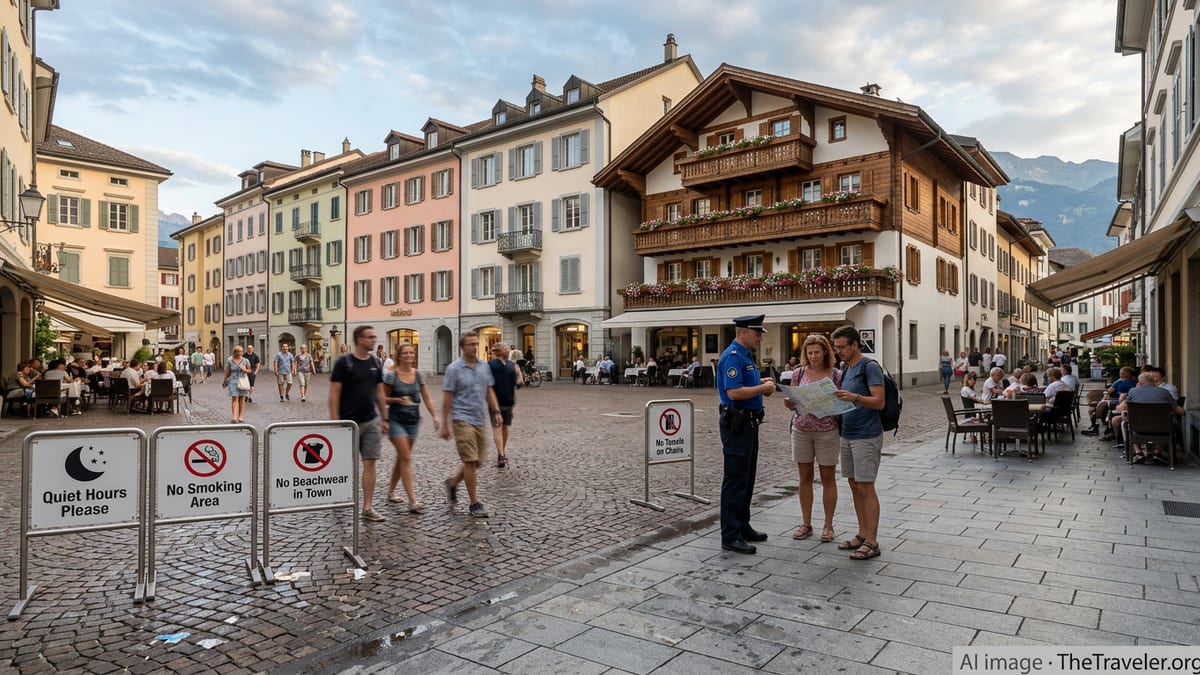
While Switzerland has not introduced a single nationwide “tourist law,” publicly available information indicates that it is increasingly relying on municipal ordinances and cantonal rules that apply equally to residents and visitors, but which carry particular implications for holidaymakers. These rules typically concern noise, littering, wildlife feeding, traffic, and respectful behavior in historic centers, lakeside resorts and mountain villages.
Major Swiss cities, including Zurich, Geneva, Lucerne and Bern, enforce strict regulations on public cleanliness and waste disposal. Fines for dropping litter, leaving rubbish in public spaces or ignoring recycling rules can quickly climb into several hundred francs, a level comparable to or above €250 at current exchange rates. Similar penalties may apply to graffiti or minor vandalism affecting public transport, station areas and historic façades that attract large numbers of tourists.
Noise rules are another focus. Switzerland’s reputation for quiet residential districts, lake promenades and mountain resorts is underpinned by detailed local regulations on late-night noise, amplified music and vehicle sound levels. In some cantons, pilot projects have used sound meters to identify excessively loud vehicles, while many municipalities apply fines for loud parties, street disturbances or shouting after quiet hours. For visitors staying in short-term rentals or hotels in old town districts, breaches can quickly become an expensive surprise.
Wildlife protection and public health concerns also play a role. Several Swiss cities have rules discouraging or prohibiting feeding pigeons and other urban wildlife, citing disease risks and damage to buildings and monuments. Tourists gathering in waterfront squares or by historic fountains may not always realize that tossing food to birds can lead to fines, particularly where signage or local campaigns highlight the issue as part of broader efforts to preserve urban heritage.
Protecting Heritage Sites, Landscapes and Local Life
The shift toward stricter enforcement in Switzerland mirrors developments in Italy, Spain, Portugal and France, where popular heritage sites and natural landscapes have struggled with crowding, erosion and loss of local character. Across Europe, local governments and tourism boards frame these fines as tools to preserve cultural identity and protect UNESCO-listed areas, historic quarters and fragile coastlines.
In Italian cities such as Venice, Florence and coastal villages along the Cinque Terre, reports describe enforcement against swimming in canals, picnicking on church steps or straying from marked trails. Spain’s clampdowns on party tourism in island archipelagos and urban centers are presented as measures to safeguard residents’ quality of life and prevent damage to historic centers and waterfronts. Portugal’s coastal regulations and France’s expansion of no-smoking zones in parks and on beaches are likewise explained as steps toward cleaner, healthier public spaces.
Switzerland’s approach leans heavily on the concept of shared responsibility. Federal tourism strategy documents emphasize sustainability, efficient public transport, protection of biodiversity and careful management of visitor flows in mountain regions and lakeside towns. Local rules on trail etiquette, camping, campfires, drones and swimming in rivers and lakes serve not only to protect visitors, but also to reduce erosion, safeguard wildlife and maintain water quality in areas that are heavily marketed as pristine escapes.
As with other European countries, there is also a social dimension. Restrictions on disruptive stag-party style behavior, large unsanctioned gatherings or excessive street drinking in scenic old towns are intended to ensure that tourism revenue does not come at the cost of residents’ daily lives. In practice, this can mean that a group’s late-night singing, loud music in a riverside park or disrespectful behavior at a war memorial may lead to fines aligned with the more severe penalties appearing across the continent.
Tourist Taxes and the Push for Sustainable Tourism
Alongside behavioral fines, many European destinations have expanded tourist taxes and entry fees, arguing that visitors should help pay for the costs of maintaining public spaces, cleaning historic centers and investing in sustainable infrastructure. Italy has announced higher tourist taxes in certain cities and new access fees in highly visited areas, including measures aimed at day-trippers. Spain and France have also adjusted local levies on overnight stays, while Portugal has used taxes to fund coastal protections and urban services in popular districts.
Switzerland has long used local tourism taxes on overnight stays, and recent policy papers highlight a goal of positioning the country as a leading sustainable destination. These charges, typically collected through accommodation providers, support local visitor infrastructure, trail maintenance, public transport discounts and cultural programming. While not fines in the punitive sense, they form part of a broader framework in which visitors contribute more directly to the upkeep of the areas they enjoy.
In European debates on overtourism, these financial tools are increasingly linked to climate and environmental objectives. Limiting cruise ships in sensitive ports, restricting private vehicles in old towns and encouraging rail-based travel are presented as ways to cut emissions and reduce congestion. Switzerland’s high reliance on trains, mountain railways and cable cars fits this trend, and many regional tourism strategies refer to encouraging car-free stays, promoting off-season travel and diversifying visitor flows beyond a handful of heavily photographed spots.
Together, higher tourist taxes and tougher fines reflect a recalibration of Europe’s tourism model. Destinations known for open access are now putting a price on environmental pressure, crowding and disrespectful behavior, with the expectation that visitors adapt or pay significantly more.
What Visitors Need to Know Before Traveling
For travelers planning trips to Switzerland and neighboring countries such as Turkey, Italy, Portugal, Spain and France, the new enforcement reality means preparation is essential. While specific rules differ by city and region, visitors can expect stricter oversight of behavior at beaches, in historic squares, near monuments and on public transport. Activities that once drew little more than a frown now come with clearly posted penalties, often starting around the €200 to €250 mark and in some cases rising much higher.
Before departure, travelers are advised to review up-to-date local guidance on tourist rules for each destination and season, paying special attention to regulations on alcohol in public spaces, noise, dress codes away from the beach, appropriate conduct at religious and cultural sites, and restrictions on drones or photography around sensitive areas. In Switzerland, checking municipal information for specific cities or mountain regions can clarify expectations on quiet hours, waste disposal, trail use and bathing in lakes and rivers.
On the ground, practical steps such as respecting signage, avoiding sitting or climbing on monuments, wearing street-appropriate clothing once away from the seafront, keeping music low and disposing of litter correctly can minimize the risk of hefty penalties. Travelers should also be aware that local police or inspectors may issue on-the-spot fines payable immediately, and that ignorance of a regulation rarely leads to leniency where clear signage or prior public information campaigns exist.
For Europe’s most visited destinations, including Switzerland’s alpine resorts and lake cities, the message is that tourism is still welcome but must be better managed. Visitors who adapt to local expectations and embrace quieter, more respectful forms of travel are likely to find that these stricter rules preserve the very qualities that drew them in the first place, from intact historic centers to clean lakes and unspoiled mountain trails.