

More news on this day
Hundreds of passengers across Australia faced major disruption as Sydney Airport recorded 14 flight cancellations and 299 delays in a single day, causing knock-on impacts for services operated by Virgin Australia, Qantas, United Airlines, Air Canada and others on key routes to Gold Coast, Brisbane, Melbourne, Moree and Adelaide.
Get the latest news straight to your inbox!
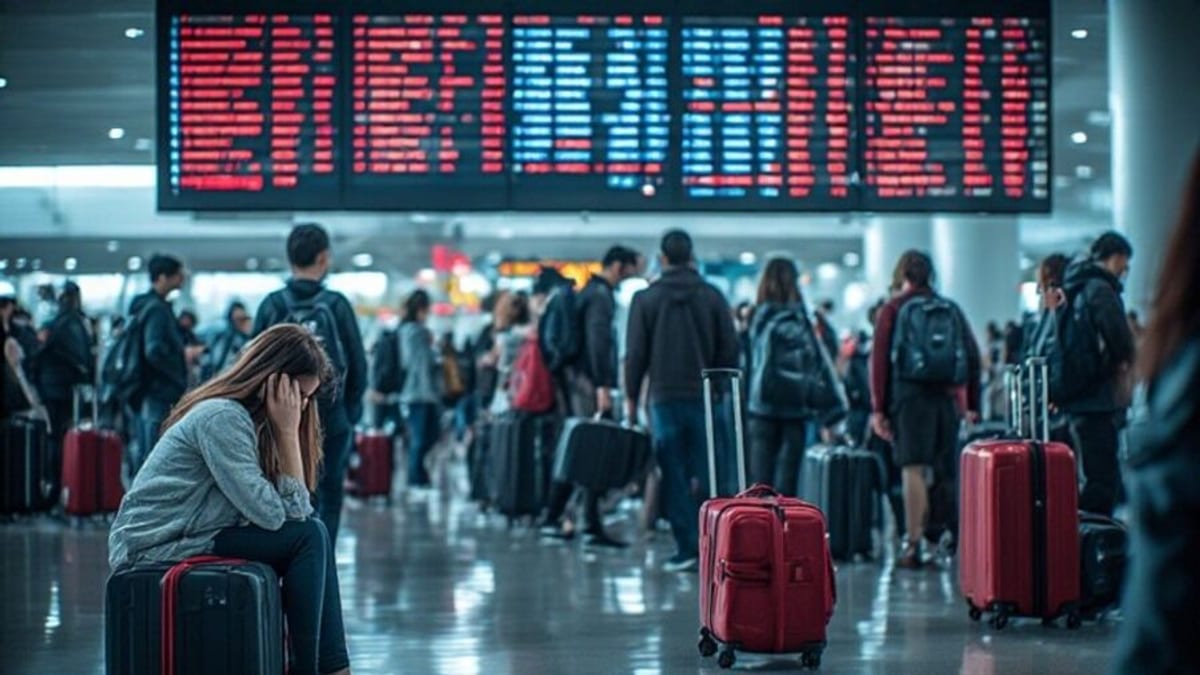
Image by Latest International / Global Travel News, Breaking World Travel News
Weather Turbulence and Capacity Limits Converge Over Sydney
Published coverage and live tracking data for late March 2026 indicate that a combination of strong winds and air traffic management restrictions over Sydney led to significant disruption across the domestic and international network. Reports from aviation observers describe gusty conditions and low cloud around Sydney Kingsford Smith Airport, prompting ground delays and tighter spacing between arrivals and departures.
As traffic flow was reduced, the number of available take-off and landing slots fell, forcing airlines to reschedule or cancel services. While individual carriers make final decisions on whether to cancel particular flights, publicly available information shows that on this day at least 14 scheduled services at Sydney did not operate, and almost 300 more ran late.
The disruption coincided with a busy travel period, amplifying the impact on passengers connecting across Australia and beyond. Several long-haul services to and from North America and Asia were delayed, further complicating the task of getting travellers to their final destinations.
Industry reports have previously highlighted the vulnerability of Sydney’s tightly managed runway system during adverse weather, and the latest disruption again exposed how quickly timetable reliability can deteriorate when capacity is reduced.
Domestic Routes to Gold Coast, Brisbane, Melbourne, Moree and Adelaide Hit Hard
The worst of the operational chaos was felt on Sydney’s core domestic corridors, where high-frequency services make the network particularly sensitive to delays. Publicly accessible flight boards and data services for the affected day show repeated knock-ons on the Sydney to Brisbane, Gold Coast and Melbourne routes, with schedules heavily compressed and aircraft rotated at short notice.
Flights linking Sydney with Adelaide and regional New South Wales destinations such as Moree also experienced disruption as aircraft and crews were diverted to cover late-running services on busier city pairs. Passengers on some regional links were left waiting for rolling updates as airlines assessed whether services could still operate within crew duty limits.
Travellers heading to leisure hubs on the Gold Coast and in Queensland’s southeast faced extended waits in departure lounges after morning delays cascaded into the afternoon. Reports indicate that some passengers were offered rebooking onto later same-day services, while others were moved to flights the following day when capacity ran out.
The impact was not confined to departures from Sydney. Return flights into the city from Brisbane, Melbourne, Adelaide and the Gold Coast experienced their own delays as they queued for arrival slots, in some cases circling or diverting until conditions allowed a safe landing.
Virgin Australia, Qantas and Jetstar Bear the Brunt
With Virgin Australia and Qantas operating the bulk of domestic services in and out of Sydney, their schedules absorbed most of the disruption. Tracking data and published coverage show multiple delays on trunk routes such as Sydney to Brisbane and Sydney to Melbourne, where high aircraft utilisation leaves limited room to recover from schedule shocks.
Budget carrier Jetstar, which also relies heavily on Sydney as a hub for services to the Gold Coast, Melbourne and Adelaide, reported significant lateness across its network, reflecting how low-cost models can be particularly exposed when a single delay propagates through consecutive sectors.
Passengers shared experiences on social media of rolling departure times, crowded customer service desks and difficulty securing alternative seats once flights were cancelled. Some travellers reported being re-accommodated via indirect routings, for example travelling Sydney to Melbourne and then on to Adelaide or Brisbane when direct options were no longer available.
Public data from previous months already pointed to pressure on on-time performance at Sydney, and the latest weather disruption has renewed scrutiny of whether airlines and the broader aviation system have enough buffers in place to absorb shocks without widespread cancellations.
International Carriers United and Air Canada Also Affected
The disruption extended beyond domestic routes, snaring international airlines that depend on timely Sydney departures to maintain complex global schedules. Long-haul services by United Airlines and Air Canada experienced delays as they waited for departure clearance or for incoming aircraft and crews to arrive from other Australian cities.
When long-distance flights from Sydney to North America depart late, the effects ripple into subsequent rotations, with potential delays for passengers connecting onward in hubs such as San Francisco, Vancouver or Toronto. On busy transpacific days, even moderate hold-ups in Sydney can lead to missed connections and the need to rebook large numbers of travellers.
While the number of outright cancellations among international flights remained lower than on the domestic side, extended ground delays at Sydney left some travellers facing missed same-day connections and unplanned overnight stays. According to publicly available information from airline status pages, rebooking options were constrained on certain routes where only one service operates per day.
Operational experts note that Sydney’s curfew, which prohibits most departures and arrivals during overnight hours, limits the ability of international carriers to recover from daytime disruption by scheduling extra late-night flights, further tightening the margins when weather or airspace restrictions intervene.
Calls Grow for Better Resilience and Passenger Support
The latest wave of cancellations and delays has renewed debate over how well Australia’s aviation system is equipped to manage increasingly frequent weather and capacity events. Consumer advocates and travel industry commentators are drawing attention to the recurring pattern of holiday and weekend disruption, particularly at major hubs such as Sydney.
Recent government and industry reports on airline on-time performance already show elevated rates of delays and cancellations on key domestic routes, with Sydney often identified as a bottleneck when conditions deteriorate. The events surrounding the 14 cancellations and 299 delays are being viewed in that broader context of systemic strain.
There are growing expectations that airlines improve real-time communication with passengers, provide clearer guidance on compensation and accommodation options where applicable, and invest in operational buffers such as additional aircraft and crew reserves. Some analysts also point to the forthcoming opening of Western Sydney Airport as a potential long-term pressure valve, although it will not address current congestion at Kingsford Smith in the short term.
For now, travellers using Sydney and its connected airports at the Gold Coast, Brisbane, Melbourne, Moree and Adelaide are being reminded by travel advisers to allow extra time for connections, monitor flight status closely, and consider travel insurance that covers delays and cancellations during periods of heightened operational risk.