

More news on this day
A mass outage of Baidu’s Apollo Go robotaxis in the central Chinese city of Wuhan has left more than 100 driverless vehicles frozen in live traffic, trapping passengers on elevated highways and busy arterials and raising new questions about how cities manage large autonomous fleets.
Get the latest news straight to your inbox!
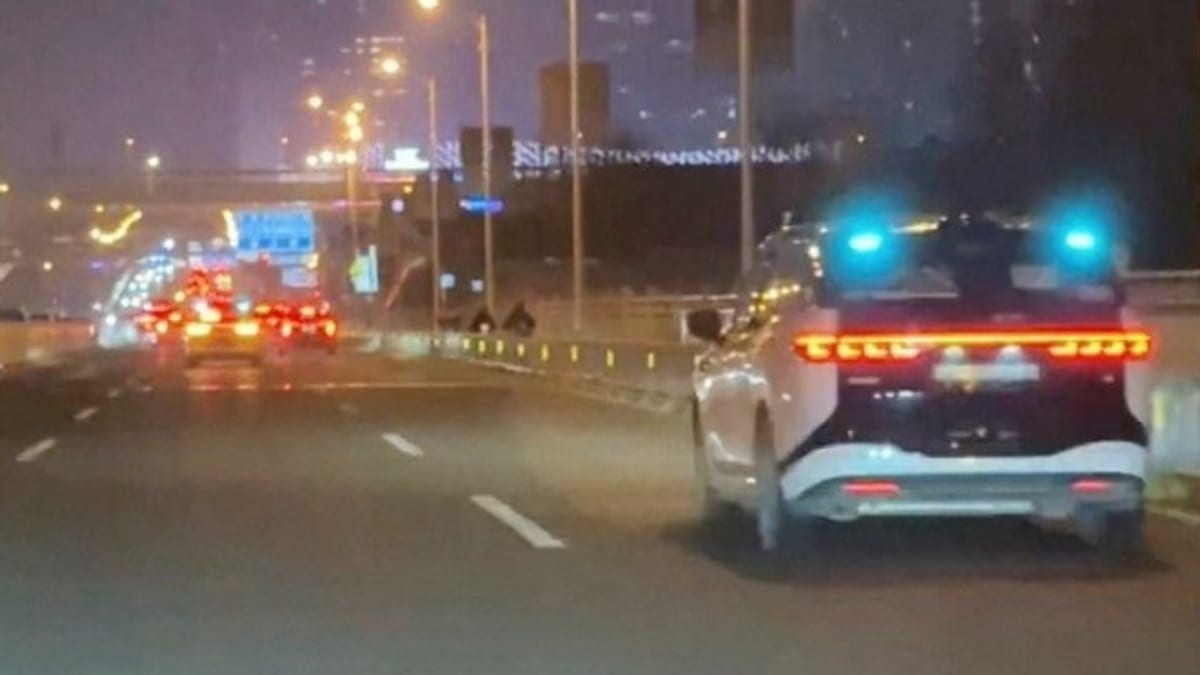
Robotaxis stop in place across key Wuhan corridors
Publicly available reports indicate that the disruption began on the evening of March 31, 2026, when Apollo Go vehicles operating across downtown Wuhan abruptly stopped where they were, some in middle lanes of expressways and multi-lane city roads. The service is one of the world’s largest commercial robotaxi programs, with hundreds of vehicles licensed to operate in the metropolis of more than 11 million residents.
According to descriptions compiled from Chinese and international media coverage, in-car screens in affected robotaxis displayed warnings about a driving system malfunction and instructed riders to wait for assistance. In several cases, passengers reported remaining inside stationary vehicles for up to 90 minutes, with traffic continuing to flow at speed around them.
Traffic images circulating on Chinese social platforms and referenced in technology and automotive trade coverage show driverless taxis stopped in active lanes, including on elevated roadways and ring roads. Some vehicles reportedly came to a halt in overtaking lanes, complicating efforts by human-driven cars and trucks to navigate around them.
Wuhan traffic police and transport authorities, as cited in local media summaries, have described the event as a system malfunction affecting more than 100 vehicles, without specifying whether the issue stemmed from onboard software, communications links, or back-end fleet management systems.
Passengers stranded, minor collisions reported but no injuries
Passengers’ accounts collated from Chinese outlets and international summaries portray a confusing wait inside sealed vehicles that had stopped without warning. Some riders indicated that they were able to open doors and exit when their cars were in slower or lighter traffic, while others said on-screen instructions and fast-moving vehicles on either side made them reluctant to step out.
Automotive and technology news reports referencing Wuhan police statements note that no injuries were recorded, despite the number of stalled vehicles and the complexity of the road network where they stopped. However, several outlets describe rear-end collisions and minor crashes as drivers attempted to avoid suddenly immobilized robotaxis.
Commentary in regional business media suggests that the lack of serious injuries may be attributed partly to quick reactions by nearby drivers and human traffic officers, as well as to the relatively short duration of the outage in many locations. Nonetheless, the sight of unoccupied, sensor-topped cars sitting motionless in traffic has sparked concern among residents and social media users about how such systems behave when something goes wrong.
For Apollo Go, which had been highlighted as a showcase for large-scale autonomous mobility in everyday urban conditions, the incident represents an unplanned stress test of emergency procedures, remote support capacity, and coordination with local traffic management.
Investigators focus on fleetwide “system malfunction”
Available official statements, as summarized in Chinese and international news coverage, emphasize that the shutdown is believed to have arisen from a system malfunction rather than from weather, infrastructure damage, or a single-vehicle technical fault. Reports referencing Wuhan police and transport regulators state that a detailed investigation is underway, though no timeline has been given for public findings.
Analyses in technology and mobility media highlight that the scale of the disruption differentiates it from more familiar single-vehicle glitches. A failure affecting more than 100 Level 4 autonomous vehicles simultaneously suggests a problem at the system architecture level, potentially involving cloud-based decision-making, high-definition map services, or over-the-air software updates.
Industry commentators note that driverless fleets are designed with “minimum risk” responses that aim to prioritize safety by bringing vehicles to a controlled stop when they encounter unexpected conditions. In Wuhan, however, the concentration of stalled vehicles on elevated highways and through-traffic lanes has prompted questions about whether current definitions of minimum risk sufficiently account for dense, multilane urban infrastructure.
Regulatory specialists following the sector point out that China has encouraged rapid deployment of robotaxis in select cities as part of a broader national drive in autonomous and smart transportation, while also signaling that high-profile incidents can prompt tighter technical standards and more detailed requirements for fail-safe behavior.
Global spotlight on robotaxi reliability and urban resilience
The Wuhan shutdown comes after a series of autonomous-vehicle disruptions in other markets, including widely reported traffic jams involving driverless taxis in San Francisco during a citywide power outage in late 2025. In that case, robotaxis operated by another provider reportedly entered safe-stop modes when traffic signals lost power, but the resulting clusters of stalled vehicles contributed to congestion on key streets.
Comparisons drawn in international coverage suggest that while individual autonomous-vehicle mishaps such as blocked intersections or vehicles confused by road work have become more routine, mass-scale outages are still rare. When they do occur, they tend to expose dependencies on cloud infrastructure, digital mapping, and power and communications networks that are not always visible to passengers.
Urban mobility analysts quoted across business and transport outlets argue that incidents like Wuhan’s are likely to inform how cities integrate driverless fleets into broader transport planning. Possible areas of focus include clearer in-vehicle guidance for passengers during emergencies, designated safe-landing spots on elevated or limited-access roads, and protocols for rapidly towing or manually moving disabled autonomous cars.
For travelers and residents in cities experimenting with robotaxis, the event underscores both the promise and the fragility of automated mobility. While autonomous fleets can, in theory, reduce congestion and crashes over time, their reliance on complex, interconnected systems means that a single failure can ripple across dozens of vehicles at once, turning an ordinary commute into an unexpected test of emerging technology.
What the Wuhan incident means for future travelers
Travel and tourism outlets following the story note that Wuhan has marketed its robotaxi network as part of a broader image as a forward-looking technology hub, offering visitors a glimpse of the future of urban transport. The sight of driverless cars gliding through dedicated pick-up zones had become a modest attraction for tech-curious travelers.
In the wake of the outage, commentators suggest that visitors may pay closer attention to how robotaxi operators communicate safety information, including emergency exit guidance and contact options for remote support. Some analysts also expect more prominent signage and instructions at pick-up points, especially in areas where vehicles enter high-speed corridors soon after departure.
Travelers considering autonomous rides in pilot cities are being encouraged by consumer advocates and mobility researchers to view the Wuhan event as a reminder to stay situationally aware, even in a driverless vehicle, and to familiarize themselves with basic emergency features such as manual door releases and SOS call buttons.
As investigations continue in Wuhan, the incident is likely to shape public debate about how quickly driverless services should scale and what safeguards must be in place before fleets become a routine part of airport transfers, hotel shuttles, and cross-town trips. For now, the March 31 malfunction stands as one of the clearest examples yet of how a technical glitch in a centralized system can strand both locals and visitors in the middle of their journeys.