

More news on this day
A mass “system malfunction” that abruptly stopped hundreds of driverless taxis across the Chinese city of Wuhan has left passengers stranded in live traffic and renewed global questions about the resilience of robotaxi networks when software fails.
Get the latest news straight to your inbox!
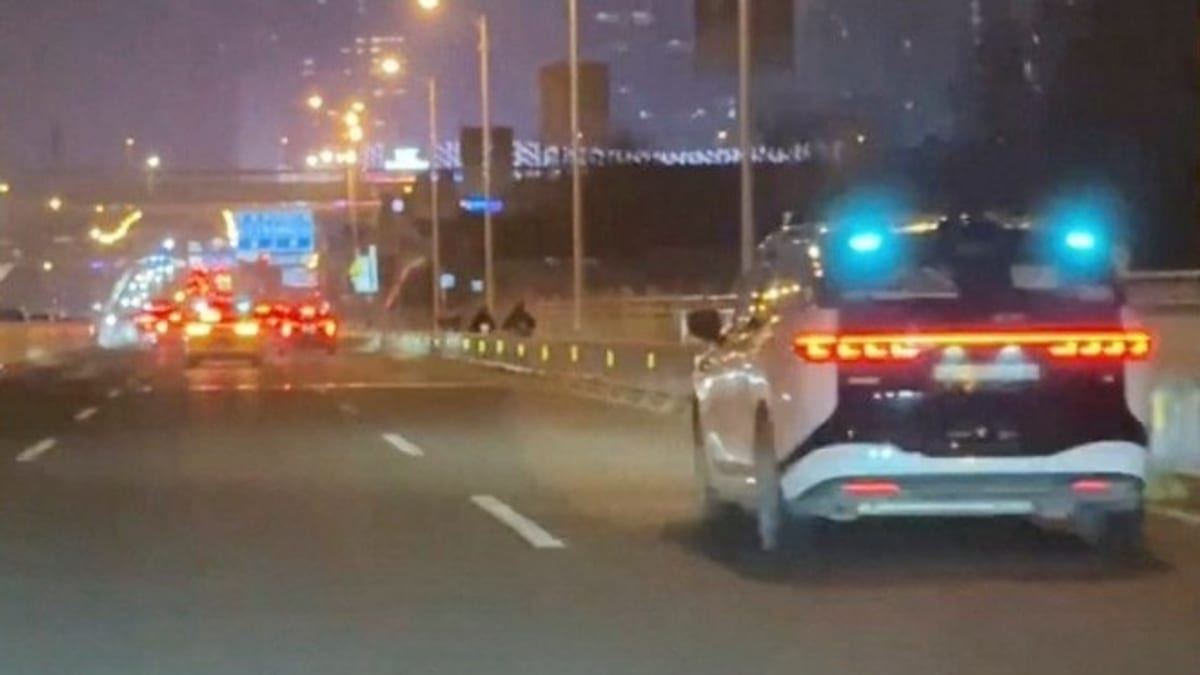
Robotaxis Freeze Across Wuhan Highways
Publicly available information from Chinese and international outlets indicates that on the evening of March 31 and into April 1, Baidu’s Apollo Go robotaxis began stalling almost simultaneously on multiple roads in Wuhan, a central Chinese metropolis that has become a major test bed for autonomous vehicles. Reports describe cars halting in lanes of fast-moving traffic and at busy intersections, in some cases without the ability to immediately pull to the shoulder.
Accounts compiled in domestic Chinese media and outlets such as the Associated Press and The Guardian suggest that more than 100 vehicles were affected, with some passengers stuck in their seats for extended periods while traffic continued to flow around them. In at least several cases, riders were reportedly able to open doors and exit onto the roadway, heightening concerns about pedestrian safety in a high-speed environment.
Police in Wuhan have attributed the disruption to a system failure affecting the Apollo Go fleet, but detailed technical explanations had not been made public by April 3. Baidu’s service, one of the world’s largest commercial robotaxi deployments, operates over extensive mapped zones in Wuhan, which magnified the impact when multiple vehicles faltered at once.
No serious injuries have been publicly linked to the outage so far, but images shared across Chinese social platforms and referenced in international coverage show lines of stalled robotaxis surrounded by conventional traffic, reinforcing how quickly a software issue can escalate into a citywide mobility problem.
Passengers Report On-Screen Error Messages and Long Waits
Rider testimonies gathered by Chinese news outlets and summarized in English-language reporting describe a pattern that suggests an abrupt, centrally triggered shutdown rather than isolated vehicle glitches. One passenger recounted that their robotaxi stopped shortly after making a turn, displaying an in-car notification that the driving system had malfunctioned and that staff would arrive within minutes.
In practice, assistance reportedly took significantly longer to materialize for some riders. Passengers described pressing emergency buttons in the vehicles to reach remote support, only to remain in stalled cars surrounded by live traffic. In several cases cited in local coverage, riders chose to exit the vehicles on their own after determining that doors could be opened and that there was a safe gap in traffic.
These experiences underline a critical design challenge for fully driverless services: riders are dependent on the vehicle and remote operators not only for navigation, but also for basic decisions about when it is safe to exit. When a fleet-wide software or communications problem arises, that dependency can leave paying passengers caught between automated instructions and real-world traffic risks.
The outage in Wuhan has also sparked online discussion inside China about how robotaxis communicate during emergencies, with commentators questioning whether in-car messages and remote support protocols are adequate for non-technical users who may panic when a driverless car stops unexpectedly on a busy road.
Global Pattern of Robotaxis Stalling in the Street
The Wuhan malfunction is the latest and most dramatic example of a recurring issue for robotaxi operators worldwide: vehicles going static in precisely the locations where they cause the most disruption. In the United States, separate reports over the past year have documented clusters of Waymo robotaxis stalled across San Francisco during a power outage, as well as empty vehicles hesitating or freezing at intersections in Los Angeles’ Culver City.
Coverage in outlets such as Axios and local California media has described robotaxis blocking emergency vehicles, stopping in front of fire stations, or becoming confused by temporary traffic changes and construction zones. Earlier, in San Francisco, outages at another operator prompted images of driverless cars clogging major streets after losing connectivity to remote monitoring systems.
Industry analysts interviewed in recent months by publications including Wired and TechCrunch have argued that these stoppages, while rarely resulting in serious crashes, can still pose significant safety and infrastructure risks. Each stalled vehicle effectively becomes an unplanned obstacle, forcing human drivers and cyclists to improvise evasive maneuvers and complicating routes for ambulances and fire engines that rely on seconds of response time.
Against this backdrop, the Wuhan incident is being viewed by mobility experts as a large-scale stress test of how an advanced robotaxi city responds when the technology itself becomes the source of congestion. The sight of dozens of driverless cars immobilized on elevated expressways undercuts marketing promises that autonomous fleets will automatically reduce traffic jams.
Regulators, Cities and Operators Reassessing Risk
The fallout from Wuhan is likely to feed into ongoing policy debates in multiple countries about how aggressively to expand driverless ride-hailing. Regulators in China have been positioning the nation as a leader in autonomous-vehicle deployment, while local authorities in cities like Wuhan promote robotaxis as symbols of technological progress and smart-city planning.
At the same time, regulators in the United States, Europe and Australia are already reconsidering conditions on robotaxi operations after a series of high-profile mishaps. Publicly available information from hearings, protests and court filings over the past year indicates growing interest in requiring clearer shutdown procedures, stronger fail-safe mechanisms and more transparency regarding how companies respond when fleets malfunction in public streets.
The new outage in Wuhan is likely to contribute data and imagery that advocates and skeptics alike will use to influence policy. Proponents of autonomous driving argue that software can ultimately be improved faster than human behavior on the road, while critics point to repeated examples of robotaxis freezing in complex urban environments and suggest that current systems remain too fragile to replace professional drivers at scale.
For destination cities that rely heavily on tourism and business travel, the robotaxi debate is no longer just a technical question. It has become part of broader conversations about visitor safety, reliability of local transport, and the reputational risk if visitors find themselves trapped in stalled vehicles on a foreign highway.
Implications for Travelers and Urban Mobility
For international travelers, Wuhan’s system malfunction is a reminder that riding in a driverless taxi still carries uncertainties that differ from conventional ride-hailing. Visitors who do choose robotaxis in pilot cities may want to pay close attention to in-car safety instructions, understand how to contact remote assistance, and be prepared for situations where the safest option is to remain inside the vehicle until traffic conditions make it clearly safe to exit.
From an urban-mobility perspective, the incident illustrates how intertwined digital infrastructure and physical streets have become. A single software issue can now affect hundreds of vehicles at once, turning a mobility service into a citywide traffic event. Transport planners and tourism authorities are closely watching how quickly operators can diagnose such failures, restore service and rebuild public confidence.
Despite the setback, investment and expansion plans for robotaxis show little sign of slowing in China or abroad. Companies continue to pitch autonomous fleets as a way to offer reliable rides, reduce congestion and provide late-night transport in areas underserved by transit. The question raised by Wuhan’s frozen robotaxis is not whether the technology will move forward, but how cities and travelers can ensure that when systems malfunction, they do not leave people stranded in the middle of the road.