

More news on this day
Thousands of U.S. air travelers have been stranded or severely delayed in recent days as storms, staffing gaps and infrastructure constraints combined to snarl flights at major hubs and regional airports, underscoring how fragile the national aviation network remains even when no single carrier is solely to blame.
Get the latest news straight to your inbox!
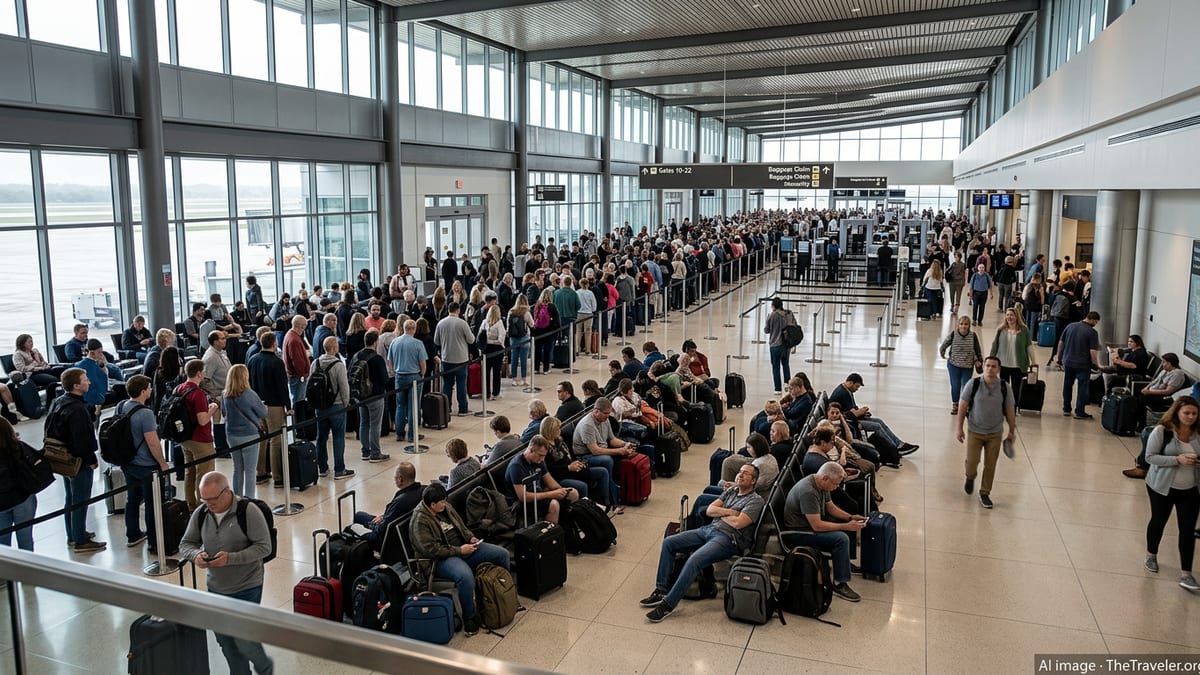
Storm Systems Turn Isolated Delays Into Nationwide Gridlock
Recent spring storms sweeping through the Midwest, South and East Coast have repeatedly pushed the national air network into gridlock, with delay totals running into the thousands on some days. Aviation tracking data cited in multiple news reports shows that storms on March 31 and April 1 disrupted operations from Chicago and New York to Texas and Florida, with several days topping 2,000 delays and hundreds of cancellations across many airlines.
Coverage of those events indicates that hubs such as Chicago O'Hare, Atlanta, Dallas Fort Worth, Houston and New York area airports have been particular choke points. When thunderstorms or low visibility force air traffic managers to slow arrival and departure rates at those major gateways, flights backed up on the ground quickly ripple across the country, affecting passengers at smaller origin and destination airports that may be seeing clear skies.
Reports from travel outlets and flight data providers describe how even a few hours of ground stops or ground delay programs can lead to missed connections, overnight strandings and broken travel chains. Because most large U.S. carriers operate hub-and-spoke networks, a disruption at one or two major hubs can strand passengers flying on multiple airlines well beyond the storm zone.
Experts cited in public analyses of these events note that such patterns are not new, but the intensity of recent weather systems and the concentration of flights into a handful of mega-hubs have left less margin for recovery. Once aircraft and crews fall out of position, the effects can last well into the next day.
National Aviation System Strains Add To Airline-Specific Problems
While many travelers instinctively blame the logo on their boarding pass, government and industry data show that a significant share of delays are categorized as national aviation system issues, not strictly airline failures. Publicly available Federal Aviation Administration summaries attribute the majority of recent disruptions to weather, airport congestion, runway capacity limits and broader airspace constraints.
These systemwide factors can force airlines to delay or cancel flights even when their own planes and crews are ready to operate. Capacity reductions announced at San Francisco International Airport, where an FAA rule change and runway work are cutting scheduled arrivals by a third, illustrate how safety-driven adjustments at a single facility can affect carriers that otherwise appear to be operating normally.
Air traffic control staffing continues to be another pressure point. Localized shortages, including recent reports of controller gaps in regions such as Southern California and the Midwest, have been linked to longer spacing between aircraft and restrictions on traffic flows during busy periods. Studies of the national airspace system describe rare but highly disruptive days when these constraints, combined with weather and heavy demand, produce cascading delays well beyond any individual airline’s control.
At the same time, airlines still bear responsibility for issues classified as within their control, such as maintenance problems or crew scheduling shortfalls. Federal consumer reports separate those air carrier delays from national system causes, illustrating how both sets of factors now frequently collide on the same travel day.
Staffing Shortages At Airports Compound Passenger Frustration
The crunch has not been limited to cockpits and control towers. Recent reporting on Transportation Security Administration staffing warns that prolonged budget disputes and missed paychecks could force cutbacks or temporary closures at some smaller airports, potentially requiring officers to be reassigned to major hubs struggling with long security lines.
Passenger accounts from busy travel days this spring describe security waits stretching past an hour at several large airports, turning what might have been a manageable flight delay into a missed departure. Where wait times balloon, airlines must hold flights if too many passengers are still in screening queues, adding another layer of uncertainty to departure boards already reshuffled by weather or airspace constraints.
Ground handling and airport operations teams are also under strain. Published analyses of recent disruption days in Texas and the Southeast highlight shortages of ramp staff, gate agents and baggage handlers that slowed aircraft turnarounds and lengthened connection times. When storms or national system constraints compress schedules into shorter operating windows, those staffing gaps become more visible to passengers stuck in crowded terminals.
Industry observers note that while airlines and airports have ramped up hiring since the pandemic recovery, demand for air travel has rebounded even faster, leaving the system vulnerable when multiple stress points collide on the same day.
Technology And Tight Schedules Leave Little Room For Error
Another factor amplifying recent chaos is the reliance on tightly timed schedules and centralized software systems. Analyses of past IT outages, including a 2024 incident involving a major cybersecurity update, show how a single technology failure can quickly strand hundreds of thousands of passengers when crew tracking or dispatch platforms go offline.
Even without a high-profile outage, airlines increasingly depend on complex algorithms to match aircraft, crews and passenger itineraries across vast networks. When storms or airspace restrictions disrupt that choreography, recovery can be slow. Flights may operate out of sequence, crews can time out under federal duty rules, and planes may end up far from where they are needed the next morning.
Researchers examining patterns of disruption in the U.S. national airspace system have identified clusters of days characterized by severe, systemwide impact, marked by widespread delays across carriers and regions. The recent wave of days featuring thousands of delays and large numbers of cancellations fits that description, reflecting how interconnected the system has become.
For passengers, the distinction between an airline-specific breakdown and a broader system strain is often academic. What they experience on the concourse is a series of rolling departure time changes, long lines at customer service desks and difficulty securing hotel rooms or rebooked itineraries when multiple carriers are competing for the same limited resources.
Travelers Bear The Brunt As Spring And Summer Loom
The timing of the latest disruptions is particularly challenging, arriving just as demand ramps up for spring holidays and ahead of the busy summer season. Travel agencies and consumer advocates are reporting elevated levels of itinerary changes and last-minute cancellations as passengers attempt to route around vulnerable hubs or storm-prone regions.
Public guidance from consumer agencies emphasizes that when a flight is canceled and a passenger chooses not to travel, they are generally entitled to a refund, regardless of whether the cause is classified as airline-controlled or a national system issue. Compensation for hotels, meals or ground transportation, however, typically depends on whether the disruption is deemed within the airline’s control, such as a crew or maintenance problem, rather than weather or airspace constraints.
Travel publications are increasingly advising passengers to build extra time into itineraries, favor earlier flights in the day and monitor conditions not only at their origin and destination but also at major hubs along their route. They also highlight the importance of tracking flights through both airline apps and independent data services, which can provide early signals of trouble elsewhere in the system.
With forecasters expecting an active storm pattern in the coming weeks and federal efforts to bolster staffing and infrastructure still in progress, analysts suggest that more days of widespread disruption are likely. For now, the latest wave of stranded passengers serves as a vivid reminder that modern air travel in the United States is shaped as much by the limits of a complex, shared system as by the performance of any single airline.