

More news on this day
TAAG Angola Airlines is reinstating direct air links between Luanda and Abidjan for the first time in over two decades, announcing a three-times-weekly service that underscores Angola’s ambitions to become a key regional hub for West and Southern Africa.
Get the latest news straight to your inbox!
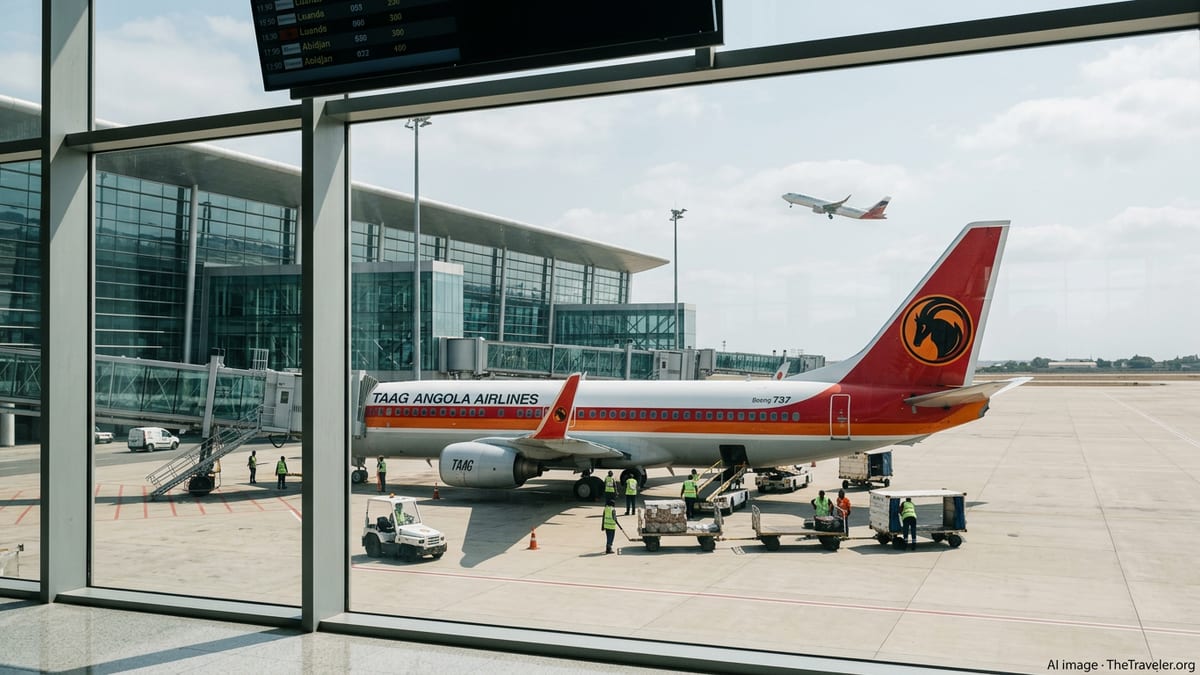
Route Relaunch Marks Strategic West Africa Push
The Angolan flag carrier has opened ticket sales for a new nonstop service between Luanda’s Dr. António Agostinho Neto International Airport and Félix Houphouët-Boigny International Airport in Abidjan, with the first commercial flight scheduled for 6 April 2026. The move formally restores a connection that TAAG last operated regularly in 2005, signaling renewed focus on West African markets.
Flights are planned to operate three times per week, on Mondays, Wednesdays and Fridays, catering to a mix of business, diplomatic and leisure traffic. The schedule has been timed to offer daylight operations in both directions, aiming to simplify travel for corporate travelers and officials moving between the two capitals.
The announcement follows months of signals from Angolan and Ivorian authorities that a direct link was a priority, amid growing volumes of trade and investment between the two economies. Angolan diplomats in Abidjan had previously highlighted rising demand from both business travelers and the West African diaspora seeking more convenient access to Southern Africa.
For TAAG, the relaunch of Abidjan forms part of a broader African expansion strategy that has recently added or reinforced services to cities such as Accra, Lagos and Nairobi. The airline is positioning itself as a connector between West, Central and Southern Africa, using Luanda as the main transfer point.
Luanda’s New Airport Anchors Regional Hub Strategy
The Luanda Abidjan service will operate from Dr. António Agostinho Neto International Airport, Angola’s new international gateway that has progressively taken over all of TAAG’s long haul and regional international flying. The modern hub, located outside central Luanda, has been designed to handle future traffic growth and to support the airline’s ambition to become a competitive African network carrier.
Angolan aviation authorities see the Abidjan route as a flagship example of how the new airport can extend the country’s reach into high potential markets across West Africa. Improved operational efficiency and additional slot availability at the new facility give TAAG greater flexibility to schedule connections to and from its expanding network.
Passengers originating in Abidjan are expected to benefit from onward connections via Luanda to destinations such as Lisbon, Johannesburg and Cape Town, as well as to regional points within Angola. The new route also lays groundwork for potential longer haul links, with industry observers noting that TAAG’s growing Dreamliner fleet is being deployed to open new intercontinental markets.
By channeling West African traffic through Luanda, Angola aims to capture a greater share of intra African travel that has historically routed through non African hubs. The strategy aligns with wider regional efforts to liberalize and integrate African air transport, even as implementation of continental aviation agreements evolves at different speeds.
Upgraded Fleet and Onboard Product for the New Route
TAAG plans to deploy the Airbus A220 300 on the Luanda Abidjan service, configured with 137 seats including a dedicated business class cabin. The type has become a workhorse for the airline on medium haul African routes, offering improved fuel efficiency, lower operating costs and enhanced passenger comfort compared with older generation aircraft.
The choice of aircraft reflects TAAG’s ongoing fleet renewal, which also includes the introduction of Boeing 787 Dreamliners for long haul operations. The newer jets are central to the carrier’s transformation program, aimed at improving reliability, passenger experience and financial performance after a challenging period for the global aviation sector.
For passengers, the A220’s wider windows, quieter cabin and modern interiors are expected to be key selling points on the roughly three hour sector between Angola and Côte d’Ivoire. Business travelers in particular are likely to welcome the dedicated premium cabin, which is designed to support corporate and governmental traffic that routinely moves between Luanda and Abidjan.
Flight times are scheduled to allow same day arrivals into both cities, with midday departures from Luanda and afternoon returns from Abidjan. This structure is intended to facilitate meetings and same day transfers while feeding into evening long haul departures from Luanda to Europe and Southern Africa.
Economic, Trade and Tourism Benefits for Angola and Côte d’Ivoire
Government officials in both countries have framed the renewed air link as an important tool for deepening economic relations. Angola and Côte d’Ivoire are among Africa’s largest oil producing and export oriented economies, and closer connectivity is expected to support energy sector collaboration, infrastructure projects and financial services activity.
Abidjan serves as a major regional headquarters city for international institutions and corporations operating across francophone West Africa, while Luanda is positioning itself as a gateway to Southern Africa’s resource and infrastructure markets. A nonstop flight between the two hubs reduces travel times, simplifies logistics and can stimulate new business travel that was previously discouraged by complex routings.
Tourism authorities also see opportunities to package combined itineraries, encouraging West African travelers to visit Angola’s Atlantic coastline and national parks, and promoting Côte d’Ivoire’s cultural and coastal destinations to Angolan residents. Improved air access is often a prerequisite for tour operators to develop and market new multi country products.
In addition, the route is expected to benefit diaspora communities and students who travel between the two countries and beyond. By integrating with TAAG’s broader African and intercontinental network, the Luanda Abidjan service could become an important link for travelers from francophone West Africa connecting onward to South America and Southern Africa.
Competitive Landscape and Outlook for Regional Connectivity
The decision to reconnect Luanda and Abidjan comes as African airlines compete to capture a larger share of intra African traffic, a market segment that remains underdeveloped compared with intercontinental flows. Regional hubs in Addis Ababa, Nairobi and Johannesburg have long dominated connecting traffic, but emerging platforms in Luanda, Accra and Kigali are steadily gaining ground.
Industry analysts note that TAAG’s move taps into growing demand along the West Africa Southern Africa corridor, where trade, migration and investment have increased in recent years. While some travelers will continue to favor established hubs based on existing loyalty and schedules, a nonstop option often proves compelling when it significantly reduces total travel time.
The success of the Luanda Abidjan route is likely to be closely watched as a test of TAAG’s broader network strategy, which includes adding new African destinations and refining schedules to improve connectivity. Strong performance could encourage the airline to consider further West African expansions or increased frequencies on the route if demand warrants.
For now, the airline is focusing on a measured three weekly operation, allowing it to build awareness, fine tune schedules and integrate the service into its wider transformation program. As ticket sales ramp up ahead of the April 2026 launch, aviation observers will be looking for signs that the long dormant link between Angola and Côte d’Ivoire can develop into a durable, commercially sustainable corridor.