

More news on this day
TAAG Angola Airlines is accelerating a sweeping fleet renewal program centered on Airbus A220s and Boeing 787 Dreamliners, a move designed to sharpen its competitive edge and enhance the travel experience across Southern Africa and beyond.
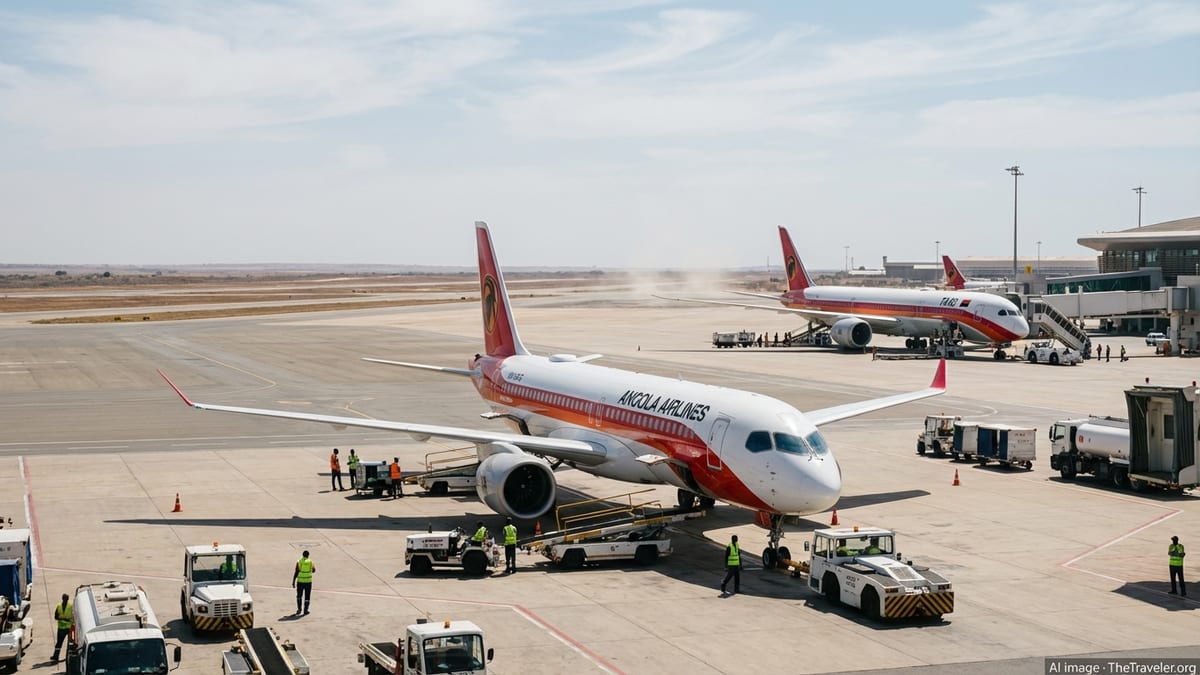
A220s Reshape Regional Travel out of Luanda
The backbone of TAAG’s regional upgrade is the Airbus A220-300, a new-generation narrowbody that is progressively replacing the airline’s older Boeing 737-700s. The carrier has now incorporated multiple A220s into its fleet as part of a 2024–2029 strategic plan that targets a more versatile and fuel-efficient operation. Each A220 enters service on high-demand domestic routes and intra-African connections, linking Luanda more seamlessly with key Southern African markets.
The A220’s 137-seat layout, including 12 seats in business class and a generous economy cabin, marks a noticeable step up in comfort for regional passengers. Wider seats, higher ceilings and larger windows than the outgoing 737s contribute to a quieter, brighter cabin environment on routes that can run several hours across the subcontinent. For business travelers and government officials criss-crossing the region, the new aircraft offer a more consistent, modern onboard product.
Operationally, the A220s give TAAG added range and flexibility, allowing the airline to consider new point-to-point services within Southern Africa and to secondary cities beyond its traditional network. With the type capable of flying up to roughly 3,600 nautical miles, the carrier can stitch together economic hubs and emerging tourism destinations without relying solely on long-haul widebodies or complex connections.
The fleet renewal also feeds into Angola’s ambition to position Luanda as a regional connecting hub. By adding efficient, right-sized jets, TAAG can increase frequencies, refine schedules and better synchronize regional arrivals and departures with long-haul services into Europe and South America, improving onward connectivity for Southern African passengers.
Dreamliners Elevate Long-Haul Comfort for Southern Africa
At the long-haul end of the network, TAAG’s introduction of Boeing 787-9 Dreamliners marks a pivotal shift in how the airline connects Southern Africa with intercontinental markets. The first 787-9 joined the fleet in early 2025, followed by a second unit in late 2025, both based at Luanda’s new international airport. These aircraft are beginning to supplement and gradually replace older Boeing 777s on marquee routes.
The 787s bring a quieter cabin, improved pressurization, higher humidity and larger windows, features that are particularly valued on overnight services between Southern Africa and destinations such as São Paulo and Lisbon. TAAG has configured its latest 787-9 with more than 300 seats, including a sizeable premium economy cabin, signaling a push to capture higher-yield leisure and corporate traffic originating in or connecting via Southern Africa.
The Dreamliners also form part of a broader multi-type strategy that gives TAAG more tools to match aircraft size with demand. Alongside the A220s, the 787s enable the airline to right-size capacity on long and thin routes, open new city pairs and adapt more quickly to seasonal shifts in traffic, from Angolan diaspora flows to oil-and-gas travel and emerging tourism corridors.
Behind the scenes, new digital maintenance and cabin-upgrade agreements with Boeing support the introduction of the 787 family. These arrangements are intended to sharpen fleet reliability and keep interiors aligned with passenger expectations, further reinforcing the perception of TAAG as a modern, internationally competitive carrier for Southern African travelers.
Passenger Experience Upgrades Across Cabin Classes
From the passenger’s perspective, the most visible impact of TAAG’s fleet renewal is onboard. The A220s feature a two-class configuration with a refreshed business cabin and an economy section that benefits from the aircraft’s wider seats in a two-by-three layout, minimizing middle seats and improving personal space. Larger overhead bins and modern LED lighting give the cabin an airy feel even on shorter domestic legs.
On the 787s, TAAG is rolling out updated seats, new in-flight entertainment systems and a quieter cabin environment, all aimed at reducing fatigue on long-haul flights to and from Southern Africa. The airline is positioning its premium economy product, in particular, as an attractive option for travelers seeking extra comfort without the cost of business class, a segment that is growing on regional and intercontinental routes alike.
The new aircraft types are also designed with sustainability and operating efficiency in mind, which can indirectly improve the customer experience. Both the A220 and 787 families offer significantly lower fuel burn and emissions than the aircraft they replace. Over time, these efficiencies can help the airline stabilize fares, support route expansion and maintain schedules that are competitive with other African and global carriers.
TAAG has refreshed its visual identity alongside the hardware changes, introducing updated branding that features Angola’s iconic Palanca antelope on tailfins and engines. This modern livery is increasingly visible at major Southern African airports, reinforcing the message that Angola’s flag carrier is investing in a contemporary product and a stronger regional presence.
Strengthening Southern African Connectivity and Partnerships
The new fleet is central to TAAG’s role in widening air access across Southern Africa. With more efficient aircraft and additional units arriving over the next several years, the airline plans to increase its total fleet size and ramp up annual passenger numbers. That growth strategy is closely linked to Angola’s efforts to diversify its economy beyond oil by promoting aviation, tourism and trade.
On the regional front, TAAG has been expanding commercial partnerships, including codeshare arrangements with neighboring carriers to deepen connectivity into cities across Southern Africa. The improved economics of the A220 and 787 make such partnerships more attractive, as the Angolan carrier can schedule more competitive frequencies and offer a cabin product that is easier to align with partners.
For travelers within the region, the outcome is a denser network of routes and more seamless one-stop links through Luanda to long-haul destinations. Business travelers from countries such as South Africa, Namibia, Zambia or Zimbabwe gain additional options for reaching Europe and South America, while Angolan and Southern African leisure passengers benefit from more convenient connections to beach, safari and cultural destinations within the subcontinent.
As the upgraded fleet beds into service, TAAG is expected to continue fine-tuning schedules, cabin products and partnerships to strengthen its position in Southern Africa’s competitive aviation landscape. For passengers, the arrival of new-generation jets signals more choice, quieter cabins and a noticeably more modern experience when flying within and beyond the region.