

More news on this day
TAAG Angola Airlines is set to launch a new Luanda–Abidjan route in April 2026, a move expected to boost regional travel, tourism and trade while cementing Luanda’s status as a rising African aviation hub.
Get the latest news straight to your inbox!
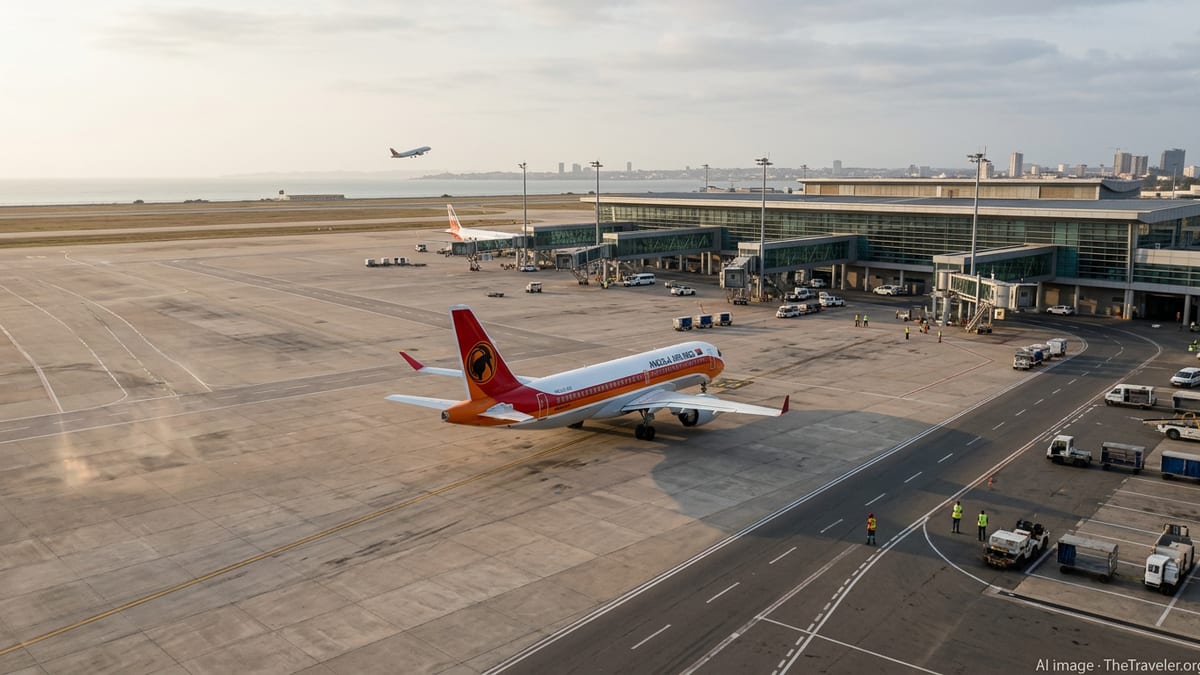
New Route Connects Two Strategic West and Southern African Gateways
The new service will link Dr. António Agostinho Neto International Airport in Luanda with Félix Houphouët-Boigny International Airport in Abidjan, restoring a connection last served regularly by TAAG in 2005. The decision comes amid rising demand for direct travel between Angola and Côte d’Ivoire, driven by business ties, multilateral cooperation and growing interest in leisure travel across the region.
According to the airline’s latest schedule filings, commercial flights are due to begin on 6 April 2026, with three weekly rotations on Mondays, Wednesdays and Fridays. Flight times are designed to offer daytime departures in both directions, improving comfort and connectivity for both corporate and leisure travellers.
TAAG plans to operate the route with its new-generation Airbus A220-300 aircraft, configured with 137 seats including a dedicated business cabin. The narrowbody jet’s range and economics are aligned with the carrier’s strategy of opening thinner intra-African routes that can be developed into stable, year-round services.
The launch follows months of diplomatic and technical preparation. In 2025, Angola and Côte d’Ivoire signed a bilateral air services agreement that granted extensive traffic rights and opened the door for this connection, underlining both governments’ backing for closer air links and support for the Single African Air Transport Market policy framework.
Boost for Business, Trade and Tourism Between Angola and Côte d’Ivoire
Officials in both Luanda and Abidjan see the new route as a catalyst for deeper economic engagement. Bilateral trade has been rising from a low base, with Angolan energy expertise and infrastructure know-how complementing Côte d’Ivoire’s position as a major producer and regional services hub. Direct air links are expected to cut travel times, reduce reliance on indirect connections via third countries and lower overall trip costs.
Tourism stakeholders also anticipate a lift. Abidjan’s reputation as a cultural and culinary capital of francophone West Africa, together with Angola’s Atlantic coastline, wildlife reserves and emerging urban tourism scene, gives tour operators new possibilities for multi-country itineraries. The route provides a platform for packages combining coastal leisure, business events and short cultural city breaks on both sides of the continent.
Travel industry analysts note that easier point-to-point access can quickly translate into higher passenger flows, especially for regional conferences, sporting events and diaspora travel. The new route is expected to encourage more Ivorians to explore Angola’s destinations beyond Luanda, while giving Angolan travellers a more direct entry point into francophone West Africa.
For local tourism boards, the connection provides a fresh opportunity to target high-yield travellers, from corporate delegates to expatriate communities working in mining, logistics and energy. Air connectivity is frequently cited as a key constraint on intra-African tourism, and the Luanda–Abidjan link is being positioned as one of several new bridges TAAG is building across the continent.
Luanda’s Emerging Role as a Continental Connectivity Hub
The Luanda–Abidjan route fits into a broader strategy by TAAG and the Angolan government to position Luanda as a competitive hub for travel between southern Africa, West Africa, Europe and Brazil. The national carrier has been rolling out a two-year transformation programme, modernising its fleet, sharpening its network and gradually transferring operations to the new Dr. António Agostinho Neto International Airport.
The new Luanda airport, which began handling passenger flights in late 2024, offers expanded capacity, longer runways and a terminal layout tailored for quick connections. TAAG has already concentrated much of its international flying at the facility, with a view to building a banked hub system that supports efficient transfers between regional and long-haul services.
By adding Abidjan to its network, TAAG enhances the value of this hub-and-spoke model. Passengers from Côte d’Ivoire will gain one-stop access via Luanda to destinations such as Johannesburg, Cape Town and Windhoek in southern Africa, as well as Lisbon and São Paulo on intercontinental routes. Codeshare partnerships with other African carriers are expected to further extend connectivity through coordinated schedules and shared ticketing.
Strengthening Luanda as a hub is also part of Angola’s wider economic diversification drive. Better air links play a role in attracting investment, supporting conferences and easing travel for regional institutions based in the city. The government has repeatedly highlighted aviation as a strategic sector that can multiply development benefits in tourism, trade and services.
Operational Details and Market Expectations
Based on current plans, TAAG’s Luanda–Abidjan flights will depart Angola late morning, arriving in Côte d’Ivoire early afternoon, before returning to Luanda in the late afternoon and evening. This schedule is designed to fit within TAAG’s existing waves of flights to Europe, southern Africa and Brazil, enabling convenient same-day connections.
The use of the Airbus A220-300 is seen as significant for customer experience and route economics. The aircraft’s quieter cabin, larger windows and improved fuel efficiency compared with older-generation jets are expected to appeal to both business and leisure travellers. The configuration with 12 business class and 125 economy seats allows TAAG to balance premium demand with broader affordability.
Industry observers forecast steady, if initially modest, load factors as the route matures. Experience from TAAG’s recent launches to cities such as Nairobi suggests that new intra-African services can build momentum over several seasons, particularly when supported by government-to-government ties and targeted marketing by tourism bodies.
Travel agents in the region point out that corporate clients, regional organisations and development agencies are likely to be early adopters of the Luanda–Abidjan flights. Over time, the route could also gain traction with tour operators packaging West and Southern Africa, as well as with members of the Angolan and Ivorian diasporas seeking more direct travel options.
Significance for African Air Liberalisation and Regional Integration
The Luanda–Abidjan launch is being closely watched in African aviation circles as a tangible example of how bilateral air services agreements and continental liberalisation initiatives can translate into new routes. The Angola–Côte d’Ivoire accord includes flexible traffic rights that support fifth-freedom operations and pave the way for more open competition and collaboration.
Advocates of the Single African Air Transport Market policy argue that such routes are essential to unlocking the full potential of the African Continental Free Trade Area. Shorter, more affordable journeys between African capitals are seen as a prerequisite for expanding intra-African trade, cross-border investment and people-to-people links.
By moving ahead with Luanda–Abidjan, TAAG is aligning its growth strategy with these broader policy goals. The airline has signalled further African expansion, mentioning planned services to other key markets including Accra and additional points in East and Central Africa. Each new connection reinforces Luanda’s role within a denser web of intra-African air links.
As airlines across the continent continue to rebuild networks and reshape their fleets, the performance of the Luanda–Abidjan route will offer a real-time test of demand for direct West–Southern Africa connectivity. For now, the opening of ticket sales and the backing of both governments suggest confidence that the market is ready for this next step in regional integration.