

More news on this day
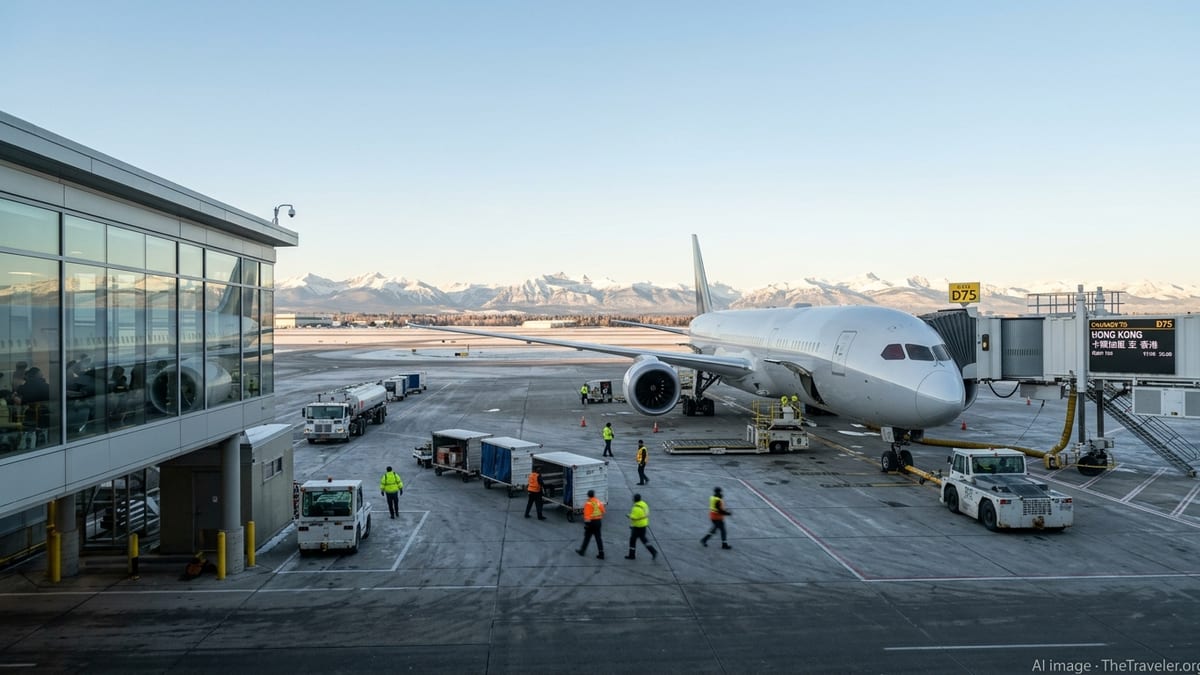
Taiwan’s airlines and tourism officials are sharpening their focus on Canada as they plan their next wave of long-haul growth for 2026, with Alberta’s Rockies-bound adventure travelers emerging as a particularly attractive target for new Asia–North America links.
Get the latest news straight to your inbox!
Strategic North America Expansion Sets the Stage
Taiwan’s two major international carriers are already in the middle of a long-haul growth cycle that is reshaping connectivity across the Pacific. Recent fleet decisions point squarely at deeper North American penetration from 2026 onward, even if specific Alberta routes have yet to be confirmed. China Airlines has committed to additional Airbus A350-1000 aircraft to strengthen its long-range network, with corporate statements highlighting opportunities in North America and Europe as key drivers for the order. Publicly available information on EVA Air’s network plan shows a similar trajectory, with a growing mix of Boeing 787 and other new-generation widebodies aimed at high-demand transpacific corridors.
Industry coverage indicates that these aircraft investments are timed to coincide with a forecasted rebound and diversification in transpacific travel by the mid-2020s, as Asia-based carriers look beyond traditional gateways such as Vancouver, Toronto, Los Angeles and San Francisco. Sector analysts note that the latest Taiwanese orders are sized not only to reinforce existing hubs, but also to leave headroom for secondary-city experiments and seasonal leisure-focused routes, which could include new Canadian points.
While Taiwan’s current scheduled services to Canada remain centered on established coastal hubs, the broader North American strategy is clearly evolving. Chinese-language and international aviation reporting describe a steady push into the Pacific Northwest and secondary U.S. cities, creating a model that could be replicated in Western Canada if demand and airport incentives align in the 2026–2028 window.
This shift coincides with an overall recovery and reorientation of long-haul capacity between Asia and Canada. Data compiled by tourism and aviation analysts show carriers gradually rebuilding traffic rights and restoring routes after the pandemic period, with a strong emphasis on markets that can support high-yield passengers and resilient leisure flows. In this environment, Alberta’s international gateways are positioning themselves as logical next steps.
Alberta’s Adventure Appeal Meets Taiwan’s Tourism Ambitions
Alberta’s tourism authorities have placed adventure and nature-based travel at the center of long-term growth plans, highlighting the Rockies as a global showcase for hiking, skiing, wildlife viewing and road-trip itineraries. Public planning documents and destination marketing materials outline a goal of substantially increasing visitor spending by 2035, with international air access cited as a critical enabler of that ambition. The province’s Rocky Mountain parks, including areas around Banff and Jasper, already attract millions of visitors annually, and local industry groups report that international guests are staying longer and spending more on guided and backcountry experiences.
At the same time, Taiwan has been actively promoting itself as both a standalone destination and a stopover-friendly hub for North American travelers headed deeper into Asia. Recent Taiwan Tourism Administration updates describe record surges in North American arrivals in 2024, supported by marketing that leans heavily on outdoor themes such as cycling the island’s coastal routes, hiking in high-mountain national parks and surfing on the east coast. Promotional campaigns in Canada and the United States frame Taiwan as an “Asian adventure base camp,” a positioning that resonates with the same demographic drawn to Alberta’s alpine landscapes.
Market reports circulating in Canada’s tourism sector show adventure travel as one of the fastest-growing segments nationwide, with double-digit percentage gains in recent years for activities such as trekking, backcountry skiing and multi-day guided expeditions. Alberta’s operators have been especially quick to package these experiences for international guests, offering itineraries that combine the Rockies with indigenous cultural stays, northern lights viewing and lesser-known prairie and badlands attractions. Stakeholders in both Taiwan and Alberta see substantial overlap between these adventure-focused travelers and the long-haul passengers targeted by new or expanded routes.
In this context, a closer aviation relationship between Taiwan and Alberta aligns with strategic goals on both sides of the Pacific. For Taiwan, a foothold in Alberta would open a new pool of high-value leisure travelers and diversify its North American footprint beyond traditional gateways. For Alberta, deeper ties to Taipei would provide a direct link not only to Taiwan itself but also to a dense web of regional connections across East and Southeast Asia, supporting inbound tourism and outbound travel by Canadians who increasingly seek multi-country itineraries.
Calgary and Edmonton Compete to Be Western Canada’s Next Asia Gateway
Alberta’s two major airports, Calgary International and Edmonton International, are in the midst of their own competition to attract new long-haul services. Publicly available route announcements over the past two years show Calgary securing several high-profile international links and reinforcing its role as a connecting hub for Western Canada. Aviation forum discussions and airport network presentations highlight recent and upcoming services to Europe and the Middle East, including a planned nonstop connection from Calgary to Abu Dhabi in late 2026, signaling that global carriers see long-haul potential in the region.
Edmonton, while smaller in total passenger volume, has been positioning itself as a complementary alternative with a strong catchment in northern Alberta and neighboring territories. Airport briefings emphasize available capacity, incentives and a growing local population with ties to Asia. Industry observers note that Edmonton’s pitch to airlines often stresses cargo opportunities alongside passenger traffic, an angle that could be attractive to Taiwan’s carriers given the island’s significant role in high-tech manufacturing and time-sensitive exports.
For Taiwanese airlines mapping their next moves, both Alberta airports offer distinct advantages. Calgary’s role as a major domestic hub for Western Canada could funnel travelers from across the Prairies and the Rockies into a single transpacific departure point, potentially supporting year-round operations. Edmonton’s relative lack of existing long-haul competition, meanwhile, might allow a new entrant to achieve high visibility and capture market share quickly in a region that currently relies heavily on connections through Vancouver or U.S. gateways.
Airport master plans and local economic development strategies in Alberta repeatedly reference Asia, and particularly East Asia, as a priority region for future air service development. With Taiwanese carriers actively bolstering their long-haul fleets and searching for new city pairs that balance leisure and business demand, the stage is set for serious negotiations around 2026 and beyond, even if any eventual announcement may come later in the decade.
Data Signals Rising Two-Way Demand Between Taiwan and Canada
Tourism and market research published in 2024 and 2025 indicate that both Canadian travel to Asia and Asian travel to Canada are on a steep upward trajectory. Statistics Canada data show international arrivals to Canada continuing to recover strongly, with visitors from key Asian markets contributing an outsized share of growth in total spending. Trade-focused analyses describe Canada as one of the most sought-after long-haul destinations for nature and adventure, with the Rockies region repeatedly cited as a bucket-list draw.
On the outbound side, Canadian travel patterns show renewed interest in Asia as border restrictions have eased and capacity has been restored. Industry summaries from tourism boards and travel trade media point to robust bookings to Japan, South Korea, Thailand and Taiwan, supported by a strengthening Canadian dollar against some Asian currencies and competitive fares on connecting itineraries through major hubs. Adventure tour operators note that Canadians are increasingly pairing hiking or skiing trips with cultural city stays and island-hopping add-ons, a trend that aligns well with hub-and-spoke networks centered on Taipei.
For Taiwan, North America is emerging as an anchor market in its long-term tourism strategy. Recent Taiwan Tourism Administration briefings report record or near-record arrivals from the United States and Canada in 2024, aided by targeted campaigns in major cities and participation in travel and adventure trade shows. One report from a San Francisco-area travel event highlighted that more than 100,000 Canadian travelers visited Taiwan in a recent year, underlining the country’s growing profile among long-haul explorers from the Americas.
These demand signals matter for Alberta because long-haul aviation decisions tend to follow demonstrated, data-backed flows rather than purely aspirational goals. If current growth rates hold through 2026, analysts suggest that airlines with new widebody capacity will increasingly look beyond the largest Canadian gateways for cities that can anchor profitable seasonal or year-round routes. Taiwan’s carriers, already familiar with North American dynamics, are expected to be among the most active in exploring such opportunities.
What 2026 Could Mean for Alberta’s Asia-Bound Adventurers
While no Taiwanese airline has publicly confirmed a direct Taiwan–Alberta route for 2026, industry watchers see the coming year as a critical period of groundwork. Network planners typically evaluate potential routes several seasons in advance, and the combination of new aircraft deliveries, strong adventure travel trends and Alberta’s increasingly global profile places the province firmly on radar screens. Aviation analysts note that even announcements focused on other North American cities can be early indicators of a broader strategy that may later extend to Western Canada.
For Alberta’s adventure travelers, a future nonstop to Taipei would represent a significant shift in how they reach Asia. Instead of connecting through Vancouver, Toronto or U.S. coastal hubs, passengers could theoretically fly directly from Calgary or Edmonton into a well-connected Asian gateway, cutting travel time and simplifying itineraries that pair the Rockies with destinations such as Japan, Vietnam or the Philippines. Travel agents and tour companies are already modeling what such routings could look like, building sample itineraries that link a week of hiking in Banff with cycling in eastern Taiwan or island-hopping in Southeast Asia.
In the meantime, enhanced cooperation between Taiwanese carriers and Canadian airlines through alliances and codeshares continues to improve connectivity for Alberta-based passengers, even without a dedicated nonstop. Star Alliance links between EVA Air, Air Canada and other partners, for example, allow for relatively seamless journeys from Alberta to Taipei via Vancouver or other hubs, complete with through-checking of baggage and coordinated schedules. As 2026 approaches, these indirect options are likely to expand further, providing incremental benefits while the market for a potential nonstop route matures.
Whether a direct Alberta–Taiwan service materializes in the near term or later in the decade, the underlying trend is clear: Taiwan’s aviation and tourism strategies are increasingly oriented toward adventurous, high-spend travelers in markets like Western Canada. For Alberta, that evolving focus could translate into new opportunities to showcase the Rockies and surrounding wilderness to Asia-based visitors, while giving local residents a more streamlined path to mountain and coastal adventures across the Pacific.