

More news on this day
Taiwan’s Ministry of Foreign Affairs is urging travelers heading to South Korea to opt for traditional paper arrival cards instead of the country’s electronic system, amid an ongoing dispute over how Taiwan is listed in Seoul’s e-Arrival platform.
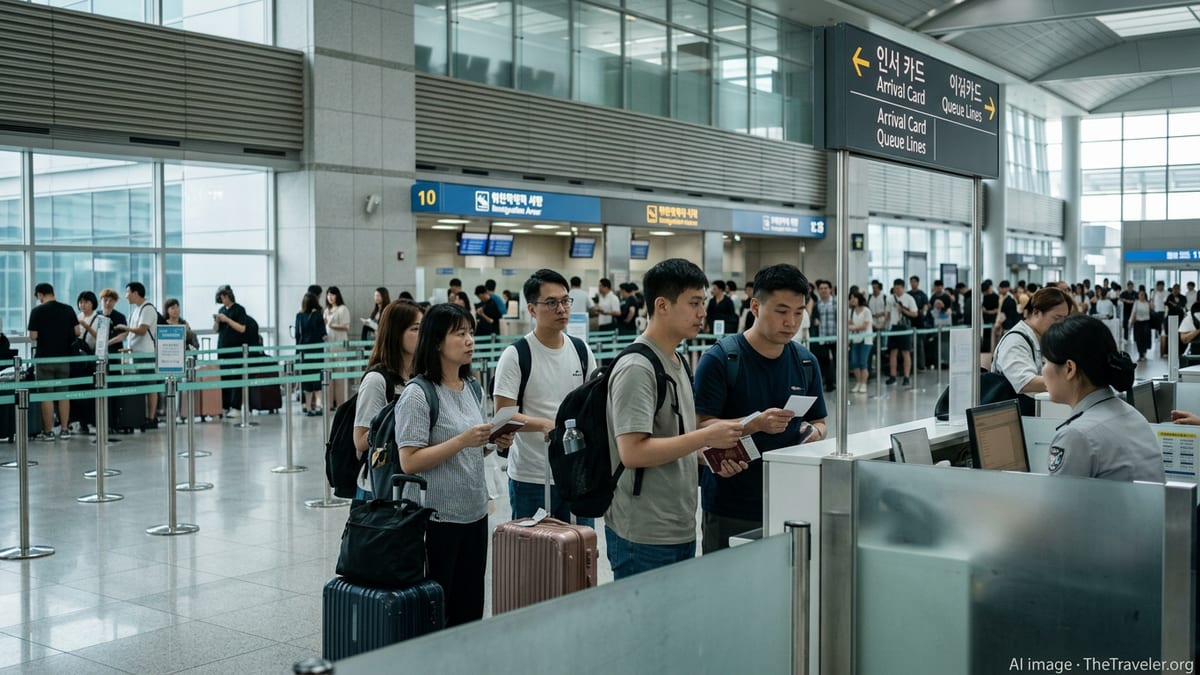
Diplomatic Dispute Spills Into Airport Arrivals
The advisory follows repeated protests from Taipei over South Korea’s electronic arrival card, which continues to categorize Taiwan as “China (Taiwan)” in key fields such as place of departure and next destination. Taiwanese officials say the wording is inaccurate, politically charged and confusing for travelers passing through South Korean immigration.
Despite several rounds of communication via diplomatic channels, Seoul has yet to issue a clear public response or amend the digital form. Taiwan’s foreign ministry has described the situation as regrettable and has warned that the continued use of the label undermines the island’s status and public confidence in South Korea’s handling of Taiwanese visitors.
South Korea is one of the most popular overseas destinations for Taiwanese tourists, especially for short leisure breaks and shopping trips. The dispute over the e-Arrival system has therefore moved quickly from a technical formality to a highly visible point of friction in everyday travel.
Officials in Taipei emphasize that while political sensitivities are at the heart of the complaint, their immediate concern is to minimize confusion and inconvenience for Taiwanese passport holders at South Korean airports.
Paper Cards Remain Available At Korean Airports
Amid frustration over the online system, Taiwan’s foreign ministry has confirmed that South Korea continues to operate both electronic and paper arrival cards in parallel. According to briefings from Taipei, Korean authorities have indicated that there is currently no timetable to phase out paper cards.
This dual-track arrangement gives Taiwanese travelers a practical alternative. Upon arrival in South Korea, passengers can request and fill out a paper arrival card instead of relying on the e-Arrival portal. The paper form does not use the contested wording and allows travelers to complete immigration procedures without engaging with the disputed digital designation.
Officials say the recommendation to use paper forms is intended to provide clarity at the border while diplomatic discussions continue in the background. Travelers are being reassured that choosing the paper card will not disadvantage them in any way during entry checks.
Airport staff in South Korea are accustomed to handling both formats, and processing times for paper and electronic arrivals are understood to be broadly similar. The key difference for Taiwanese passengers is the terminology they are presented with when declaring their journey details.
Travel Alert Raised To “Gray” Advisory Level
In response to the unresolved issue, Taiwan’s Bureau of Consular Affairs has updated its travel advisory for South Korea to the first-level “gray” alert. This is the lowest of Taiwan’s formal travel warning categories and serves as a reminder for citizens to stay informed and exercise general caution.
The gray alert does not discourage travel, nor does it imply a security threat on the ground in South Korea. Instead, it reflects Taiwan’s view that the e-Arrival system, in its current form, poses an ongoing administrative and symbolic concern for its nationals.
By raising the advisory, authorities in Taipei aim to ensure that travelers check the latest guidance, are aware of the naming controversy, and know they can request a paper arrival card on arrival. The move also signals to Seoul that the issue has entered the public domain and is being monitored at the governmental level.
Consular officials stress that the advisory could be revised again if South Korea modifies its e-Arrival terminology or if new measures are introduced that affect how Taiwanese citizens are processed at the border.
What Taiwanese Travelers Should Do Before Departure
For now, travelers from Taiwan planning a trip to South Korea are being advised to prepare as they normally would in terms of flights, accommodation and insurance, but to make a conscious choice about how they complete immigration paperwork. Those who wish to avoid the disputed wording are encouraged simply not to submit the e-Arrival form in advance.
Instead, passengers can proceed directly to immigration on landing and request a paper arrival card from airport staff. Officials recommend carrying a pen, knowing one’s local contact details in South Korea and allowing a little extra time at the arrivals hall to complete the form by hand.
Travelers who have already filled out the e-Arrival card are not being told to cancel or alter their plans. However, the foreign ministry is using its public messaging to underscore that using the paper option is fully acceptable and may offer peace of mind for those uncomfortable with the digital system’s terminology.
Passengers are also advised to monitor announcements from Taiwan’s Ministry of Foreign Affairs and consular services before departure, in case further policy changes or updates emerge from ongoing talks with Seoul.
Wider Context: Digital Borders And Political Sensitivities
The controversy highlights how the rapid digitization of border controls can intersect with long-standing geopolitical disputes. Electronic platforms, which once replicated paper forms with little scrutiny, are now powerful symbols of how governments choose to describe places, territories and nationalities.
South Korea has been promoting its e-Arrival card alongside its electronic travel authorization system as part of a broader modernization of entry procedures and to streamline passenger flows at busy airports. For most travelers, these tools are a convenience that cut down on paperwork and queuing times.
For Taiwan, however, the way it is labeled in such systems is inseparable from debates over sovereignty and international recognition. Taipei’s strong reaction to the “China (Taiwan)” listing reflects a broader determination to challenge any reference that appears to subordinate the island to Beijing.
As more countries roll out digital arrival systems, similar issues are likely to surface elsewhere. For now, Taiwanese travelers heading to South Korea are being offered a simple workaround through paper cards, while diplomats on both sides work to see whether a technical fix can be found that respects both operational needs and political realities.