

More news on this day
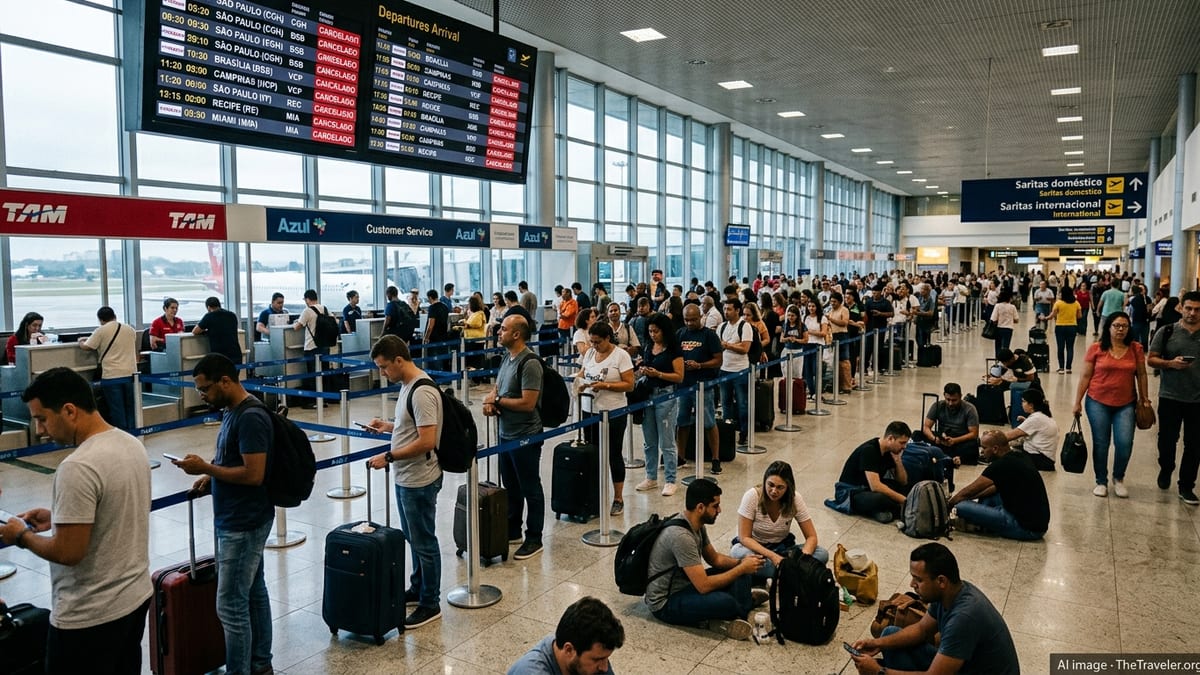
Travel across Brazil and key international routes faced fresh disruption as more than 45 flights operated by TAM and Azul were cancelled, affecting passengers on busy corridors linking São Paulo, Brasília, Campinas, Recife, Miami and other destinations, according to early operational data and local media reports.
Get the latest news straight to your inbox!
Wave of Cancellations Hits Major Brazilian Hubs
The latest disruption has concentrated around Brazil’s largest aviation hubs, with cancellations reported across São Paulo’s Guarulhos and Congonhas airports, Brasília, and Campinas’ Viracopos terminal. Publicly available airport boards and media coverage indicate that a mix of domestic and international services were withdrawn over the course of the day, quickly rippling through airline networks.
On domestic routes, affected trips include high‑demand connections between São Paulo and Brasília, Recife and other northeastern capitals, where frequencies are typically dense and aircraft load factors are strong. Even a relatively small percentage of cancelled rotations can displace thousands of travelers when it falls on routes that function as trunk lines for both business and leisure traffic.
Internationally, cancellations on services linking Brazil to Miami and other North American gateways have added complexity for long‑haul passengers. These flights often rely on tight connections from secondary Brazilian cities, meaning a single cancelled feeder segment can derail entire itineraries and strand travelers far from their final destination.
Operational summaries circulating in Brazilian travel media suggest that TAM and Azul together have surpassed 45 flight cancellations in the current wave, though exact figures continue to shift as schedules are adjusted throughout the day and some aircraft are repositioned.
Operational Pressures Behind TAM and Azul Schedule Cuts
While the airlines have not publicly detailed a single, unified cause for the disruption, the pattern of cancellations fits broader pressures on Brazilian aviation seen in recent years. Past episodes of concentrated flight cuts in the country have often been linked to a combination of crew availability issues, maintenance bottlenecks and sudden spikes in demand that strain existing fleets.
Analysts who track the sector note that carriers such as Azul and TAM operate complex domestic networks that connect large hubs to dozens of regional cities. When a single aircraft is grounded or a crew rotation is disrupted, the knock‑on effect can cascade across multiple legs, leading airlines to pre‑emptively cancel flights rather than risk widespread delays. Publicly available information from previous disruption events in Brazil shows that such strategies, although frustrating for travelers, are frequently used to stabilize operations more quickly.
In addition, airlines continue to manage the financial and logistical aftershocks of tight aircraft supply worldwide. Reports on fleet planning have highlighted delayed deliveries from manufacturers and limited availability of spare capacity for wet‑leasing, factors that leave carriers with less flexibility to cover last‑minute gaps in the schedule.
Fuel costs, exchange‑rate volatility and competitive pricing on core routes are also weighing on margins, making it harder for airlines to maintain significant standby capacity. Industry commentary suggests this can force tough choices on which flights to prioritize when irregular operations arise, especially on days of adverse weather or airspace congestion.
Passengers Face Missed Connections and Lengthy Rebookings
For travelers caught in the disruption, the most immediate impact has been missed connections and longer journey times. Flight tracking tools and airport departure boards show clusters of cancellations on routes that are commonly used as feeders into long‑haul services, including those from regional Brazilian cities into São Paulo, Brasília and Recife.
Passengers booked onward to Miami and other international destinations may find that rebooking options are limited, particularly in peak travel periods when alternative flights are already heavily sold. Travel forums and social media posts from recent disruption episodes in Brazil show that many passengers are often shifted to flights one or two days later, or rerouted through different hubs, significantly extending total travel time.
Travel rights in Brazil are governed by regulations of the national civil aviation authority and consumer protection rules, which generally require airlines to offer options such as rebooking at no extra cost, refund, or accommodation and meals in cases of extended delays and cancellations attributable to the carrier. However, public complaints recorded in consumer platforms indicate that accessing these remedies can sometimes involve long queues at service desks, overloaded call centers and confusion about what support is available in each individual case.
With disruptions spanning both domestic shuttles and long‑haul links, travel agents and online booking platforms are increasingly advising customers to monitor their reservation status frequently on the day of travel and to allow extra time for connections, particularly when itineraries rely on separate tickets or involve multiple airlines.
Key Routes Affected: São Paulo, Brasília, Campinas, Recife and Miami
The cancellations have underscored just how central a handful of airports are to Brazil’s air transport system. São Paulo’s Guarulhos and Congonhas airports together handle a large share of the country’s domestic and international traffic, and any reduction in operations there can quickly propagate across the entire network. Brasília, functioning as a political and geographic hub, serves as a connecting point for flights radiating across the central and northern regions.
Campinas’ Viracopos airport, widely associated with Azul’s growth strategy, is particularly vulnerable to operational hiccups. The carrier has built an extensive banked hub at the airport, with waves of arrivals and departures timed to maximize connections. When several flights in one bank are cancelled, it can break the connectivity pattern and devalue onward options for travelers, forcing more extensive schedule reshuffles.
Recife has also emerged as a strategic node, especially for links into Brazil’s northeast and selected international routes. Disruptions here can interfere with holiday travel to coastal destinations as well as business flows between northern and southeastern cities. For passengers heading to or from Miami, cancellations at any of these hubs can result in long overnight waits or involuntary stays in intermediate cities while itineraries are rebuilt.
Publicly available schedule data for Brazilian carriers in recent seasons shows that routes between these hubs and major overseas destinations tend to operate at high load factors, limiting spare seats. When cancellations occur, airlines must therefore balance the need to accommodate displaced passengers with the commercial imperative of maintaining yields on future segments.
What Travelers Can Do If Their Flight Is Canceled
Travel specialists recommend that passengers traveling on TAM or Azul in the coming days closely monitor flight status through airline apps, airport displays and SMS or email notifications. Given how quickly operational decisions can change, checking multiple times before leaving for the airport can help travelers avoid unnecessary trips and allow more time to evaluate alternatives.
In the event of a cancellation, publicly available consumer guidance in Brazil suggests that travelers should keep records of all communications with the airline and preserve receipts for any out‑of‑pocket expenses such as meals, ground transport or accommodation. This documentation can be useful when requesting reimbursement or compensation later, particularly if the disruption is found to be within the airline’s control.
Travel insurance may offer additional protection, depending on policy terms. Many comprehensive policies include coverage for trip interruption and missed connections, although benefits and required documentation can differ significantly between providers. Industry observers advise passengers to review their coverage details in advance and to contact insurers promptly if their plans are affected.
For future bookings, some travel advisors are suggesting longer connection windows when itineraries pass through Brazil’s busiest hubs or rely on tight domestic‑to‑international transfers. While no buffer can fully eliminate the risk of disruption, additional time between flights can offer more flexibility to absorb delays or last‑minute schedule changes when airlines like TAM and Azul are forced to trim their operations.