

More news on this day
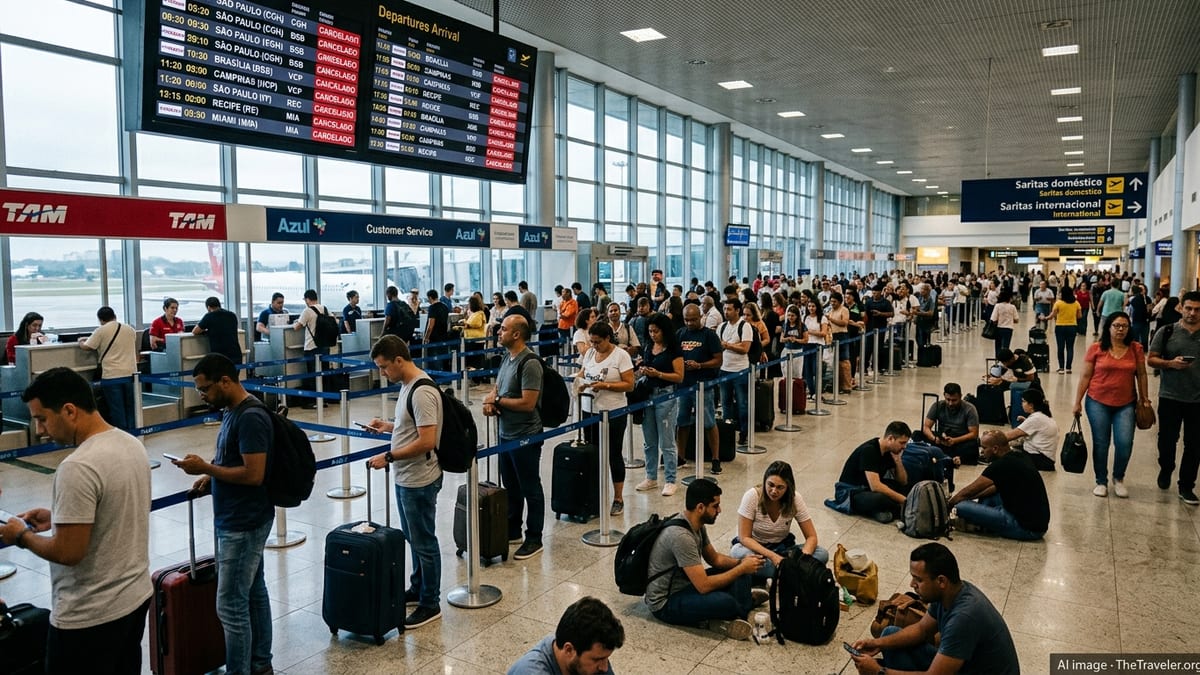
Significant flight cancellations by Brazilian carriers TAM and Azul have disrupted travel across the country, with more than 45 services reportedly grounded on key domestic and international routes touching São Paulo, Brasília, Campinas, Recife, Miami, and other major destinations.
Get the latest news straight to your inbox!
Dozens of Flights Scrapped Across Brazil’s Main Hubs
Publicly available airport and flight-tracking information indicates that a wave of cancellations by TAM and Azul has affected services throughout Brazil’s busiest air corridors. More than 45 flights were removed from schedules over a short period, concentrating on high-demand links that funnel travelers through São Paulo, Brasília, and other key nodes in the national network.
The disruptions have been most visible at São Paulo–Guarulhos, Viracopos–Campinas, and Brasília, which together form a dense web of connections to northern and northeastern cities such as Recife, as well as long-haul departures to destinations including Miami. Domestic point-to-point services and feeder flights that supply these hubs were also affected, amplifying the impact for travelers on multi-leg itineraries.
Operational data show that the cancellations were not isolated to a single time of day. Morning departures, midday connections, and evening bank flights all saw gaps in the boards, complicating efforts by airlines to re-accommodate passengers on later services. This pattern has heightened congestion at check-in desks and customer service counters as travelers attempt to secure alternative options.
While detailed causes vary by route, industry monitoring suggests a mix of operational adjustments, aircraft and crew positioning challenges, and broader schedule reshaping as carriers recalibrate capacity at the end of the Southern Hemisphere summer peak.
Key Domestic Routes to São Paulo, Brasília, Campinas, and Recife Hit Hard
The domestic market has borne the brunt of the latest disruption. Routes linking São Paulo to Brasília, Campinas, Recife, and other state capitals rank among Brazil’s busiest air corridors, and even a limited number of cancellations on these city pairs can cascade into wider network effects.
At São Paulo–Guarulhos, which handles extensive traffic to Brasília and Recife, reports of cancelled TAM departures have left some travelers facing multi-hour or overnight waits for available seats. Azul’s hub at Viracopos–Campinas, an important base for connecting smaller regional cities to the southeast, has also seen cancellations, reducing options for passengers who rely on one-stop connections via Campinas rather than direct services from their home airports.
Brasília, functioning both as the federal capital and a central connection point, has experienced cancellations that disrupted itineraries between the country’s north and south. Passengers traveling through Brasília have reported tight connections or forced rebookings onto later flights as the number of available services shrank, particularly during peak travel windows.
In Recife, a major gateway to Brazil’s northeast, reduced arrivals and departures from both TAM and Azul have narrowed choices for travelers heading to or from coastal destinations. This is especially challenging for passengers with fixed hotel stays and tour reservations along the northeastern shoreline, where flexible alternatives can be limited during busy travel periods.
International Links to Miami and Beyond Affected
The cancellations have not been confined to Brazil’s domestic skies. Long-haul and regional international services, notably on routes to Miami, have also been affected according to published flight-board snapshots and schedule-monitoring platforms. Miami is a key gateway for Brazilian travelers connecting to North America and the Caribbean, making any disruption on this route particularly consequential.
Travelers booked on TAM flights between Brazil and Miami have reported last-minute schedule changes, cancelled segments, or re-protection onto later services. Where aircraft or crew availability has been constrained on long-haul operations, airlines have had to prioritize certain departures, occasionally leading to the consolidation of lightly booked flights or the reassignment of widebody aircraft.
These international adjustments can ripple across the airline alliance and codeshare ecosystem. When a Brazil–Miami leg is cancelled, passengers holding through-tickets onward to other cities often require complete itinerary reissues. This not only lengthens queues at airline counters but also increases the risk of missed connections and extended layovers at intermediate airports.
For inbound travelers heading into Brazil, cancelled Miami departures reduce same-day options for reaching São Paulo, Brasília, Recife, or secondary hubs. Tourists and business travelers who designed tight schedules around key meetings, cruises, or events may find themselves arriving a full day later than planned.
Passenger Impact: Long Queues, Missed Connections, and Rebooking Strain
The immediate impact for passengers has been visible in crowded terminals and extended rebooking processes. Travelers arriving at airports to find their flights cancelled have faced long waits at service desks as ground staff work through re-accommodation and refund requests under pressure.
Because many of the affected routes to São Paulo, Brasília, and Campinas serve as feeders for onward journeys, missed connections have become a central concern. A cancelled domestic leg can cause travelers to forfeit their seats on subsequent international sectors, especially when minimum connection times are already tight or remaining flights are near capacity.
Publicly accessible consumer guidance notes that passengers whose flights are cancelled are typically entitled to rebooking or refunds, but the practical process can be complex when disruptions occur close to departure. Those who booked via online travel agencies or third-party platforms may need to coordinate between the airline and intermediaries, adding another layer of communication at an already stressful moment.
Social media posts and local coverage have highlighted instances of families, business travelers, and international tourists sleeping in terminal seating or nearby hotels while waiting for alternative departures. Such scenes underscore how even a few dozen cancellations, when concentrated on trunk routes, can cause disproportionate inconvenience during busy travel periods.
What Travelers in Brazil Should Do Now
Travel specialists observing the situation recommend that passengers with upcoming itineraries on TAM or Azul treat schedules as subject to short-notice change and build in extra time for critical journeys. Checking flight status frequently on the day of travel and enabling airline app notifications can provide early warning of potential cancellations or delays.
For those connecting through São Paulo–Guarulhos, Viracopos–Campinas, Brasília, Recife, or international gateways such as Miami, leaving longer layovers than usual can reduce the risk of misconnecting if a feeder leg is disrupted. Travelers with fixed commitments, such as cruises, tours, or major events, may wish to arrive at their starting point one day earlier than strictly necessary while airlines continue to adjust schedules.
Published consumer-rights information for Brazil notes that passengers may be eligible for support such as rebooking, refunds, or basic assistance in cases of significant disruption, depending on the cause and timing of a cancellation. Keeping documentation of boarding passes, receipts, and any written notifications from airlines can help travelers when seeking reimbursement for additional expenses.
As TAM and Azul continue to recalibrate capacity, observers expect more schedule fine-tuning in the short term. Travelers planning domestic or international trips involving São Paulo, Brasília, Campinas, Recife, Miami, or other major hubs are being advised to monitor their bookings closely and remain prepared for adjustments as Brazilian carriers work to stabilize operations.