

More news on this day
Sudden cancellations of two high-profile routes operated by TAM and United Airlines have intensified Brazil’s ongoing air travel turmoil, disrupting key links from São Paulo to São Luís and Newark and leaving passengers scrambling for alternatives at already strained airports.
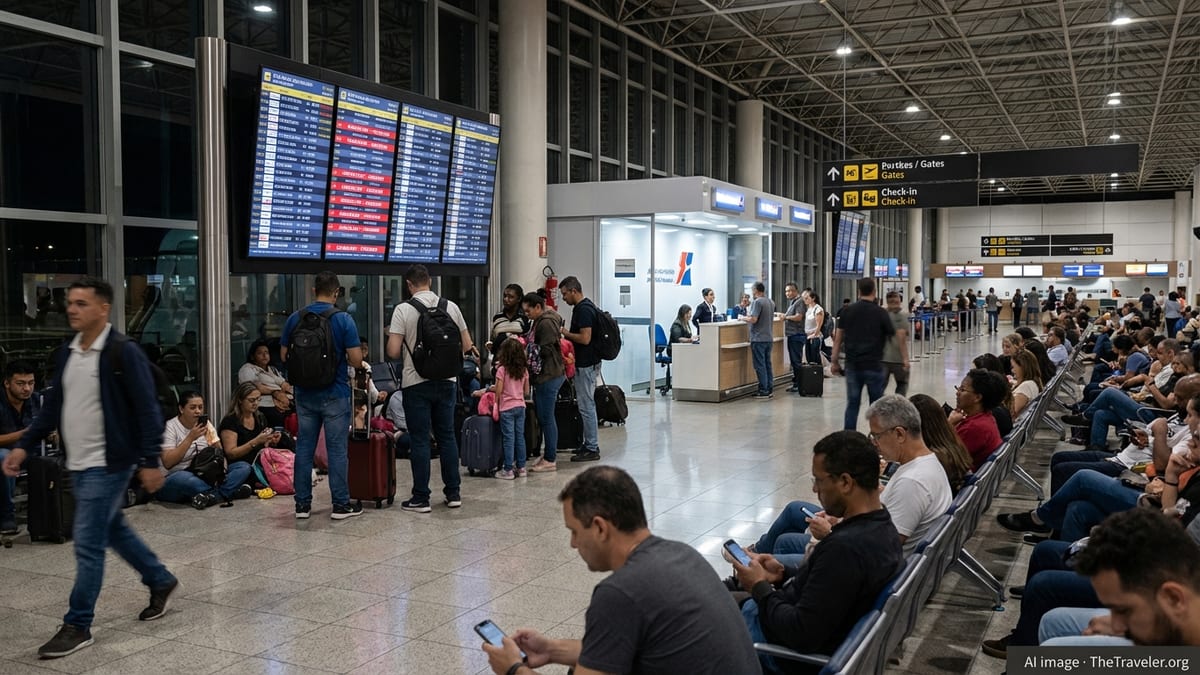
High-Impact Cancellations Hit São Paulo Hubs
The latest disruption comes amid a broader wave of flight cancellations across Brazil in recent weeks, with São Paulo-Guarulhos and Congonhas frequently at the center of operational strains. Industry trackers and travel advisory services have repeatedly flagged a pattern of rolling schedule cuts and day-of-departure cancellations affecting both domestic and long-haul routes.
In this context, the scrapping of a TAM service to São Luís, a key gateway in Brazil’s northeast, and a United Airlines flight linking São Paulo to Newark in the United States has had outsized impact. Both routes are vital for business and leisure travelers, as well as for connections onward to other domestic and international destinations.
While overall traffic through Brazil’s main hubs remains robust, the abrupt nature of these cancellations has amplified frustration among passengers. Many travelers learned of the changes only hours before departure, triggering a rush to airline counters and digital channels in search of rebooking options during an already busy late-February travel period.
The cancellations coincide with lingering knock-on effects from severe weather in both Brazil and the northeastern United States, where a recent blizzard temporarily disrupted operations at Newark Liberty International Airport and forced carriers, including United, to trim schedules and reposition aircraft and crews.
Weather, Operations and Network Strain Converge
Brazil’s aviation system has been wrestling with a combination of weather-related air traffic control restrictions, overnight technical issues and tight aircraft utilization. Recent advisories for the country highlighted delays and cancellations concentrated at major hubs like São Paulo, Rio de Janeiro, Belo Horizonte and Salvador, with some airports operating close to capacity as carriers seek to restore normal schedules.
At the same time, United and other global airlines have been dealing with the after-effects of a powerful winter storm in the United States that led to widespread cancellations and delays at northeastern airports, including Newark. As carriers restart operations, they are focusing on safety and regulatory crew-rest requirements, which can force last-minute schedule changes even after local weather clears.
For Brazil-bound and Brazil-originating passengers, this convergence of factors has translated into fragile connectivity on long-haul corridors. When a single Newark service is withdrawn from São Paulo’s schedule, options for same-day rebooking are limited, particularly for travelers with tight onward connections in North America or Europe.
Domestic operations have also felt the strain. The canceled TAM flight to São Luís, layered on top of earlier schedule adjustments across multiple Brazilian carriers, has underscored how quickly regional links can be affected when aircraft and crews are diverted to cover bottlenecks elsewhere in the network.
Passengers Face Long Queues, Limited Rebooking Choices
At São Paulo-Guarulhos, passengers booked on the canceled United Newark service reported lengthy lines at customer service desks as they sought rerouting via alternative hubs or later departures. With transatlantic and North American flights heavily booked in late February, many customers were offered re-accommodation a day or more later, or via multi-stop itineraries connecting through other U.S. or Latin American cities.
Domestic travelers bound for São Luís on TAM encountered similar challenges. Northeastern Brazil is heavily dependent on air links for both tourism and essential travel, and capacity on popular corridors out of São Paulo is tightly managed. As a result, the sudden loss of a departure has had ripple effects on seat availability, fares and connection options for subsequent days.
Airlines have encouraged affected passengers to use digital channels and mobile apps where possible to avoid crowded airport counters. Weather waivers and change-fee exemptions have been introduced on some routes impacted by the wider disruption pattern, allowing customers to alter dates or routings without additional charges, subject to fare rules and cabin availability.
Nevertheless, for travelers with fixed plans, including international connections, business meetings or group trips, the last-minute nature of the cancellations has been difficult to absorb. Social media posts from stranded passengers in Brazil this week show crowded departure halls, families sleeping on benches and travelers trying to rearrange hotel stays and ground transport at short notice.
Key Routes Expose Vulnerabilities in Brazil’s Air Network
The São Paulo to Newark and São Paulo to São Luís links illustrate how strategically important certain flights have become within Brazil’s broader transport ecosystem. Newark serves as a major gateway for Brazilian travelers to the U.S. northeast and beyond, while São Luís provides access to the growing tourism and energy sectors in Maranhão and neighboring states.
A single widebody departure from Guarulhos to Newark can carry hundreds of passengers, including those connecting onward to smaller U.S. markets. When such a flight is removed from the schedule with little warning, downstream effects are felt not only in São Paulo and Newark but in secondary cities that rely on timely connections for international access.
The same dynamic plays out on the domestic side, where TAM’s São Paulo to São Luís operation supports both origin-and-destination traffic and feeder flows from other Brazilian cities. Disruptions on this corridor can force travelers into overnight stops or lengthy detours via alternative hubs, adding cost and complexity to itineraries and putting additional pressure on already busy routes.
Aviation analysts note that Brazil’s network resilience is particularly tested when external shocks like severe weather in another region combine with local operational constraints. With aircraft and crews operating close to maximum utilization on many long-haul and domestic routes, there is limited slack to absorb unexpected cancellations without visible impact on passengers.
What Travelers Should Expect in the Coming Days
Industry observers expect Brazilian carriers and their international partners to progressively restore capacity and regularity as weather conditions stabilize and aircraft rotations are normalized. However, the experience of the past week suggests that travelers using São Paulo as a hub, especially for connections to the northeast of Brazil or to the United States, should plan for continued disruption risk in the short term.
Passengers booked on TAM, United and other airlines serving Brazil are advised to monitor flight status closely in the 24 hours before departure, keep contact details updated in airline profiles and consider flexible travel arrangements where possible. For critical trips, some agents are recommending earlier departures or alternative routings to build in extra buffer time.
Travel experts also stress the importance of understanding passenger rights in cases of cancellation or long delay, including rules on rebooking, refunds, care, and assistance. While policies vary by carrier and jurisdiction, many airlines have introduced temporary flexibility measures to accommodate customers affected by the latest round of disruptions.
For now, the canceled TAM and United flights serve as a pointed reminder of how quickly conditions can change in a globally connected aviation system, and how closely Brazil’s domestic and international routes are intertwined when weather and operational challenges hit on both sides of the equator.