

More news on this day
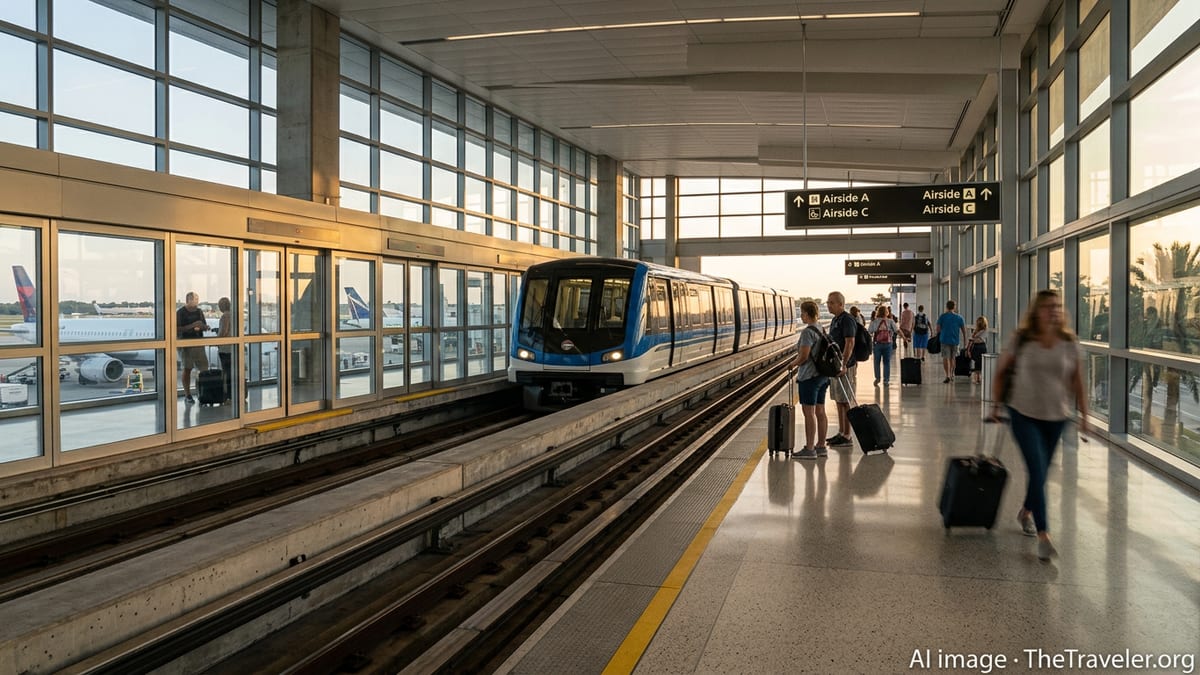
Tampa International Airport in Florida has begun rolling out a new generation of Blue shuttle trains, a major upgrade to its signature people-mover system that aims to sharpen reliability, enhance passenger comfort and support future growth across the busy Gulf Coast hub.
Get the latest news straight to your inbox!
A New Chapter for Tampa’s Pioneering Shuttle System
Publicly available planning documents and capital program reports show that Tampa International Airport is replacing its long-serving automated people mover vehicles with new Blue shuttle trains serving key airsides. The upgrade focuses initially on the Airside A and Airside C shuttles, which connect travelers from the main terminal to gate concourses via short, elevated runs.
The airport’s landside–airside layout, regarded as a groundbreaking design when it opened in the 1970s, relies heavily on these shuttles to keep walking distances short and passenger flows efficient. The original systems used Bombardier Innovia APM 100 cars; the new generation incorporates updated rolling stock and modernized train control technology intended to extend the life of the network and improve performance.
Capital improvement reports indicate that the shuttle car and control system replacement is a multi-year project, with assembly of the new vehicles and associated signaling infrastructure progressing in phases. The Blue shuttle trains are entering service following earlier work on the companion Red shuttle trains at the same airsides, enabling the airport to maintain operations while each fleet is upgraded in turn.
For travelers, the visible change is the arrival of fresh, blue-liveried trains in the glass-walled stations that have become an architectural hallmark of Tampa International Airport. Behind the scenes, however, much of the transformation is rooted in control systems, power management and safety features that are not immediately apparent to casual users.
Enhanced Passenger Comfort and Modern Cabin Design
The new Blue shuttle trains are designed to refresh the passenger experience on what, for many visitors, is their first encounter with Tampa International Airport. Information from manufacturer and project summaries points to updated cabins with brighter interiors, wider doorways and layouts that make it easier for passengers with luggage, strollers and mobility devices to board and alight quickly.
Large windows remain a defining feature of the shuttles, offering sweeping views over the airfield and main terminal during the brief ride to and from the airsides. The upgraded trains build on this with improved lighting, reduced interior noise and smoother acceleration and braking, all of which contribute to a calmer and more comfortable ride even during peak travel periods.
Accessibility considerations also play a prominent role in the design. Floor levels are closely aligned with platform edges to minimize gaps, while open-standing areas near doors accommodate wheelchairs and oversized baggage. Handrails and grab bars are positioned to make short journeys secure for passengers of different heights and mobility levels.
Although the trip between the main terminal and each airside typically lasts only a minute or two, airport planners treat the shuttles as an extension of the terminal environment. The new Blue trains are expected to integrate with updated signage, wayfinding and audio announcements, creating a more intuitive journey from curbside to gate.
Operational Efficiency and Advanced Control Systems
According to detailed capital improvement reports, the Blue shuttle project is paired with a comprehensive replacement of the airport’s shuttle train control system. This includes modern signaling, communications and monitoring tools intended to increase reliability, reduce downtime and simplify maintenance scheduling across the fleet.
The upgraded system is designed to support higher service frequencies during busy periods, with tighter headways and more precise control of train movements between the main terminal and the airsides. Improved diagnostics allow airport technicians to identify potential issues earlier, reducing the likelihood of unplanned outages that can ripple through gate operations and passenger connections.
Energy efficiency is another focus. Newer-generation automated people mover vehicles typically incorporate lighter materials, more efficient traction motors and regenerative braking that can feed electricity back into the system. For a high-intensity shuttle operation that runs throughout the day, even small gains in efficiency can translate into meaningful reductions in operating costs and emissions over time.
In parallel with the Blue shuttle rollout, Tampa International Airport has been expanding and refining other elements of its ground transport network, including the SkyConnect train linking the main terminal to the Rental Car Center and transit hub. The combined effect is a layered internal transport system that moves people quickly between parking, rental cars, buses and aircraft gates with minimal friction.
Supporting Growth and Future Expansion at Tampa International
Tampa International Airport has experienced steady growth in passenger volumes in recent years, driven by strong tourism demand for the Tampa Bay area and expanded domestic and international air service. Planning documents highlight ongoing terminal and curbside expansion programs that place additional demands on the shuttle network.
The new Blue shuttle trains are positioned as a key enabler of this growth, giving the airport added capacity and reliability on some of its most heavily used internal routes. As more airlines add service at Airsides A and C, the ability to quickly move large numbers of passengers between security checkpoints and gates becomes increasingly critical.
The shuttle modernization also dovetails with broader long-term concepts, including potential new airside facilities and expanded connections to regional transit. With a modernized control backbone and standardized fleet, the airport has greater flexibility to adjust schedules, modify operating patterns or extend service as future projects come online.
For travelers, the immediate impact is more practical. Shorter waits on platforms, smoother rides and a contemporary look and feel all help reinforce Tampa International Airport’s reputation as one of the more user-friendly mid-sized hubs in the United States. As the new Blue shuttle trains join the fleet in larger numbers, the familiar rhythm of the landside–airside journey is being quietly but significantly upgraded.
What the Upgrade Means for Everyday Travelers
For frequent flyers and first-time visitors alike, the introduction of the new Blue shuttle trains changes the texture of the trip without altering its basic sequence. Passengers still ride elevators or escalators to the shuttle platforms, watch platform doors slide open in sync with train doors, and step into a compact cabin that whisks them directly to their airside concourse.
Where the experience begins to differ is in the small details. The new trains are expected to offer gentler starts and stops, making it easier for standing passengers to maintain balance, especially when holding luggage. Clear interior signage and announcements help orient travelers who may be unfamiliar with the airport’s unique layout.
For connecting passengers under time pressure, improved reliability and shorter headways can reduce anxiety and make tight transfers more manageable. The upgraded fleets at Airsides A and C, together with modernized control systems, aim to keep shuttles circulating at consistent intervals, even during periods of heavy demand or challenging weather.
For the wider Tampa Bay region, the Blue shuttle trains symbolize continued investment in one of its most important gateways. As the airport advances a series of phased improvements, the refreshed shuttle system underscores a broader strategy: keeping the core passenger journey simple, fast and comfortable while preparing for the next decades of growth in Florida’s Gulf Coast aviation market.