

More news on this day
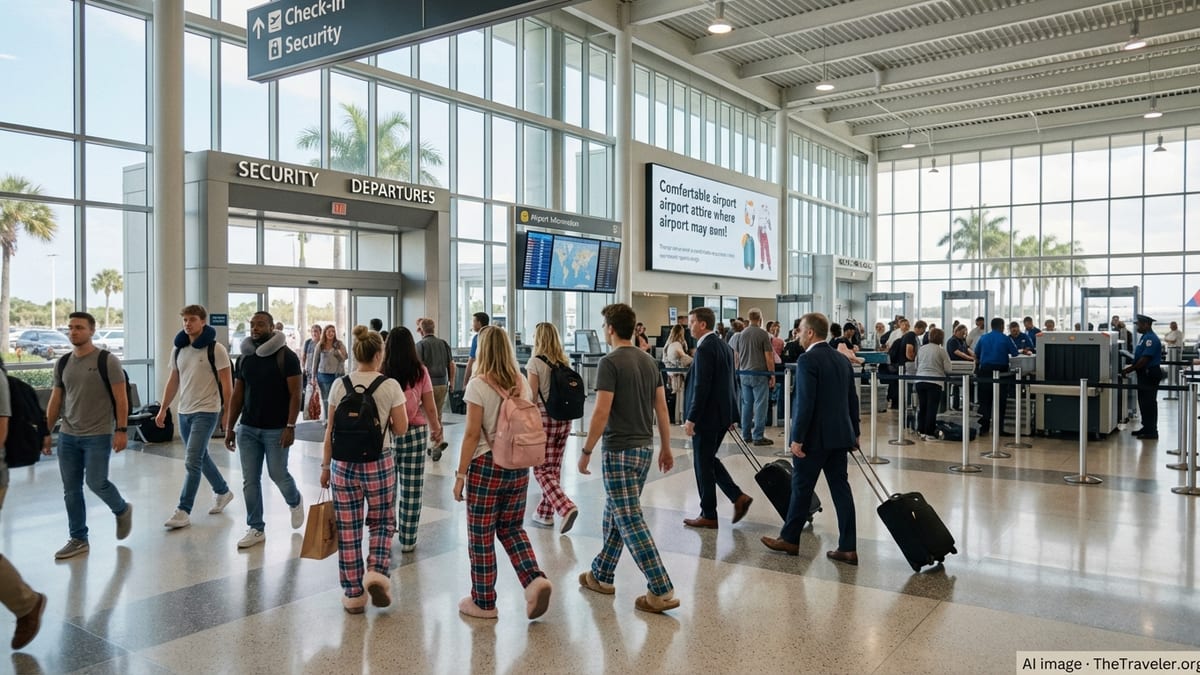
A tongue-in-cheek social media post from Tampa International Airport calling for a “ban” on pajamas in its terminals has unexpectedly exploded into a nationwide argument over travel etiquette, personal comfort and just how far airports should go in nudging passengers to dress up.
Playful Post, Serious Backlash
The uproar began on February 26 when Tampa International Airport shared a viral post on its official social channels declaring that it had “seen enough” of pajama-clad travelers and that “it’s time to ban pajamas at Tampa International Airport.” Framed as a faux public-service announcement, the message mimicked the tone of an official policy notice while urging followers to have “difficult conversations” with friends and relatives who treat the terminal like a bedroom.
Airport officials quickly indicated through replies and context that the pajama “ban” was not a formal policy but part of a tongue-in-cheek social media campaign. The post followed an earlier, similarly styled effort ribbing passengers about wearing Crocs, which the airport jokingly described as having made Tampa the world’s first Crocs-free airport.
What was intended as lighthearted brand humor, however, collided with a tense national mood around air travel, sparking a wave of criticism from passengers, influencers and etiquette commentators who viewed the message as yet another scolding from institutions that are not fixing more pressing problems, from crowded terminals to cramped seats.
Travelers Push Back Against ‘Dress Code’ Culture
Within hours of the pajama post going live, screenshots spread across X, TikTok and Reddit, where thousands of users debated whether airports have any business commenting on what passengers wear. Some frequent flyers vowed to route future trips away from Tampa, while others promised to show up in pajamas specifically to protest what they saw as shaming of comfort-seeking travelers.
On travel forums and social threads, critics argued that as long as passengers are covered and not wearing offensive slogans, their clothing should be irrelevant. Many pointed out that viral clips of disruptive behavior in airports rarely feature people in sweatpants and slippers, suggesting that focusing on sleepwear is more about optics than safety or civility.
Others questioned the practicalities. Commenters joked about telling staff they sleep in gym shorts or T-shirts and asking whether those would be classed as pajamas, while some wondered if leggings, joggers or loungewear could be swept into an informal dress code. For them, the ambiguity underscored deeper concerns that “jokes” about attire could inch toward unwritten rules and subjective enforcement.
Part of a Larger Civility Campaign in the Skies
The Tampa flare-up did not emerge in a vacuum. In November 2025, the US Department of Transportation launched a “Golden Age of Travel Starts With You” campaign, urging Americans to treat airports and airplanes as shared public spaces that deserve respect. Transportation Secretary Sean Duffy publicly encouraged travelers to wear “a pair of jeans and a decent shirt” instead of outfits that look more appropriate for bedtime.
That campaign followed a reported surge in unruly passenger incidents in recent years, with regulators and airlines struggling to respond to confrontations over masks, alcohol, personal space and delays. Officials have argued that encouraging more respectful conduct, including more “presentable” clothing, could help cool tensions in cramped cabins and crowded gate areas.
Critics of the civility push, though, say the focus on appearance diverts attention from structural issues such as shrinking legroom, rising fees and unpredictable schedules. Social media reactions to both the federal messaging and Tampa’s pajama post often echoed a similar refrain: if airlines offered more comfort and reliability, passengers would feel less need to board dressed for a red-eye on the living-room couch.
Airports, Airlines and the Limits of Soft Power
Despite the strong reactions, Tampa International Airport has not introduced an official dress code beyond the industry-standard expectation that passengers be properly clothed and wear shoes, and there is no indication that travelers will be denied boarding for showing up in flannel pants or cartoon-print sleepwear. Airline conditions of carriage typically prohibit only offensive, lewd or unsafe attire.
Instead, the pajama campaign highlights a newer strategy among transportation hubs: using playful, often edgy social media voices to influence behavior without writing new rules. Airports and airlines have experimented with humorous posts to encourage passengers to arrive earlier, pack lighter, check gate changes and even be kinder to staff.
Supporters of Tampa’s approach say a bit of levity can cut through travel fatigue and that a joking “ban” is far less intrusive than a formal code backed by security staff. They argue that, at most, the post invites customers to reflect on how they present themselves in crowded public environments where tensions can already run high.
Yet the sharp response also underlines a limit to that soft power. For many travelers, especially those already feeling squeezed by higher fares and tighter cabins, any hint that airports are policing style lands as tone-deaf. The same humorous voice that wins laughs over lost luggage memes can feel out of step when it appears to pass judgment on bodies and wardrobes.
A Debate That Reaches Far Beyond Tampa
In the days since Tampa’s post, writers, etiquette experts and commentators have seized on the moment to revisit a perennial question of modern air travel: Is the airport more like a bus station or more like a boardroom? Opinion columns have contrasted images of the mid-20th-century “golden age” of flying, when passengers dressed formally, with today’s reality of athleisure, pajama pants and neck pillows worn through the terminal.
Some travel advisors have cautiously welcomed a renewed conversation about basic standards, arguing that comfortable does not have to mean sloppy and that a modest uplift in attire might improve both behavior and overall mood. Others counter that there is no clear evidence linking outfits to civility and that singling out pajamas risks shaming lower-income or neurodivergent travelers who depend on soft, familiar clothing to cope with stressful journeys.
For now, pajama-clad passengers passing through Tampa International are unlikely to encounter more than a knowing glance and a social media team ready with another wry post. But the intensity of the reaction suggests that US travelers are on edge about who sets the norms of public behavior and whose comfort counts. As spring and summer travel ramp up, the debate ignited by a joking pajama “ban” may influence how other airports talk about everything from footwear to inflight conduct, even if no one is measuring hemlines at the security line.