

More news on this day
Hundreds of passengers at Tampa International Airport faced disrupted travel plans on February 24 as JetBlue, United, Delta, American Airlines and other major carriers recorded 36 flight cancellations and 74 delays tied to a powerful blizzard crippling the U.S. Northeast.
Blizzard-Battered Northeast Sends Shockwaves to Tampa
The latest winter storm system sweeping across the Northeast has left Tampa far from unscathed. While skies over Florida remained mostly clear, the knock-on effects of runway closures, de‑icing backlogs and constrained airspace at airports from New York to Boston rippled through Tampa International’s schedule on Tuesday.
According to airport status boards and airline operations updates, 36 departures and arrivals at Tampa were canceled, with a further 74 delayed, as carriers adjusted schedules around grounded aircraft and weather‑related restrictions farther north. Many of the affected services involved connections to or from major hubs such as New York, Newark, Boston and Philadelphia, where the blizzard has brought operations close to a standstill.
For Tampa‑based travelers, the disruption was felt most acutely on early‑morning and late‑evening flights, the time windows when airlines typically bank Northeast connections. Several passengers awoke to find overnight schedule changes, while others endured extended waits at departure gates as crews and aircraft repositioned into Florida.
Airport officials reiterated that the problems were not caused by local conditions, but by the intricate web of national scheduling that ties Tampa to storm‑battered cities along the Eastern Seaboard.
Major U.S. Carriers Struggle to Keep Schedules Intact
The cancellations and delays at Tampa touched nearly every major U.S. airline operating out of the airport. JetBlue, which has a significant footprint on routes linking Florida with New York and Boston, saw several key Northeast services scrubbed outright. United and Delta reported disrupted rotations on flights to New York–area and Mid‑Atlantic hubs, while American Airlines faced a mix of cancellations and extended delays across its network of East Coast connections.
Regional and low‑cost carriers serving Tampa were also drawn into the turmoil. Flights operated by partners feeding larger hubs, as well as point‑to‑point leisure services heading to cities under winter storm warnings, were either delayed awaiting clearance or canceled when conditions deteriorated. With many aircraft and crews out of position across the national network, even routes not directly bound for the Northeast felt the sting of the storm’s ripple effects.
Airline representatives emphasized that safety remains the primary consideration when deciding whether to cancel or delay a flight. Blowing snow, crosswinds and reduced visibility at destination airports, combined with the operational hazards of prolonged de‑icing, have forced carriers to trim schedules and build additional padding into turn times. Those decisions, while frustrating for passengers, are designed to avoid mid‑day operational meltdowns and last‑minute diversions.
Carriers also pointed to ongoing staffing and aircraft‑availability challenges that can magnify the impact of a major weather event. When multiple hubs across the same region are simultaneously affected, options for rerouting and recovery narrow quickly, especially during peak travel periods.
Passengers Face Long Lines, Tough Choices and Limited Seats
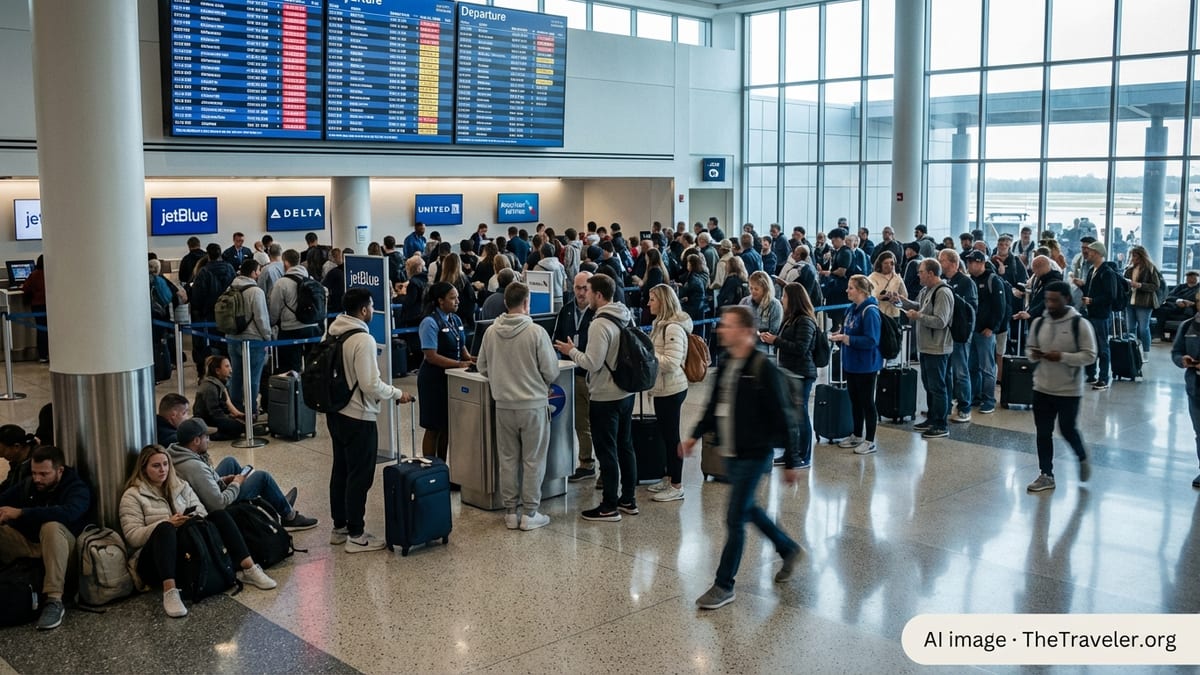
Inside Tampa International’s terminals, travelers confronted the now‑familiar realities of modern disruption: crowded customer‑service counters, long hold times on airline hotlines and gate areas dotted with families camped out beside carry‑on bags. With many Northeast airports sharply reducing their schedules, rebooking options for same‑day or even next‑day travel proved limited, particularly on popular business and leisure routes.
Some passengers were able to secure alternative routings through unaffected hubs in the Midwest or Southeast, turning what should have been a direct two‑hour hop into multi‑stop itineraries spanning the entire day. Others opted to postpone their trips altogether, choosing refunds or travel credits where eligible. For travelers with cruise departures, business meetings or family events on fixed dates, the uncertainty added a stressful layer to already time‑sensitive plans.
Airport staff and airline employees reported a mix of frustration and understanding from customers. While some voiced anger at the lack of clear timelines and the scarcity of available seats, many acknowledged the severity of the weather system and its widespread impacts across the country. Information boards changed rapidly through the day, underscoring how fluid the situation remained as conditions evolved in the Northeast.
Families traveling with small children and elderly passengers were among the hardest hit, with long waits and overnight changes demanding extra logistical juggling. Some hotels near the airport reported an uptick in last‑minute bookings as travelers opted to stay close to the terminal in the hope of catching newly opened seats on morning departures.
What Stranded Travelers in Tampa Should Do Now
With cancellations and delays likely to continue until the storm fully clears and airlines can reposition aircraft, travel experts recommend that passengers flying into or out of Tampa build flexibility into their plans. Those scheduled to travel over the next 24 to 48 hours are being urged to monitor their flight status frequently through airline apps and to enable push notifications for last‑minute updates.
Same‑day stand‑by lists have grown longer as people attempt to move onto earlier flights or grab remaining seats on alternative routings. Travelers with urgent plans are advised to head to the airport early if their flight still shows on time, allowing margin for security lines and gate changes. At the same time, officials caution against arriving excessively early for heavily delayed flights, as terminal congestion adds strain for both staff and passengers.
Consumer advocates note that if an airline cancels a flight, travelers who choose not to fly are typically entitled to a refund of the unused portion of their ticket, regardless of the cause of the cancellation. For delays, airlines may provide meal vouchers or hotel accommodations at their discretion, but such assistance is not guaranteed during major weather events categorized as outside the carrier’s control. Passengers are encouraged to keep receipts for any unexpected expenses, in case partial reimbursement is later offered.
Travel insurance policies with trip‑interruption coverage may also offer some protection, although terms vary. Policyholders should review the fine print and contact their insurers promptly, as many plans require notification within a set timeframe after a disruption begins.
Tampa Braces for Ongoing Ripple Effects Across the Network
Even as the worst of the blizzard conditions begins to ease, Tampa International and its airline partners expect residual disruption to linger beyond Tuesday. Clearing backlogs of stranded aircraft, reconnecting crew rotations and restoring normal frequencies on key routes can take several days once a major weather event subsides, particularly when thousands of flights have been affected nationwide.
For Tampa, which serves as a critical gateway between Florida’s Gulf Coast and major cities along the Eastern Seaboard, the challenge will be smoothing out schedules while accommodating displaced passengers from earlier cancellations. Airlines may temporarily consolidate lightly booked flights, upgauge aircraft on certain routes to increase capacity or add late‑night and early‑morning segments if crew‑duty limits and airport operating hours allow.
Local tourism stakeholders are watching developments closely, as air connectivity is a lifeline for both leisure visitors and the region’s growing business community. Hotel and attraction operators are preparing for a short‑term dip in arrivals from affected Northeast markets, followed by a potential surge once travelers finally manage to depart re‑opened airports and rebooked flights begin to funnel back into Tampa.
For now, the advice from airport officials is straightforward: anyone flying into or out of Tampa in the coming days should stay informed, stay flexible and be prepared for plans to change as the national aviation system continues to recover from the latest blast of winter weather.