

More news on this day
A powerful late February winter storm battering the Northeast snarled air travel across the United States on Monday, with Tampa International Airport reporting 117 flight cancellations and 30 delays and cascading disruptions for passengers booked on JetBlue, Delta, American, United, Southwest and Frontier flights to New York, Philadelphia, Boston, Baltimore and other key East Coast gateways.
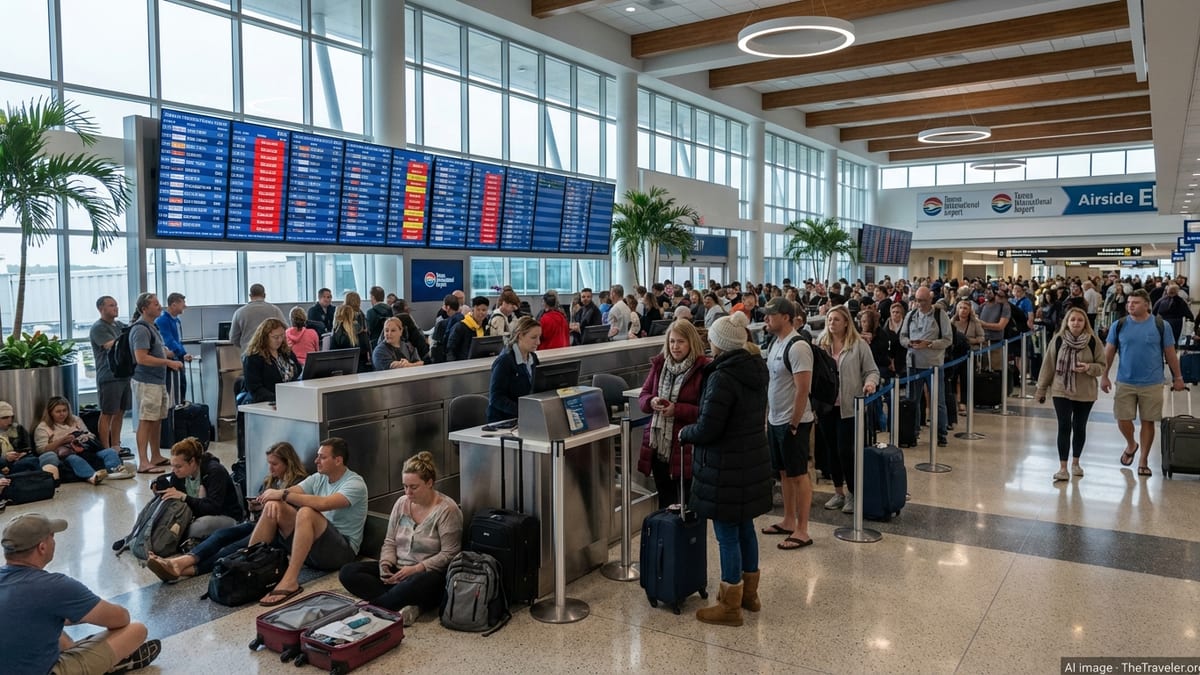
Storm Slams Northeast, Florida Becomes Collateral Damage
The latest nor’easter, bringing blizzard conditions, fierce winds and heavy snow to the I‑95 corridor, effectively shut down major airports from New York to Boston on February 23. While Florida skies remained largely clear, Tampa’s role as a busy origin and connection point for those hubs meant its schedule was quickly upended as airlines preemptively scrubbed flights or held aircraft out of position.
By midmorning, live data from flight tracking services showed more than 5,000 flights canceled within, into or out of the United States, with the bulk concentrated at New York’s LaGuardia, John F. Kennedy and Newark airports, as well as Boston Logan and Philadelphia. As those airports slashed operations to near zero, outbound and inbound services at secondary airports such as Tampa International were inevitably pulled from the boards.
Airport officials in Tampa noted that the vast majority of the disruptions were tied directly to the Northeast storm rather than local weather or infrastructure issues. However, the impact for travelers on the ground in Florida was identical: hours‑long waits in terminal concourses, last‑minute itinerary changes, and in many cases, the abrupt loss of long‑planned trips.
JetBlue, Delta, American and United Bear Brunt of Disruptions
With major hubs in New York and Boston, JetBlue was among the hardest hit carriers nationwide, and Tampa passengers booked on the airline’s nonstop services to those cities faced widespread cancellations. Flights linking Tampa to John F. Kennedy International and Boston Logan were among the first to disappear from departure boards as the storm’s severity became clear overnight.
Delta, American and United, all of which rely heavily on Northeast hubs to connect Florida traffic to the rest of the country and to Europe, also scaled back sharply. Tampa departures to New York, Newark, Boston and Philadelphia were trimmed as carriers focused on safety, crew duty limits and the availability of runway and gate infrastructure in storm‑battered cities.
For many travelers, the carrier logo on their boarding pass mattered little. What they encountered on Monday was a system under acute strain: agents juggling rebookings, full phone lines, and mobile apps intermittently timing out as thousands attempted to secure scarce seats on later flights.
Southwest and Frontier Passengers Face Network‑Wide Ripple Effects
Low‑cost carriers were not spared. Southwest, which has a sizable operation at Tampa and a robust presence along the East Coast, saw multiple point‑to‑point services disrupted when destinations like Baltimore/Washington and Providence curtailed operations. Even flights that technically did not serve the hardest‑hit airports were affected when aircraft and crews were stranded upstream in the network.
Frontier passengers departing Tampa also encountered cancellations and rolling delays as the carrier adjusted its schedule to account for closed or capacity‑restricted airports in the Mid‑Atlantic and Northeast. Since ultra‑low‑cost airlines typically operate tighter schedules with fewer spare aircraft, a single weather‑related disruption can trigger a chain reaction that lasts days rather than hours.
Industry analysts noted that while Tampa’s 117 cancellations and 30 delays represented a fraction of the national totals, the concentration of those disruptions on routes to New York, Philadelphia, Boston and Baltimore underscored how storms more than a thousand miles away can quickly destabilize Florida’s normally reliable winter air links.
Key Routes to New York, Philadelphia, Boston and Baltimore Hardest Hit
Among Tampa International’s affected services, nonstop flights to the Northeast’s largest urban centers were disproportionately impacted. Morning and midday rotations to LaGuardia, JFK and Newark were wiped out, while a significant share of departures to Boston Logan and Philadelphia International were either cancelled outright or pushed back repeatedly before ultimately coming off the schedule.
Flights to Baltimore/Washington International, a major Southwest stronghold and a crucial alternative for Washington‑area travelers, also took a hit as whiteout conditions and high winds slowed or halted operations across the Mid‑Atlantic. For leisure travelers heading to the Northeast for school vacations, family visits or business trips scheduled around the Presidents Day period, the cascading cancellations translated into lost hotel nights, missed meetings and scrambled ground arrangements.
Some passengers with flexible plans chose to hold their trips a day or two, hoping to ride out the worst of the disruption. Others faced more stark choices: accept multi‑stop itineraries zigzagging through the Midwest and South, or abandon trips entirely in favor of refunds or future travel credits where available.
Travelers Grapple With Long Lines, Limited Options and Uncertain Timelines
Inside Tampa International’s terminals, the human side of the disruption was visible in long customer service lines, crowded gate areas and impromptu workspaces cobbled together near power outlets. Families hunched over tablets rebooking hotel rooms, while business travelers hurriedly emailed colleagues about missed presentations and rescheduled meetings.
Airline representatives urged travelers to rely on carrier apps and notifications, which can update more quickly than overhead displays during fast‑moving operational events. Yet for many passengers whose flights had already been canceled, digital options offered little relief when the next available seat was days away or required connections through secondary hubs also straining under the storm.
Local ground transportation services reported a bump in same‑day rentals and long‑distance rides as some determined travelers opted to drive northward, despite hazardous road conditions forecast along much of the Eastern Seaboard. Others sought creative alternatives, such as rebooking to cities on the storm’s periphery and completing their journeys by train once rail lines reopen and power is restored.
Nationwide Impact Highlights Fragility of Winter Operations
The chaos in Tampa was part of a much wider national picture. Aviation analytics firms reported that cancellation rates on February 23 surged well beyond normal winter averages, with more than 15 percent of U.S. departures scrubbed by early afternoon. In typical conditions, that figure is closer to 1 percent.
Major Northeast hubs, where snow totals reached or exceeded a foot in several locations and wind gusts approached hurricane strength, were operating at a fraction of capacity. When airports that anchor the national network scale back so dramatically, the effect radiates through smaller markets and leisure destinations like Tampa, even when those cities themselves are not directly affected by severe weather.
Experts noted that airlines have grown more proactive about canceling flights ahead of major storms, both for safety and to avoid chaotic last‑minute disruptions. While that strategy can reduce the number of passengers stranded mid‑journey, it compresses the shock into a shorter timeframe, creating the kind of acute, highly visible disruption witnessed across Florida and much of the country on Monday.
Airlines Roll Out Fee Waivers but Recovery May Take Days
To soften the blow, the major U.S. carriers serving Tampa issued weather‑related waivers covering travel to and from the storm‑affected region. JetBlue, Delta, American, United, Southwest and Frontier all allowed eligible customers to change their travel dates without incurring standard change fees, though fare differences still applied in some cases once passengers moved outside the specified rebooking window.
For travelers whose flights were cancelled by the airlines, federal rules entitled them to full refunds for unused portions of their trip, including ancillary fees such as checked baggage where applicable. Consumer advocates nevertheless warned passengers to read the fine print carefully, particularly when dealing with basic economy or promotional fares that sometimes carry stricter conditions.
Operationally, airline planners face a complex multi‑day recovery. Aircraft and crews stranded on both sides of the storm must be repositioned, maintenance checks rescheduled and flight sequences re‑created to restore something resembling a normal timetable. Industry observers cautioned that even after snow stops falling and runways are cleared, Tampa and other Florida airports could see residual disruptions for much of the week.
What Tampa‑Bound and Northeast‑Bound Travelers Should Do Now
Travel advisors across Florida urged anyone holding tickets into or out of the Northeast over the next several days to assume schedules will remain fluid. The most urgent advice was simple: do not head to the airport without first confirming flight status via airline apps or text alerts, as morning departure boards can change dramatically within minutes during weather events of this scale.
For Tampa passengers whose trips were not time‑sensitive, experts suggested taking advantage of waivers to move travel later into the week, when operations are more likely to have stabilized. Those needing to travel sooner were encouraged to consider alternate routings that avoid the busiest storm‑battered hubs or, where viable, shift temporarily to rail or road for shorter‑haul segments.
For now, Tampa International remains open and fully staffed, but its reliability as a launchpad to the Northeast is tethered to a region digging out from one of its most disruptive winter storms in recent years. Until that snow is cleared and aircraft are back in position, passengers heading for New York, Philadelphia, Boston, Baltimore and beyond will need patience, flexibility and a close eye on the latest alerts.