

More news on this day
Ho Chi Minh City’s Tan Son Nhat International Airport has shattered its own traffic records during the Lunar New Year peak, handling an estimated 170,798 passengers in a single day as Vietnam’s travel demand soars to unprecedented levels.
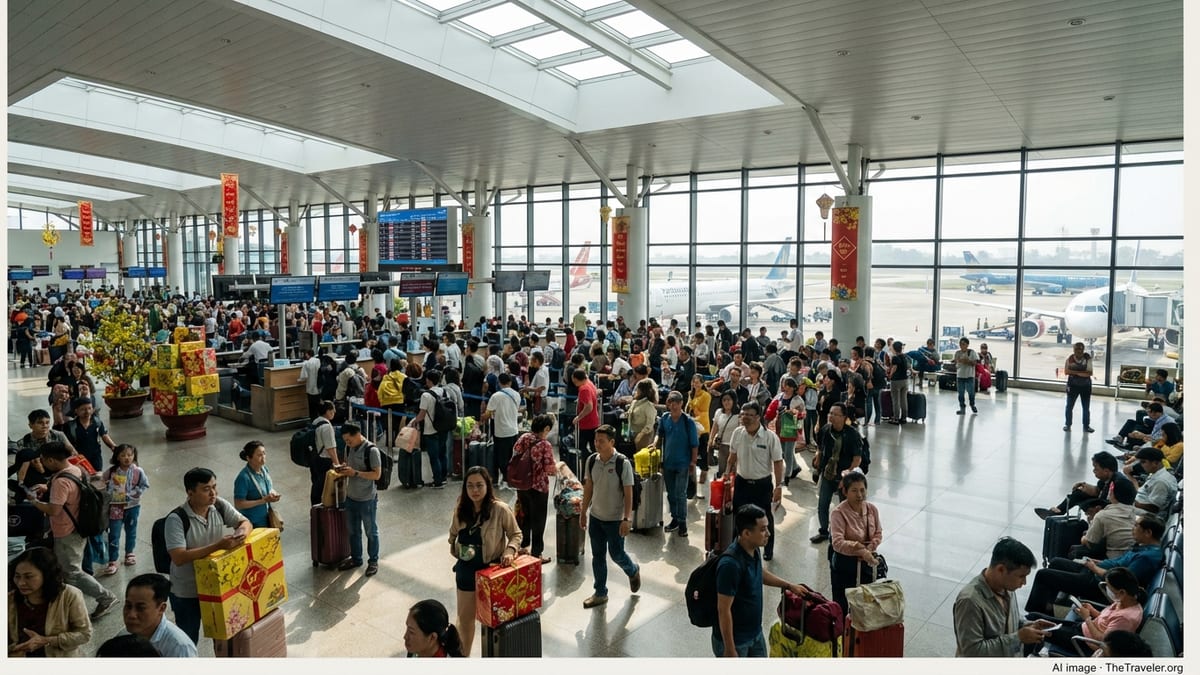
Record-Breaking Day as Nearly 171,000 Travelers Pass Through
Tan Son Nhat International Airport, Vietnam’s busiest aviation hub, has set a new single-day passenger record during the 2026 Lunar New Year period, underscoring the scale of the country’s holiday travel rush. On February 20, the fourth day of the Lunar New Year, the airport’s operations centre reported a planned 1,037 flights and an estimated 170,798 passengers, surpassing all previous daily traffic highs.
The standout figure within that total is the surge in arrivals: nearly 100,000 passengers flew into Ho Chi Minh City on the day, the highest number of inbound travelers ever recorded at the airport over a 24-hour period. While departures remained robust, the imbalance reflects the wave of residents, overseas Vietnamese and tourists converging on the southern metropolis after the first days of the Tet holiday.
The record confirms that Tan Son Nhat has moved well beyond its pre-pandemic thresholds and even the peaks seen in 2024 and 2025, when the airport’s busiest days hovered around 150,000 to 155,000 passengers. It also comes just days after another milestone, when the airport handled more than 164,000 passengers on a single pre-Tet day, highlighting how both outbound and return flows are straining existing capacity.
Despite the exceptional volumes, airport officials reported that operations remained under control, crediting months of planning and expanded infrastructure for helping to avoid the gridlock and extended delays that once typified Tet travel at Vietnam’s main gateway.
Terminal T3 Debut Helps Power Lunar New Year Surge
This year’s record-settling Tet operations mark the first Lunar New Year season in which the newly built Terminal T3 has been fully deployed, and its impact on Tan Son Nhat’s capacity has been immediate. On the record-breaking February 20 alone, Terminal T3 was scheduled to handle 459 flights, including 230 arrivals, serving nearly 67,000 passengers and shouldering much of the domestic traffic burden.
The terminal, designed specifically to relieve pressure on the aging domestic facilities, now accommodates domestic flights for Vietnam Airlines, Pacific Airlines, Vasco, Bamboo Airways, Vietravel Airlines and Sun Phu Quoc Airways. Domestic services operated by Vietjet Air continue to run from Terminal T1, while Terminal T2 remains dedicated to international operations. This three-terminal configuration has allowed the airport to spread out passenger flows, reduce bottlenecks at check-in and security, and increase overall throughput.
Authorities had initially forecast that the busiest Tet days would see passenger numbers rise to more than 165,000, with average daily traffic around 145,000 over the peak period. Instead, the February 20 figure decisively exceeded those projections, suggesting that latent demand for domestic reunions and leisure travel, as well as strengthening international tourism, remains higher than planners anticipated even after several years of strong growth.
Infrastructure upgrades have also extended beyond terminal interiors. Enhancements to apron space, taxiways and support facilities have enabled more efficient aircraft turnaround, allowing the airport to schedule more movements per hour and absorb a higher number of late-night and early-morning flights that are crucial to managing the Tet surge.
Late-Night Flights, Extra Staff and Tight Coordination
Behind the headline figures is a complex operational effort involving airlines, ground service providers, security forces and municipal authorities. In the run-up to Tet, Vietnam’s aviation regulators and transport agencies authorized higher flight frequencies in fringe time slots, opening up additional late-night and dawn departures and arrivals to stretch passenger flows across more hours of the day.
On the record-setting day, the airport’s 1,037 scheduled flights represented an elevated operating intensity, building on earlier pre-holiday peaks when more than 1,060 flights were handled in a single day. To cope, Tan Son Nhat mobilized additional staff for check-in, baggage handling, security screening and airside operations, with reinforcements concentrated during traditional crunch periods in the morning and evening.
Flight information displays, public address systems and passenger guidance teams were used extensively across all three terminals to direct travelers to check-in counters, boarding gates and baggage belts that were being flexibly reassigned to balance loads. Ground handling companies were instructed to prioritize quick aircraft turnaround while maintaining safety margins, particularly for overnight and early-morning services that operate on tight schedules.
Security forces, including aviation security units and local police, stepped up patrols in and around the terminals to keep passenger flows moving and prevent congestion at entry checkpoints. Authorities encouraged travelers to check in online where possible and to arrive at the airport early, with a minimum of two hours recommended for domestic flights and three hours for international departures during the peak period.
From Pre-Tet Departures to Post-Tet Homecomings
The record day on February 20 capped a week of intense travel activity bracketed by two contrasting surges: outbound departures as residents left Ho Chi Minh City for family reunions before the holiday, and inbound arrivals as they returned or as tourists arrived for post-Tet trips. Just one week earlier, on February 13, Tan Son Nhat set an earlier record when it was forecast to handle 164,433 passengers in a single pre-Tet day, driven largely by departures.
On that day, most travelers were leaving Ho Chi Minh City for destinations in northern and central Vietnam as well as for regional hubs, filling aircraft cabins and prompting airlines to operate a dense schedule of domestic and short-haul international flights. Domestic routes accounted for more than 100,000 passengers, illustrating the central role of aviation in connecting Vietnam’s largest city with provincial hometowns during the holiday season.
By the fourth day of the Lunar New Year, the pattern had flipped. While total flights remained high and relatively balanced between arrivals and departures, the passenger mix shifted heavily toward inbound travelers. Of the roughly 170,800 passengers handled on February 20, close to 100,000 were arriving in Ho Chi Minh City, with more than 70,000 of them using the domestic terminals as they returned from holiday visits across the country.
This seesaw movement, with massive outbound flows in the days before Tet and equally intense inbound streams in the days after, has become a defining feature of Vietnam’s modern holiday travel landscape. It places sustained pressure on airports and airlines for more than two weeks, from the build-up period through to the post-holiday return, and underscores why planners treat the Tet season as the most demanding operational test of the year.
Surging Demand Reflects Vietnam’s Growing Travel Market
Tan Son Nhat’s new record comes after several consecutive Tet seasons of rising passenger numbers, mirroring Vietnam’s broader economic expansion and middle-class growth. In recent years, the airport has become accustomed to handling around 4 million passengers during the Tet peak window of roughly one month, with each year bringing modest but steady increases in both flights and travelers.
In 2025, for example, the airport expected to process about 26,000 flights and more than four million passengers during the holiday period, an increase of more than 5 percent in passenger traffic compared with the previous year. That season also saw several single-day highs of roughly 150,000 to 155,000 passengers, figures that at the time marked new milestones for the facility.
The leap to nearly 171,000 passengers in a single day in 2026 therefore stands out as an acceleration, suggesting that demand is not just rebounding but redefining the limits of what Vietnam’s busiest airport can handle. Robust domestic tourism, a growing overseas Vietnamese community returning home for family reunions, and rising international visitor numbers all contribute to the higher volumes.
For airlines, the Tet period is both an opportunity and a challenge. Carriers ramp up capacity, scheduling thousands of additional flights and intensifying aircraft utilization to capture seasonal demand. At the same time, any disruption, from weather to airspace constraints, can cascade quickly across such a tightly packed schedule, making coordination with airports and regulators critical to maintaining reliability.
Citywide Efforts to Ease Ground Congestion
The record passenger numbers inside Tan Son Nhat’s terminals have direct consequences outside the airport, where road congestion has long been a sore point for residents and travelers alike. Anticipating heavier-than-usual traffic during Tet, Ho Chi Minh City authorities worked with transport operators to bolster public transit connections, taxi availability and ride-hailing capacity to and from the airport.
Local departments have encouraged bus companies to increase service frequencies and expand their fleets during the holiday window, while also coordinating traffic police deployments to manage key junctions around the airport perimeter. Entry and exit points have been closely monitored to prevent bottlenecks, and short-term parking management has been tightened to keep drop-off and pick-up lanes moving.
Within the airport grounds, signage has been updated to reflect the new terminal assignments and to channel passengers efficiently between domestic and international facilities. Dedicated lanes for app-based ride services and traditional taxis, as well as clearer separation of private vehicles and commercial transport, are intended to reduce confusion and minimize dwell times at the curbside.
Despite these measures, passengers have continued to report crowded forecourts and occasional gridlock during peak hours, a reminder that landside access remains one of Tan Son Nhat’s structural constraints even as airside and terminal capacity improves. The experience is reinforcing calls for accelerated investment in both airport infrastructure and citywide transport links.
What the Record Means for Vietnam’s Aviation Future
The shattering of Tan Son Nhat’s single-day passenger record is more than a statistical milestone; it is a signal of the urgent need to expand and diversify Vietnam’s aviation infrastructure. The airport, originally designed for far fewer passengers than it now handles annually, has long operated near or beyond its theoretical capacity, particularly during peak seasons.
While the opening of Terminal T3 has provided much-needed breathing room for domestic operations, industry analysts note that sustained growth in air travel will continue to test the limits of Tan Son Nhat unless broader solutions, including the development of new airports and upgrades to regional gateways, are brought online. Planning for additional capacity, such as the long-discussed Long Thanh International Airport project in nearby Dong Nai province, has taken on added urgency in light of the latest Tet figures.
For now, airport managers are focused on short- and medium-term measures: optimizing flight schedules, continuing to expand off-peak operations, investing in technology to streamline passenger processing, and strengthening coordination with airlines and local authorities. The Tet 2026 experience is likely to inform future contingency plans, from staffing and security deployments to communications strategies that encourage passengers to spread their travel across less congested days and time slots.
As Vietnam’s economy grows and its role as a regional travel hub deepens, the scenes at Tan Son Nhat during Lunar New Year offer a vivid snapshot of a country on the move. The record-breaking day of nearly 171,000 passengers highlights both the opportunities and the pressures that come with that momentum, setting the stage for further transformation of the nation’s aviation landscape in the years ahead.