

More news on this day
A surge in visitor arrivals is propelling Tanzania into the top tier of African tourism destinations in 2026, alongside established leaders such as Egypt, Kenya, Tunisia, Morocco, South Africa and Zimbabwe, as new data on 2024 and 2025 performance points to a continent firmly back in growth mode.
Get the latest news straight to your inbox!
Africa’s Tourism Rebound Reaches New Highs
Across Africa, tourism has moved beyond recovery into a phase of fresh expansion. Publicly available figures compiled from national tourism bodies and multilateral agencies indicate that the continent welcomed more than 70 million international visitors in 2024, surpassing pre‑pandemic benchmarks and setting the stage for further growth through 2026. North African heavyweights Morocco, Egypt and Tunisia, together with South Africa and rising East African safari destinations, are anchoring that momentum.
Morocco has emerged as the continent’s volume leader, with government data showing a record 17.4 million international arrivals in 2024, a year‑on‑year jump of around 20 percent. Egypt followed with about 15.7 million visitors, while Tunisia attracted more than 10 million travelers over the same period, reflecting the renewed appeal of Mediterranean resorts and cultural tourism on the southern shore of the sea.
In Southern Africa, South Africa’s tourism sector welcomed close to 9 million visitors in 2024, driven by its mix of city breaks, wildlife, wine tourism and coastal escapes. Neighboring Zimbabwe drew more than 1.5 million international arrivals, buoyed by renewed interest in Victoria Falls and regional circuit travel that links the country with Zambia, Botswana, Namibia and South Africa.
East Africa, long associated with classic safaris, is also seeing a robust rebound. Kenya received about 2.4 million visitors in 2024, with national parks such as the Maasai Mara, beach destinations along the Indian Ocean and Nairobi’s growing role as a regional aviation hub all contributing to steady double‑digit growth. It is in this regional context that Tanzania is now decisively stepping into the continental spotlight.
Tanzania’s Strong Numbers Put It in the Continental First Rank
Tanzania has moved rapidly from recovery to record‑setting performance. National statistics for 2024 show international tourist arrivals reaching roughly 1.75 million, an increase of more than 12 percent on the previous year and significantly above 2019 levels. Tourism earnings climbed to more than 3.2 billion dollars, with the sector’s contribution to gross domestic product approaching one fifth, according to economic briefings based on Bank of Tanzania and National Bureau of Statistics data.
Separate compilations of Africa‑wide tourism figures place Tanzania among the ten most visited countries on the continent in 2024, with around 2.14 million visitors when including both holidaymakers and other overnight travelers. In these rankings, Tanzania appears alongside Morocco, Egypt, Tunisia, South Africa, Kenya and Zimbabwe as a core group of destinations drawing the lion’s share of international arrivals.
Industry observers note that while Morocco and Egypt attract several times more visitors in absolute terms, Tanzania’s recent growth rates are among the fastest in East Africa. Forecasts published in regional tourism analyses suggest that if current trends hold, Tanzania could cross the 2.5 million‑visitor mark within the 2026 season, consolidating its new position among Africa’s leading destinations.
The shift is not only quantitative but also qualitative. Tanzania is increasingly present in global tour operator portfolios, flight schedules and long‑haul marketing campaigns, moving from a specialist safari destination to a more broadly recognized brand that competes directly with its regional peers for high‑value nature and adventure travelers.
Safari Icons, Zanzibar Beaches and Emerging Urban Hubs
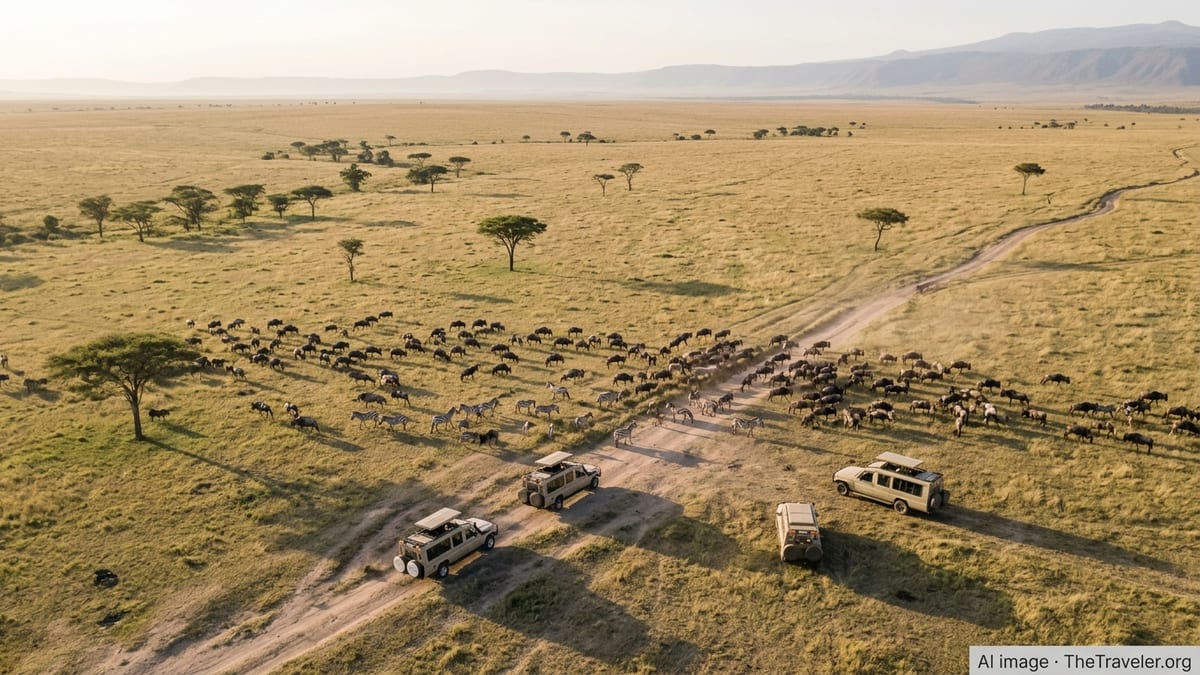
Tanzania’s appeal rests on a combination of marquee attractions and under‑the‑radar experiences. On the wildlife front, the Serengeti, Ngorongoro Crater, Tarangire and Ruaha remain central drawcards, with international coverage frequently highlighting the annual wildebeest migration as one of the world’s premier safari spectacles. The presence of Africa’s highest peak, Mount Kilimanjaro, adds a powerful adventure‑tourism anchor that few destinations can match.
The islands of Zanzibar, Pemba and Mafia are reinforcing that pull by offering a contrasting coastal and cultural experience. Visitor statistics released for Zanzibar show record monthly arrivals in 2024 and 2025, as improved air connectivity, new resort developments and the growth of small, independently run guesthouses extend the season beyond traditional peak months. Diving, kitesurfing and spice‑tour excursions are broadening the product mix beyond beach relaxation alone.
Tanzania’s cities are also starting to feature more prominently in itineraries. Dar es Salaam, the country’s commercial capital, is positioning itself as a short‑stay city break and gateway for coastal excursions, while Arusha continues to serve as the main staging point for northern safari circuits. Emerging secondary hubs such as Mwanza on Lake Victoria and the fast‑growing port city of Tanga are attracting investment in mid‑scale hotels and conference facilities, which analysts see as a base for future business and meetings tourism.
This diversified offer is helping Tanzania compete within a crowded African marketplace. While Egypt and Morocco dominate for culture and history, and South Africa positions itself as a city‑plus‑safari destination, Tanzania is carving out a clear identity around unspoiled wilderness, high‑end yet low‑density lodges, and a coastline that complements rather than competes with its inland parks.
Policy Reforms, Connectivity and Competition With Regional Leaders
Behind the headline arrival figures, policy shifts and infrastructure upgrades are reshaping the tourism landscape. Publicly available information on recent Tanzanian budget proposals indicates that the government plans to introduce mandatory travel insurance for most foreign visitors from the 2025/26 fiscal year, while simultaneously cutting a hotel levy from 10 percent to 2 percent to stimulate investment and keep overall travel costs competitive.
Visa and air access policies are also evolving. Tanzania has expanded e‑visa facilities, increased the number of visa‑exempt and visa‑on‑arrival nationalities in recent years and actively sought additional long‑haul routes from Gulf, European and regional African carriers. These steps mirror broader continental trends, with countries such as Kenya and Rwanda also easing entry requirements in a bid to attract more visitors and encourage multi‑country itineraries.
Competition among Africa’s leading destinations remains intense. Morocco and Egypt are investing in large‑scale resort zones and heritage site upgrades, Tunisia is repositioning itself with new boutique coastal developments, while South Africa is focusing on visitor safety campaigns and diversification into township, gastronomy and wine tourism. Zimbabwe, for its part, is leveraging its proximity to South Africa and Zambia to market Victoria Falls as an anchor for regional circuit travel.
In this context, Tanzania’s strategy appears to be centered on balancing volume growth with conservation. Park authorities have updated fee structures, tightened regulations around vehicle density in popular areas and promoted lesser‑known reserves such as Nyerere National Park to spread visitor flows. Analysts of East African tourism trends suggest that this approach may help Tanzania protect its core wildlife assets while maintaining the high‑quality safari experiences that differentiate it from higher‑density mass tourism markets elsewhere on the continent.
Outlook for 2026: Record Numbers and New Challenges
Looking ahead to the 2026 season, regional tourism reports and booking data from airlines and large tour operators point to another strong year for Africa’s flagship destinations. Forward indicators such as increased seat capacity on key international routes, higher long‑haul tour bookings and expanding hotel pipelines in major gateways support expectations of record visitor numbers across Morocco, Egypt, Tunisia, South Africa, Kenya, Tanzania and Zimbabwe.
For Tanzania, that likely means another step up in arrivals, particularly in high‑spend segments that combine safaris with beach stays or mountain trekking. Industry briefings highlight growing demand from North American travelers, as well as from emerging markets in Eastern Europe and Asia, where Tanzania is often marketed together with Kenya in cross‑border packages covering the Serengeti, Maasai Mara and coastal resorts.
However, the push toward record numbers also brings new pressures. Climate variability is affecting wildlife patterns and coastal ecosystems, while infrastructure in some fast‑growing destinations is struggling to keep pace with demand. Waste management, water use and the impact of increased air traffic are all emerging as areas that tourism planners across the continent must address if growth is to remain sustainable.
Analysts note that 2026 could therefore be a pivotal year in which Africa’s leading destinations, including Tanzania, define how to manage success. The challenge will be to maintain strong visitor growth and much‑needed foreign exchange earnings while protecting the natural and cultural assets that make Egypt’s temples, Morocco’s medinas, Tunisia’s beaches, South Africa’s vineyards, Kenya’s savannas, Zimbabwe’s waterfalls and Tanzania’s national parks such powerful magnets for global travelers.