

More news on this day
The Tanzania Association of Tour Operators has issued an unprecedented safety alert as severe flooding in Serengeti National Park sweeps away vehicles, strands tourists and exposes new risks to one of Africa’s flagship safari destinations.
Get the latest news straight to your inbox!
Tour Operators Warn Against Risky River Crossings
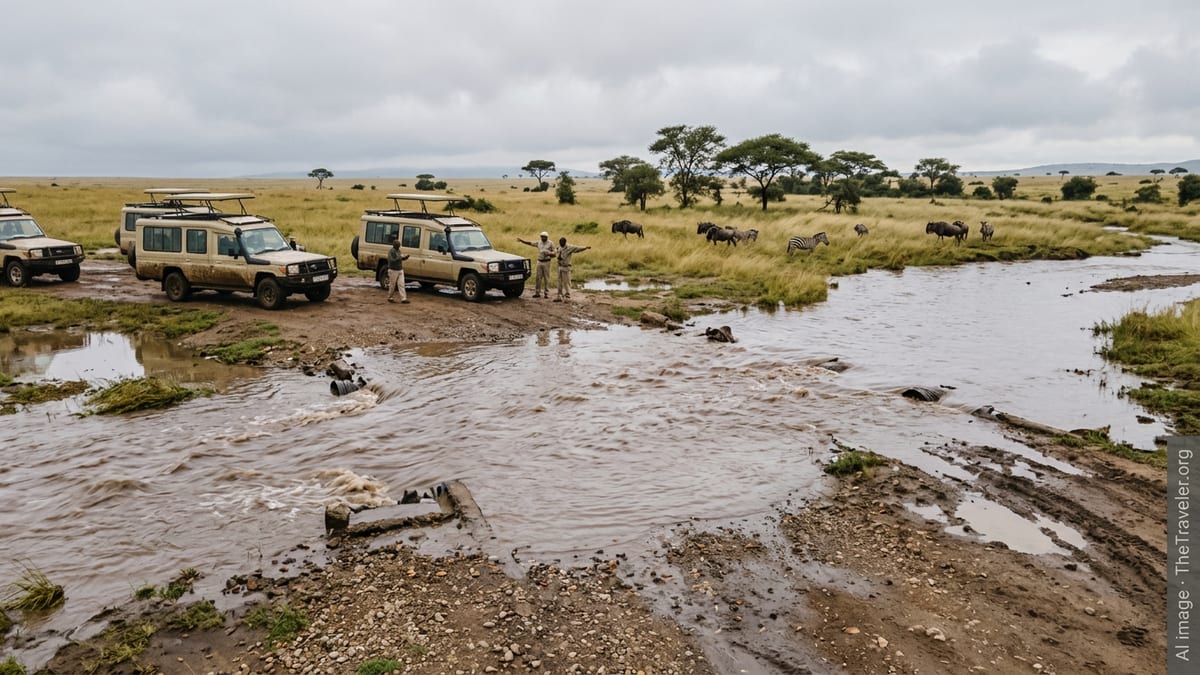
The Tanzania Association of Tour Operators (TATO) on March 9 urged all guides, drivers and tour companies to stop attempting river and road crossings where floodwaters remain high in Serengeti National Park. The appeal follows reports of several safari vehicles being swept off flooded crossings and multiple people reported missing in the sprawling ecosystem that anchors Tanzania’s tourism industry.
In a formal notice circulated across the sector, TATO chair Wilbard Chambulo called the situation “alarming,” stressing that no itinerary or commercial obligation justifies entering fast-moving water with guests on board. The association is pressing operators to turn back when they encounter flooded sections, delay movements until levels recede and collaborate with lodges and fellow operators to identify alternative, safer routes.
The warning comes as videos and photos of submerged safari tracks and vehicles caught in torrents circulate widely on social media, raising concerns among prospective visitors. While there have been no confirmed tourist fatalities, the combination of powerful seasonal rains and persistent traffic on damaged routes has created conditions that TATO describes as intolerably risky without immediate behavioral change.
TATO has also reminded operators that it stands ready to assist with emergency logistics, from rescue accommodation to support where guests risk overstaying park permits because of impassable routes. The message is intended to remove any perceived financial or bureaucratic pressure that might push drivers to attempt dangerous crossings.
Infrastructure Damage Complicates High Season Safaris
The flooding is the most serious test in years for Serengeti’s road and bridge network, with key crossings eroded or washed away and long stretches of unpaved tracks deeply rutted or submerged. Tanzania National Parks Authority officials report that several important access points, including known bottlenecks on central Serengeti routes, have been heavily damaged, temporarily cutting off some lodges and camp zones from regular vehicle traffic.
Authorities have confirmed a multi-billion shilling emergency program to repair bridges and rebuild washed-out road sections in the park, underscoring the scale of the destruction. Heavy machinery has been deployed to regrade roads, install culverts and fortify embankments along flood-prone river systems. Engineers are also working on longer-term solutions, including new elevated crossings at notorious choke points such as Nabi Hippo Crossing, which has been among the hardest hit.
The disruptions come at a crucial time for Tanzania’s tourism recovery, as international arrivals climb back toward pre-pandemic levels and the Serengeti’s calving season draws wildlife enthusiasts to the region’s southern and central plains. Tour operators report rerouted game drives, extended transfer times and last-minute itinerary changes as they work around damaged infrastructure while trying to maintain the quality of the safari experience.
Industry insiders say the sudden loss of certain routes has also exposed how dependent safari logistics are on a relatively small number of key crossings. Several operators are now reviewing their internal risk assessments for rainy-season itineraries, incorporating new contingency routes and revising guest briefings to set expectations about possible delays and detours.
TANAPA Keeps Park Open as Safety Debate Intensifies
Despite the scale of the flooding, Tanzania National Parks Authority has confirmed that Serengeti National Park remains open, with rangers and wardens working to monitor water levels, guide traffic and coordinate rescue efforts where needed. Officials emphasize that the majority of the park is still accessible and that wildlife viewing continues, albeit under more challenging conditions than usual.
The decision to keep the park operating has sparked debate within the tourism community, with some stakeholders arguing that a temporary closure or partial shutdown of the hardest-hit zones might reduce risk and allow engineering teams to work without interference. Others, including many local operators, warn that closing Serengeti at the height of the season could inflict severe economic damage on communities, staff and small businesses that depend on tourist income.
Authorities insist that enhanced safety messaging, tighter coordination with tour operators and targeted road closures in the most hazardous spots can mitigate the dangers without halting tourism altogether. Rangers have been instructed to immediately block off any crossing where water levels or structural damage pose unacceptable risk, while park management shares regular updates on road conditions with lodge managers and guide networks.
TATO’s intervention, however, suggests that formal directives alone may not be sufficient. The association’s statement explicitly criticizes instances of drivers attempting to power through flooded sections in order to keep to scheduled transfers or game drives. By placing public pressure on companies to put safety ahead of commercial considerations, TATO is seeking to shift norms across an industry that has sometimes relied on driver experience and judgment in fast-changing conditions.
Climate Volatility Brings New Layer of Risk
The severity of this year’s flooding is being widely linked by officials and conservation experts to broader climate volatility across East Africa. The region has experienced a series of intense rainfall events in recent seasons, with storms arriving earlier and delivering heavier downpours than in previous decades. Hydrologists note that these patterns are consistent with climate models that forecast more frequent extremes, including both severe floods and prolonged droughts.
Within the Serengeti-Mara ecosystem, scientists have documented increasingly erratic river flows that swing between low water levels and sudden, destructive surges. Environmental assessments already warned that infrastructure and tourism operations along key rivers would need to be rethought, from siting of lodges and camps to the design of bridges, culverts and roadside drainage. This month’s events appear to validate those concerns, as crossings that previously held during seasonal rains have been severely compromised.
For visitors, the changing climate means that traditional notions of a predictable “rainy season” are becoming less reliable. Heavy storms can now arrive outside historical norms, and localized cloudbursts can transform a passable track into a dangerous torrent within hours. Tour operators that once framed extreme weather as an occasional inconvenience are now being pushed to treat it as a central operational risk.
Policy makers are responding with a mix of immediate investments and long-term planning. Park authorities have outlined proposals for new raised bridges in multiple flood-prone corridors, together with more robust drainage systems and early-warning protocols for rapidly rising rivers. Conservation groups are also renewing calls for catchment-level interventions beyond the park boundaries, including reforestation in upstream areas that influence river behavior downstream in the Serengeti.
What Travelers Should Know Before Visiting Serengeti Now
For travelers with upcoming trips to Tanzania, the message from both authorities and operators is not to cancel travel outright, but to prepare for a more fluid and safety-conscious safari than in a typical year. Tour companies are contacting guests with updates on conditions, advising them that game drives and transfer routes may change at short notice and that certain famous crossings or viewpoints could be temporarily inaccessible.
Travel advisors are urging visitors to prioritize operators that are members of professional associations like TATO and that can demonstrate rigorous safety protocols around weather and road conditions. Questions about how companies monitor flood risks, train drivers and communicate route changes have quickly become as important as inquiries about wildlife viewing and lodge comfort.
On the ground, guests are being encouraged to trust their guides if they decide to turn back from a flooded section or abandon a planned activity. Industry leaders stress that a missed game drive is a small price to pay compared with the risks of attempting a fast-moving river crossing, particularly when visibility is low and road surfaces may be undercut or washed away.
Despite the disruptions, the Serengeti’s appeal remains undiminished for many visitors, with calving herds, predator action and dramatic skies still drawing photographers and wildlife enthusiasts. The unfolding crisis is sharpening the focus on how to experience this iconic landscape responsibly, with safety, climate resilience and environmental stewardship now firmly at the center of the conversation about Tanzania’s tourism future.