

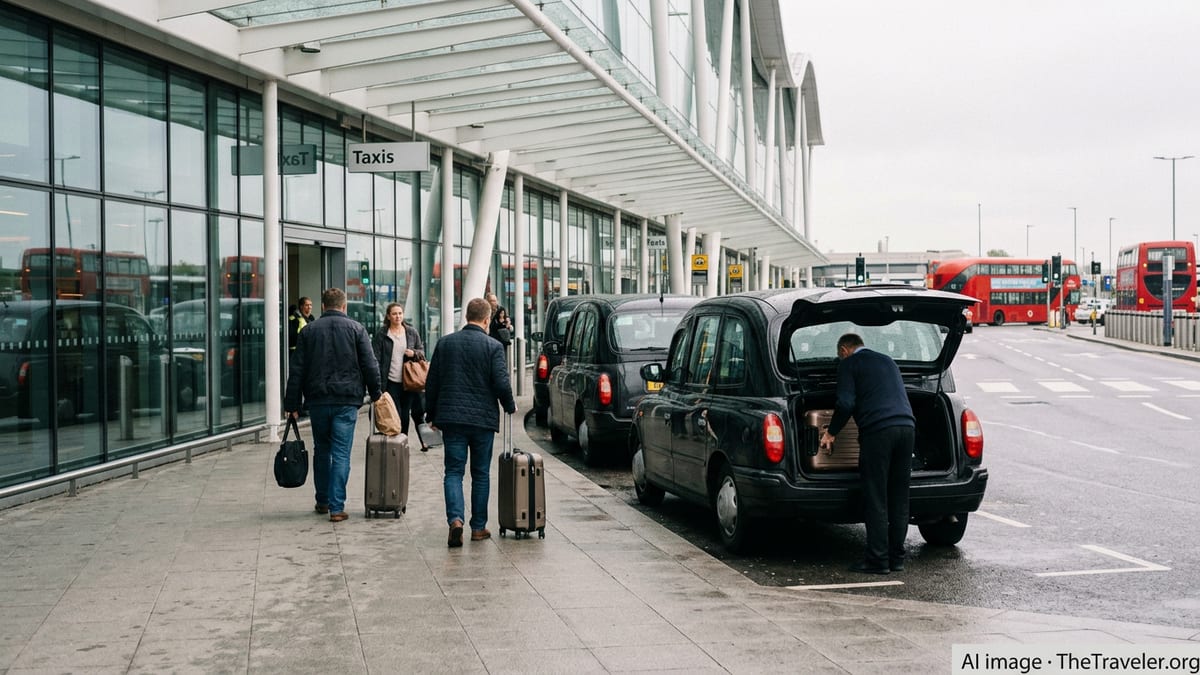
How Much a Taxi from Heathrow to London Really Costs
Heathrow sits around 15 to 20 miles from central London, and that distance, combined with heavy traffic and regulated tariffs, makes airport taxis costly. In 2025 and early 2026, most travelers pay somewhere in the region of about £60 to £120 for a standard taxi from Heathrow to central London, with typical journeys clustering around £75 to £100 for areas like Kensington, Victoria, or the West End. Black cabs that you pick up from the official taxi ranks operate on a meter, so the exact fare depends on traffic and route rather than a fixed price.
Recent fare guides and taxi calculators show that a metered black cab from Heathrow to central London commonly comes out around £90 to £130 in heavy traffic, especially during weekday rush hours or late evenings. In contrast, pre booked private minicab and transfer companies often advertise fixed rates starting roughly between £55 and £80 for central London hotels, provided you book in advance and supply your flight details so they can include waiting time.
It is important not to expect a single “standard” price. A couple arriving mid morning on a Sunday to a hotel near Hyde Park might see a black cab fare close to £75, while a solo traveler landing on a rainy Friday at 17:30 and heading to Shoreditch could easily see the meter creep towards or beyond £110. Larger vehicles such as minivans for four to six passengers, or executive cars such as a Mercedes E Class or S Class, frequently price in the £100 to £150 plus range for the same route.
If your budget is tight, think of the Heathrow taxi more like a premium door to door service than a routine ride. Comparing it against other options such as the Elizabeth line, Heathrow Express, or the Piccadilly line will help you decide whether the extra comfort and convenience are worth the extra £40 to £80 you will likely spend.
Black Cabs vs Private Transfers vs Ride Hailing Apps
Travelers leaving Heathrow for central London generally choose between three broad taxi style options: licensed London black cabs from the airport taxi ranks, pre booked private transfers (often called minicabs), and ride hailing apps such as Uber or Bolt. Each has distinct advantages, and prices can differ noticeably for the same journey.
Black cabs are the iconic London taxis, licensed and regulated, driven by professionals who have completed the Knowledge, an intensive training on London’s streets. At Heathrow, you will find official black cab ranks directly outside each terminal. You simply join the queue and take the next available cab. The meter starts around a few pounds and then runs according to Transport for London tariffs, with higher rates at evenings, nights, and weekends. For Heathrow to central London, that usually works out at roughly £80 to £120, but congestion can push it higher.
Pre booked private transfers or minicabs work differently. You arrange the ride online or by phone before you fly, choosing a vehicle type and receiving a fixed price, for example £70 for a standard saloon to a hotel in Bloomsbury, or £110 for a people carrier to an apartment in South Bank. Many of these firms monitor flight arrival times and include some free waiting time, such as 45 or 60 minutes after landing, in their fare. For families or groups with several bags, this can be significantly better value than two black cabs or multiple train tickets.
Ride hailing apps sit in the middle. At Heathrow, app based drivers usually pick up from short stay car parks or designated meeting points, not the main taxi rank. Pricing can be competitive at quiet times, sometimes similar to or slightly below pre booked minicabs for central London, but dynamic “surge” pricing during busy periods or rail strikes can send estimates into black cab territory or even higher. A quoted £65 trip to Covent Garden might jump to £100 if demand suddenly spikes, so it is worth checking the fare just before you confirm the booking.
Typical Journey Times and When Traffic Becomes a Problem
On paper, the distance from Heathrow to central London is not huge, but real world journey times are heavily influenced by traffic. Under relatively light conditions, such as early weekend mornings, a taxi can reach central areas like Paddington, Kensington, or Earl’s Court in roughly 35 to 45 minutes. For destinations further east, such as the City of London or Shoreditch, even in good traffic you should still allow at least 45 to 60 minutes.
During peak periods, the picture changes quickly. Weekday morning rush hour between about 07:00 and 10:00 and evening peaks between about 16:00 and 19:00 often see slow moving traffic on the M4, A4, and key central corridors. In these conditions, the drive into central London can stretch to 70 or even 90 minutes, especially if there are incidents, road works, or poor weather. Because black cabs charge by both time and distance, those long tailbacks translate directly into higher fares.
Realistic planning helps. If your hotel is near Paddington and you land at 06:00 on a Tuesday, you might well be at the hotel by 07:00 in a cab, with the fare towards the lower end of the typical range. The same trip starting from Heathrow at 17:30 on a rainy Friday will almost certainly take much longer and end up significantly more expensive. Many Londoners in this situation actually combine the Heathrow Express or Elizabeth line to Paddington with a short cab ride onward, trading a single expensive, traffic heavy journey for a faster, more predictable combination.
For late night arrivals between about 22:00 and 05:00, traffic is usually lighter, so journey times fall back somewhere near those off peak estimates of 40 to 60 minutes. However, remember that taxi tariffs are higher at night, so you may not save much money compared with daytime, even if the drive is quicker.
Understanding What Influences Your Final Fare
Taxis from Heathrow do not all cost the same. Several factors combine to shape the final price on the meter or the quote you receive, and understanding them helps you make educated choices. Time of day is one of the most important. London black cabs operate different tariffs for daytime, evening, and overnight. Late evenings, nights, Sundays, and public holidays usually attract higher per mile and per minute rates, which is why a midnight arrival into Terminal 5 can sometimes cost noticeably more than the same trip at 11:00 in the morning.
Traffic conditions are the next big variable. Metered fares increase not only with distance but also with time spent moving slowly or standing still. Crawling along the A4 into Hammersmith during a weekday evening, stopping at every junction, will add several pounds to the fare compared with a smooth off peak run. In one real world example, a black cab from Heathrow to a hotel near Holborn might cost around £80 on a quiet Sunday morning yet edge over £110 during a Friday rush hour when congestion is heavy around Earl’s Court, Victoria, and the West End.
Distance and destination within London also matter. “Central London” is a broad term. A trip to Kensington or Paddington is shorter than a journey to Liverpool Street, Canary Wharf, or Greenwich. In practice, most metered fares to inner Zone 1 districts sit somewhere between £70 and £120, while deeper journeys into East or South East London can exceed that, sometimes approaching £130 or more. For pre booked services, the company will usually group postcodes into zones and quote accordingly, for instance one rate for W2 and SW1 addresses, and a higher one for E1 or SE10.
Finally, vehicle type, passenger count, luggage, and extras influence the cost. An estate car, minivan, or executive sedan will typically attract a higher fixed fare than a standard saloon. Extra services such as meet and greet inside the terminal, baby seats, or additional pick ups en route can carry surcharges. Heathrow itself also applies fees for certain pickup areas, which are often folded into fixed price quotes or reflected in app based pricing. It is a good idea to confirm what is included in any private transfer quote so you are not surprised by parking or waiting time charges if your flight is delayed.
Practical Tips to Save Money and Hassle
While a taxi from Heathrow will almost always be more expensive than rail or Underground, there are several simple strategies that can help you reduce costs and avoid headaches. First, consider whether a full door to door taxi is really necessary. If you are traveling alone or as a couple with light luggage and staying near an Elizabeth line or Piccadilly line station, a train plus a short cab ride at the end often works out far cheaper and in many cases faster. For example, taking the Elizabeth line from Heathrow to Tottenham Court Road and then a black cab or minicab for the final mile or two to a Bloomsbury guesthouse might cost less than half of a direct taxi for the entire route.
Second, if you do want the convenience of a car, compare fixed price minicab quotes before you travel. Many London based transfer firms give instant prices once you enter Heathrow as your pickup point and your hotel postcode. For a family of four heading to a serviced apartment in South Kensington, a pre booked minicab at, say, £75 with meet and greet and an estate car for luggage can often be better value than two sets of Heathrow Express tickets plus a local taxi at the other end, especially at peak train fares.
Third, pay attention to timing where possible. If you have some flexibility with departure times from central London, leaving a hotel in Covent Garden for Heathrow at 06:30 rather than 08:30 can shave 15 to 25 minutes off the journey and keep the black cab fare noticeably lower by avoiding the worst of the morning gridlock. For early outbound flights, many travelers deliberately book a taxi slightly earlier than absolutely necessary so they can ride against the heaviest traffic and relax at the airport instead of watching the meter climb in a jam.
Finally, communicate clearly with your driver and check basic details before you set off. For black cabs, the meter should be visible and switched on when you start. If you are heading somewhere further than central London, ask the driver roughly what to expect cost wise. For private transfers, confirm that the price is fixed, whether road tolls, airport fees, and waiting time are included, and where exactly you will meet the driver. A minute or two of clarification at the start can prevent awkward conversations when you reach your hotel.
Comparing Taxis with Heathrow Express, Elizabeth Line and the Tube
There is no single best way to get from Heathrow to London. Taxis trade money for comfort and simplicity, while trains and the Underground offer speed and savings. The fastest rail option is usually the Heathrow Express, a non stop train between Heathrow terminals and Paddington station. The journey can take as little as about 15 minutes, with trains running roughly every 15 minutes for most of the day. Ticket prices vary widely depending on how far in advance you book and what promotions are available, but advance singles can be much cheaper than last minute purchases at the station.
For many visitors, the Elizabeth line has become a popular compromise. Trains run from Heathrow through key central stations such as Paddington, Tottenham Court Road, Farringdon, and Liverpool Street, typically taking around 35 to 45 minutes to reach the heart of the city. Fares are generally higher than the Piccadilly line but lower than the Heathrow Express, and you can pay with contactless or Oyster. If your hotel is near one of its central stops, the Elizabeth line can be both faster and cheaper than a taxi in peak traffic.
The Piccadilly line on the London Underground is the budget champion. With stations at Heathrow Terminals 2 and 3, Terminal 4, and Terminal 5, it offers a direct connection into central London areas like Hammersmith, Earl’s Court, South Kensington, Leicester Square, and King’s Cross St Pancras. The journey to Zone 1 usually takes about 50 to 60 minutes, and the fare using contactless or Oyster is significantly lower than both a taxi and the Heathrow Express. The trade off is that the tube can be crowded, especially during commuter hours, and handling heavy luggage up and down stairs can be tiring.
When weighing taxi against train, think about your group size, luggage, and final destination. A solo traveler staying near King’s Cross will probably find the Piccadilly line the best value, while a couple with two large suitcases heading to a boutique hotel near Paddington may prefer the Heathrow Express plus a short cab ride. A family of five with three large bags arriving late in the evening to a serviced flat in Covent Garden might choose a single pre booked minivan for the door to door simplicity, even at £100 plus, rather than navigating multiple train changes with tired children.
How to Take a Taxi from Each Heathrow Terminal
Heathrow currently has four active passenger terminals: Terminals 2, 3, 4, and 5. The process for taking a taxi is broadly similar at each, but a few practical details can make your experience smoother. At all terminals, follow the signs for “Taxis” or the black cab symbol as you exit arrivals. These lead you to the official taxi rank, where marshals often help manage queues during busy periods. You do not need to book in advance to use a black cab rank; simply join the line and take the next available licensed taxi.
At Terminals 2 and 3, which share a central arrivals area, the taxi rank is reached via a short walk and is clearly signposted. It is common to see a queue of black cabs waiting, especially in the mornings and evenings. Terminal 4, serving a mix of long haul and European flights, has its rank located just outside the arrivals hall. Terminal 5, the main base for some of the largest carriers, has a large, well organized taxi area outside arrivals with staff on hand and plenty of vehicles during most of the day.
If you have pre booked a private transfer, the meeting arrangements may differ. Some companies will have the driver waiting in the arrivals hall with a sign showing your name, then escort you to a nearby car park or pickup area. Others may ask you to call or message the driver once you have collected your luggage, then direct you to a specific level of a short stay car park. Allow a little extra time in your schedule for locating your driver, especially if you are not familiar with the terminal layout.
For ride hailing apps, check the app’s instructions carefully when you land. Many require you to walk to a designated pickup point in a car park rather than the main forecourt. Because car parks at Heathrow can be large, factor in 5 to 10 minutes of walking time from arrivals to the pickup zone. If you are traveling with mobility issues or very heavy luggage, this extra walking can be an argument in favor of the official black cab rank, even if the base fare is slightly higher.
The Takeaway
Choosing a taxi from Heathrow to London is ultimately a trade off between cost, comfort, and convenience. A metered black cab directly from the airport taxi rank will nearly always be the simplest option and offers a reassuringly regulated service, but for most journeys into central London you should expect to spend somewhere between about £70 and £120, and occasionally more when traffic is severe or you are traveling at night.
Pre booked private transfers can soften the blow by providing fixed prices, meet and greet, and larger vehicles for families or groups, often at slightly lower rates than a comparable black cab journey. Ride hailing apps add flexibility but can become unexpectedly expensive during peak demand periods. Against all of these, high speed trains and the Underground often win on both price and journey time, especially if you are happy to wheel your own luggage and perhaps take a short local taxi at the end.
If you understand what drives taxi prices, allow realistic time for traffic, compare your options before you fly, and clarify any charges upfront, a taxi from Heathrow can be an easy and comfortable start or finish to your time in London rather than an unwelcome surprise on your credit card statement.
FAQ
Q1. How much does a taxi from Heathrow to central London usually cost?
For most travelers a standard taxi from Heathrow to central London typically falls somewhere between about £70 and £120, depending on traffic, time of day, and exact destination, with fares sometimes higher in heavy congestion or at night.
Q2. How long does a taxi from Heathrow to London take?
In light traffic you can reach central London in roughly 40 to 60 minutes, but during weekday rush hours or in bad weather the journey can stretch to 70 to 90 minutes, especially for destinations east of the West End.
Q3. Is it cheaper to pre book a private transfer than to take a black cab?
Often yes. Many reputable transfer companies offer fixed prices from Heathrow to central London starting around the mid £50s to £70s for a standard car, which can undercut a metered black cab, particularly at busy times when traffic is slow.
Q4. Are taxis from Heathrow safe and regulated?
Licensed London black cabs are strictly regulated, and drivers must pass detailed background checks and complete extensive training. Private hire and minicab firms must also be licensed, and booking through established companies or well known apps helps ensure a safe, traceable journey.
Q5. Do taxis from Heathrow accept credit cards and contactless payments?
Almost all London black cabs and reputable private transfer services now accept major credit and debit cards, and many also accept contactless and mobile wallet payments, though it is still sensible to confirm with the driver at the start of the journey.
Q6. Should I tip taxi drivers when traveling from Heathrow to London?
Tipping is not compulsory, but it is common to round up the fare or add around 10 percent for good service, help with heavy luggage, or safe driving in difficult conditions; many passengers simply round to the nearest pound or an easy figure.
Q7. Can I guarantee a fixed price in a black cab from Heathrow?
By default black cabs run on the meter, and the final price reflects distance and time. For journeys well beyond central London some drivers may agree a set fare before departure, but within central zones you should generally expect to pay the metered amount rather than a fixed rate.
Q8. What is the best option for a family with lots of luggage?
Families or groups with several suitcases often find a pre booked estate car or minivan best, as it offers guaranteed space, door to door service, and a fixed price, which can be good value compared with buying multiple train tickets and then adding a local taxi at the other end.
Q9. Is a taxi worth it compared with the Heathrow Express or Elizabeth line?
A taxi can be worth the cost if you value door to door comfort, are traveling with children or bulky luggage, or are arriving very late or very early, but for many solo travelers and couples the Heathrow Express, Elizabeth line, or Piccadilly line plus a short cab ride is faster and considerably cheaper.
Q10. Do taxis run from Heathrow 24 hours a day?
Yes, licensed black cabs and many private hire operators serve Heathrow around the clock, though late at night there may be fewer vehicles waiting at the ranks and you might wait slightly longer or prefer to pre book a transfer in advance.