

More news on this day
Tata Consultancy Services (TCS) has suspended all travel to and from the Middle East and activated emergency support mechanisms for staff in the region, as escalating conflict and widespread airspace closures trigger major disruptions for companies with cross-border operations.
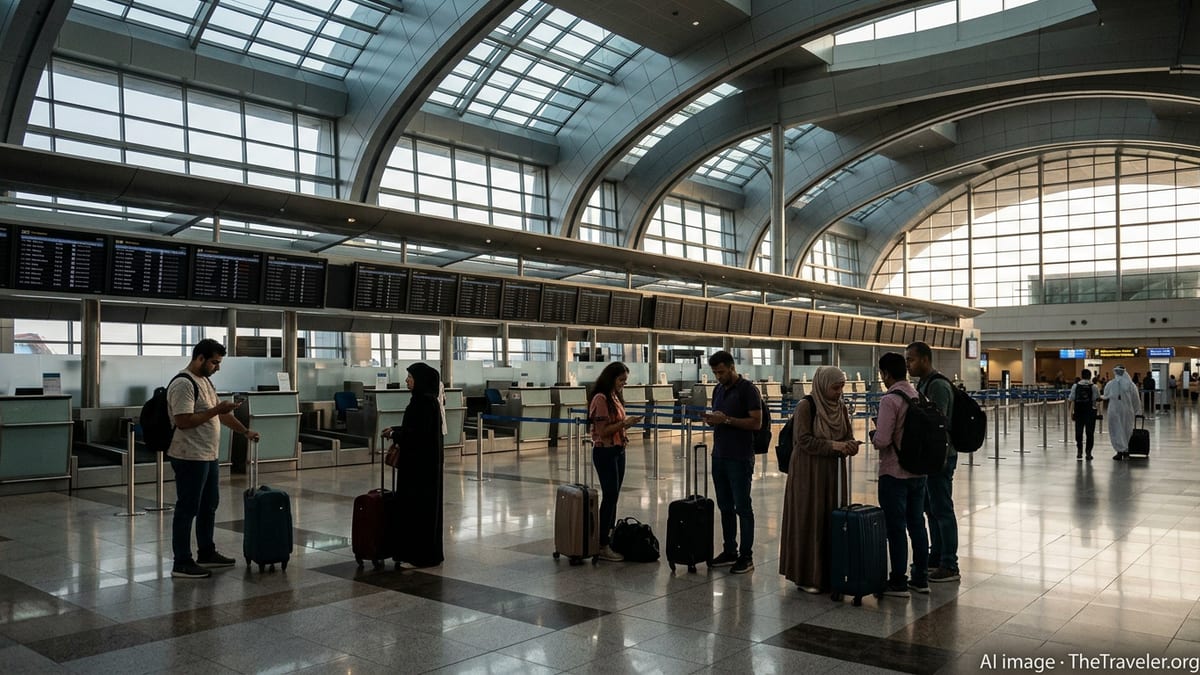
Comprehensive Suspension of Middle East Travel
The Mumbai headquartered IT services giant has instructed employees to halt all business travel to, from and through the Middle East, including transit via regional hubs. The move follows the closure of multiple air corridors and the temporary suspension of services by a number of global and Indian carriers operating in West Asia, severely limiting connectivity for corporate travellers.
Internal advisories circulated to staff state that all incoming and outgoing travel associated with the Middle East is on hold until further notice, with employees urged to avoid non essential movement and to adhere strictly to local government directives. The company has emphasised that any exceptions will require high level approval and will only be considered in cases of critical business need and available safe routing.
The decision aligns TCS with a growing list of organisations that have deferred or cancelled trips into the region in recent days, including fellow Indian IT majors and multinational corporations with regional bases in Dubai, Abu Dhabi, Doha and Riyadh. Industry bodies have similarly advised members to postpone non essential visits and to rely on remote collaboration wherever possible.
Emergency Support and Call Tree Systems Activated
Alongside travel restrictions, TCS has activated emergency support structures designed to track, contact and assist employees across affected countries. According to company communications cited by Indian business media, human resources and country leadership teams are “actively connected” with staff and their families, supported by a call tree system prioritising associates in impacted and bordering regions.
The call tree approach, commonly used in corporate crisis management, enables rapid confirmation of employee safety and quick dissemination of instructions. TCS teams are checking on accommodation, access to essentials and the feasibility of safe onward travel, while reminding staff to maintain regular contact with managers and local HR representatives.
Employees have been told to report any issues with security, health or mobility immediately so that responses can be coordinated with local authorities and, where relevant, diplomatic missions. For staff currently stranded in transit, the company is working with airline partners and airport authorities to arrange rebooking or temporary lodging until routes reopen.
Regional Context: Airspace Closures and Flight Disruptions
The TCS measures come amid a broader aviation and security crisis triggered by intensified hostilities involving Iran, Israel and allied forces. Authorities across a swathe of Middle Eastern states have restricted or closed airspace for civilian traffic on security grounds, prompting wholesale adjustments to flight paths and the cancellation of hundreds of services.
Major international and regional airlines have announced temporary suspensions on routes to key Gulf and Levant destinations, while others are operating limited evacuation or repatriation flights only. Indian carriers have reported extensive cancellations or diversions on services touching the United Arab Emirates, Saudi Arabia, Qatar and onward routes to Europe that typically cross Middle Eastern airspace.
The disruption has stranded business travellers, overseas workers and tourists at airports from Dubai to Doha, and has led several governments, including Indian state authorities, to activate emergency centres and helplines to support citizens in the region. Travel and tourism operators in Asia and Europe have in parallel launched their own 24/7 response teams to manage affected itineraries.
Employee Safety and Business Continuity Priorities
While TCS has not reported any casualties or direct physical harm to its workforce, the company has underscored that the safety and wellbeing of associates and their families remains its “highest priority.” The suspension of travel is framed as a precautionary step that balances duty of care with the need to maintain continuity of service for global clients.
Industry statements indicate that core technology operations across the Middle East are largely continuing, supported by remote work arrangements and the relocation of certain critical roles outside the most affected zones. TCS and its peers are relying on distributed delivery centres worldwide to absorb any short term disruption arising from staff being unable to travel.
Clients have been assured that contingency plans are in place, with project teams instructed to review deadlines, adjust staffing models and make greater use of virtual collaboration tools. The company is also monitoring potential second order impacts, such as delays to on site implementations, postponed customer workshops and reduced access to regional data centres.
What TCS Employees and Travellers Need to Know Now
For TCS staff, the immediate message is to stay put, stay reachable and stay informed. Employees based in Middle Eastern offices have been asked to remain indoors where advised by local authorities, limit movement to essential needs, and keep management updated on their status. Those scheduled to travel into the region have been told to stand down until official guidance changes.
Associates currently outside their home base, including those on assignments, secondments or short term business trips, are being handled case by case, with HR evaluating options such as temporary remote working from current locations, rerouting via alternative hubs once safe, or extending stays until conditions stabilise. Workers are urged not to attempt independent rebooking on disrupted routes without first consulting corporate travel and HR teams.
Travellers with personal trips planned to Middle Eastern destinations are being encouraged to reconsider timing and to check airline advisories closely, even if tickets were not booked through corporate channels. Company communications stress that any personal travel that might affect availability for work, or expose employees to heightened risk, should be discussed with managers in advance.
With the regional situation still evolving, TCS has said it will continue to monitor developments in close coordination with Indian embassies, consulates and host nation authorities, issuing further updates as needed. For now, the combination of suspended travel and fully activated emergency support networks is intended to give the company maximum flexibility to protect its workforce while keeping its global delivery operations running.