

More news on this day
Tébessa, an Algerian city near the Tunisian border long overshadowed by larger Mediterranean gateways, is preparing to restore international flights at its regional airport, setting the stage for new tourism and cross-border travel opportunities in North Africa.
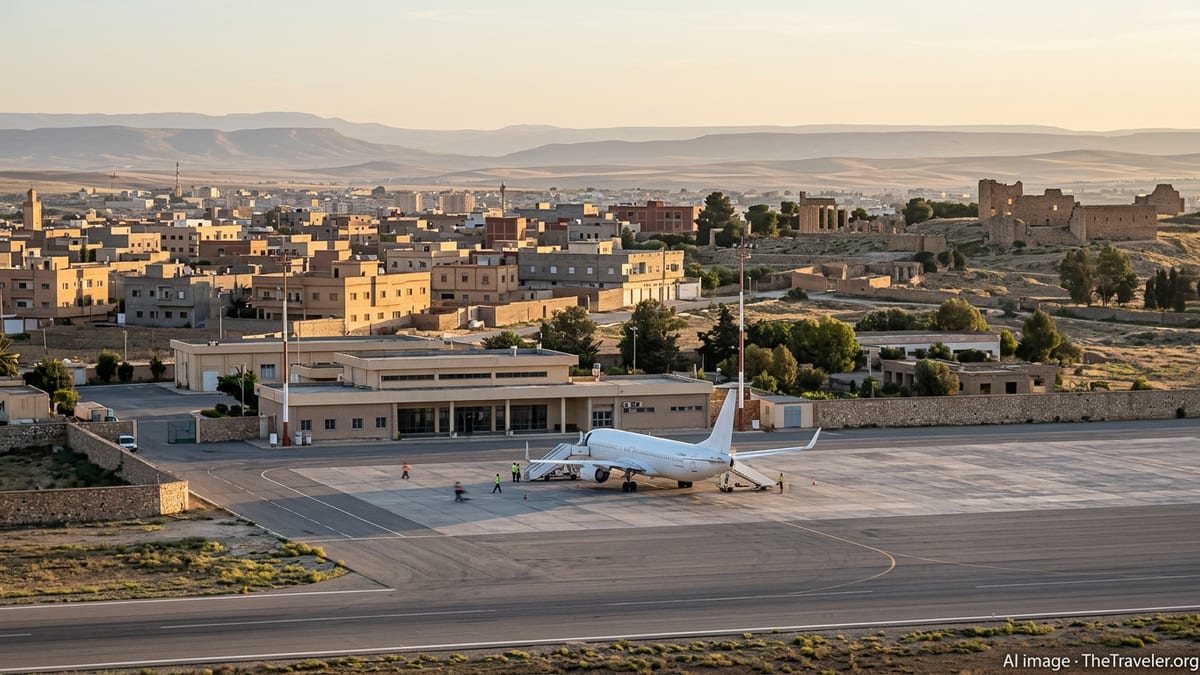
A Borderland City Steps Back Onto the Aviation Map
Local aviation and tourism officials in Algeria say plans are under way to bring back international services to Tébessa Airport, transforming what has largely been a domestic facility into a small but strategic cross-border hub. While most details are still being finalized, the intent is clear: connect eastern Algeria directly to neighboring Tunisia and, potentially, selected European and Middle Eastern markets.
For years, international visitors headed to Algeria’s coastline or flew into Tunisian resorts, rarely considering Tébessa’s Roman ruins, Saharan foothills and mountain plateaus. With new cross-border air links, the city is looking to reposition itself as a convenient entry point for travelers seeking to combine cultural touring, desert excursions and overland trips into Tunisia.
The move comes as North African destinations compete to diversify access points beyond capital-city airports. By reactivating Tébessa’s international status, Algeria is signaling that secondary cities and border regions will play a greater role in its broader tourism and economic strategy.
Even limited routes could be transformative for local communities. Direct flights mean shorter travel times for residents working abroad, easier family visits across the border and a new stream of visitors who might otherwise bypass the region entirely.
Strategic Gateway Between Algeria and Tunisia
Tébessa’s value lies in geography. The city sits only a short drive from key Tunisian crossings, placing its airport in a position to serve as an aerial bridge for two tourism markets that increasingly feed into one another. Before the health and security disruptions of recent years, millions of Algerians traveled overland to Tunisia’s beaches each summer, and Tunisian tour operators have been eyeing new cross-border circuits that integrate Algerian heritage sites.
Restored international flights would give travelers an additional option beyond long bus rides or indirect airline routings through Algiers, Tunis or coastal hubs. Tour planners could, for example, route visitors into Tébessa for archaeological touring and desert landscapes, then carry them overland into Tunisia’s spa resorts and Mediterranean coast, or in the reverse direction.
Aviation analysts note that this type of regional connectivity is increasingly important for North African economies that seek to attract higher-value visitors and year-round stays. A functioning international gateway at Tébessa could also support business travel linked to cross-border trade, mining, agriculture and energy, which remain pillars of the local economy.
Authorities on both sides of the frontier are watching how new routes might interact with land borders, customs regimes and security protocols. Any international restart in Tébessa would be coordinated closely with Tunisian counterparts to keep flows fluid for tourists while maintaining robust controls.
Infrastructure Upgrades and Airline Interest
In anticipation of international operations, airport authorities in Tébessa are focusing on compliance with international safety and security standards, including passenger screening, baggage handling and updated terminal procedures. Even modest investments in runway maintenance, lighting, air traffic systems and passenger facilities can determine whether the airport is attractive to foreign carriers.
Industry observers expect that the first international services will likely be short-haul flights operated by Algerian or regional airlines, possibly using narrow-body jets or turboprops configured for under two hours of flight time. Potential target markets include Tunisian airports, key Algerian diaspora centers in Europe and perhaps seasonal charter flights responding to tour operator demand.
Airlines evaluating Tébessa will weigh passenger demand, yields and operational risk. The airport’s proximity to overland crossings is a strength, but carriers will also look for clear government support, marketing partnerships with tourism boards and reliable ground transport links into city centers and nearby attractions.
Local hoteliers and tour operators are already positioning themselves for a potential uptick in arrivals. Some are exploring cross-border packages that could be sold jointly with Tunisian partners, while others are looking at niche segments such as heritage tourism, trekking in the Aurès and Atlas ranges, and religious travel tied to historic sites.
Tourism Potential From Roman Ruins to Saharan Foothills
For most international travelers, Tébessa is better known from history books than from guidebooks. The region hosts remnants of Roman Tbestis, including city walls, arches and early Christian sites, alongside Berber heritage and Ottoman-era influences. Tour guides believe the restoration of international flights could finally put these assets on the wider tourism map.
Beyond the city, the broader province opens onto semi-arid landscapes and the northern fringe of the Sahara, offering scope for jeep excursions, hiking and community-based tourism in highland villages. These experiences complement, rather than compete with, Tunisia’s coastal draws, creating opportunities for multi-country itineraries that appeal to long-haul visitors from Europe and beyond.
Tourism officials hope that a steady trickle of culturally curious visitors will encourage investment in small guesthouses, upgraded hotels and guided experiences that meet international expectations while preserving local character. Training programs for guides, drivers and hospitality workers are likely to feature prominently as the region prepares to interact more directly with overseas travelers.
Environmental and cultural preservation will be a parallel focus. As air connectivity grows, local authorities are under pressure to manage tourism’s footprint carefully, protecting archaeological sites and fragile ecosystems while making them more accessible.
Regional Aviation Recovery and Future Outlook
Tébessa’s international restart is unfolding against a complex backdrop for aviation in the wider region, where security incidents and airspace disruptions have at times forced airlines to reroute or suspend services. In this context, smaller regional airports that can offer stable operations may gain new relevance.
Algeria has been gradually modernizing several of its airports and refining its tourism offer to compete with neighboring Morocco and Tunisia for international arrivals. While Tébessa will not handle the volumes of coastal hubs, it symbolizes a broader shift toward dispersing traffic across the country and promoting secondary destinations.
If demand materializes, aviation planners see scope for incremental growth. Initial limited schedules could expand with additional weekly frequencies, new seasonal routes and charter services tied to festivals, religious holidays or special-interest tours. Success in Tébessa could also serve as a template for other underused regional airports in North Africa looking to plug into international networks.
For now, expectations remain cautious but optimistic. Travelers, tour operators and the Algerian diaspora will be watching closely as timetables are announced and the first international aircraft once again touch down in Tébessa, potentially opening a fresh chapter in cross-border tourism between Algeria and Tunisia.