

More news on this day
Israeli air raids on Tehran’s Mehrabad International Airport have left at least 17 aircraft destroyed on the tarmac, many of them believed to be civilian Boeing and Airbus jets, sharply intensifying Iran’s isolation and triggering fresh turmoil across already fragile international flight networks.
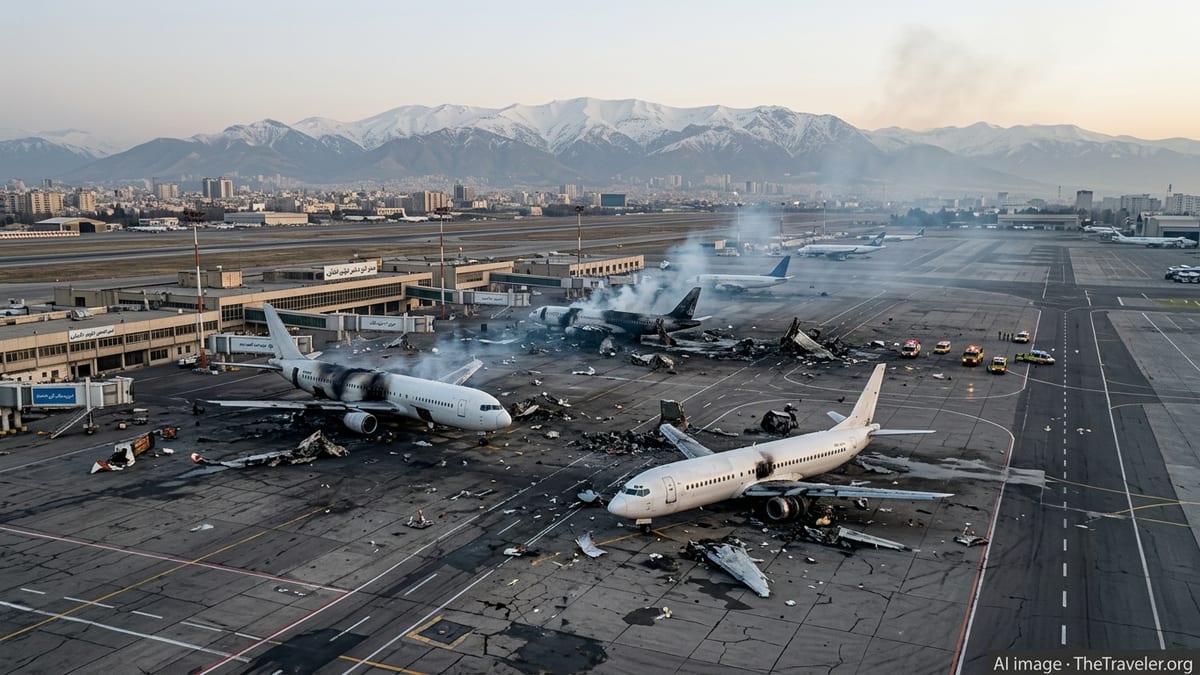
New Details Emerge From Strikes on Mehrabad
Fresh satellite imagery and military assessments released over the weekend point to extensive damage at Tehran’s Mehrabad International Airport after a pre-dawn wave of Israeli strikes on March 7. Analysts reviewing the images say at least 17 aircraft were destroyed or rendered beyond economic repair in fires and secondary explosions along two main parking aprons, including what appear to be several aging widebody Boeing airliners long associated with Iranian state-linked carriers.
Israel has said its jets targeted aircraft and infrastructure allegedly used by Iran’s Islamic Revolutionary Guard Corps Quds Force to move weapons, cash and personnel across the region. The Israeli military has publicly claimed the destruction of 16 aircraft tied to the IRGC, while independent defense specialists, comparing before-and-after imagery, report one additional hulk likely written off among the scorched remains. Iranian officials have condemned the raids as unlawful attacks on civilian aviation, insisting that passenger operations, not covert logistics, were the primary activity at the affected stands.
Images circulating on aviation forums and defense-monitoring sites show plumes of smoke rising from the airport’s western side and several passenger jets reduced to twisted, blackened shells. While exact aircraft types remain under verification, aviation historians say at least one rare Boeing 747 cargo variant parked at Mehrabad appears to have been among the casualties, underscoring the symbolic as well as operational impact of the strikes on Iran’s already aging and heavily sanctioned fleet.
Civilian Capacity Crippled as Iran’s Air Network Contracts
Mehrabad, once Tehran’s main international hub and still a critical base for domestic and regional services, plays an outsized role in Iran’s internal connectivity. The loss of so many aircraft in a single night is particularly severe for a country that has struggled for decades to renew its fleet due to sanctions restricting access to modern Boeing and Airbus models and the spare parts needed to keep older planes in service.
Industry analysts note that many of the destroyed jets were likely serving short and medium-haul routes linking Tehran with provincial cities and neighboring states. Their sudden removal from the fleet will force already stretched Iranian carriers to consolidate schedules, cut frequencies, or temporarily abandon some destinations. With little prospect of rapid replacement, airlines are expected to cannibalize remaining airframes for parts, further shrinking effective capacity in the months ahead.
Aviation safety specialists also warn that concentrating remaining traffic onto fewer airframes raises maintenance and reliability pressures on Iran’s surviving fleet. Operators were already extending service lives far beyond normal retirement ages. The latest damage, they say, risks pushing some carriers to fly aircraft more intensively or defer non-critical maintenance to keep routes alive, a pattern international regulators will be watching closely as the conflict evolves.
International Flights Diverted as Regional Skies Tighten
While Mehrabad bore the brunt of the latest attacks, the repercussions have rippled outward through air corridors linking Europe, the Gulf and Asia. Iran’s primary international gateway, Tehran Imam Khomeini International Airport, has been operating under heavy restrictions, with flight-tracking data in recent days showing only sporadic movements and long gaps suggesting de facto closure for regular commercial services.
Major European and Gulf airlines have extended or expanded suspensions of services into Iranian airspace, citing security risks for overflights as well as landings. Carriers that once relied on efficient great-circle routes across Iran are diverting long-haul flights hundreds of kilometers north or south, adding fuel costs, longer block times and tight crew duty margins. Some have opted to cancel marginal routes outright rather than absorb the operational complexity.
Beyond Iran, knock-on effects are evident in nearby hubs. Dubai International and Doha’s Hamad International, both key waypoints for global transfers, have handled surges of disrupted passengers as itineraries are rebooked via alternative routes skirting Iranian airspace. In parallel, Israel’s own airspace has seen periodic closures and capacity limits following Iranian missile and drone salvos, prompting further cancellations and diversions that compound the regional aviation squeeze.
Travelers Face Cancellations, Stranded Crews and Rising Fares
For travelers, the destruction at Mehrabad and the broader air war have translated into a patchwork of sudden cancellations, forced stopovers and uncertain rebooking options. Thousands of passengers with tickets to or through Tehran over the coming weeks have been advised not to travel to the airport unless they receive explicit confirmation that their flights are operating, a condition that remains fluid as airlines adjust day by day to shifting risk assessments and airspace notices.
Foreign carriers that once operated to Tehran are largely absent from schedules, leaving many Iranian diaspora travelers in Europe, North America and Southeast Asia reliant on complex multi-stop itineraries designed around the remaining safe corridors. Travel agents in Istanbul, Doha and Yerevan report a sharp rise in demand for seats on indirect routings that keep aircraft well clear of Iranian skies, even when that adds many hours to total journey time.
At the same time, airline revenue managers are grappling with abruptly reduced capacity across key Middle East and Central Asian corridors. With fleets constrained and routings elongated, available seats are tightening and advance-purchase discounts are disappearing from many searches. Industry consultants expect sustained upward pressure on fares for select long-haul markets as long as the war on Iran’s infrastructure continues, particularly on routes that once depended heavily on efficient Tehran overflights.
Uncertain Path to Recovery for Iran’s Aviation Sector
Within Iran, officials have vowed to restore operations and portray the airport strikes as a temporary setback. Yet the underlying structural challenges are stark. Even before the latest conflict, Iranian carriers faced chronic cash shortages, limited access to global leasing markets, and difficulties obtaining certified parts and technical support from Western manufacturers. The elimination of so many airframes in a matter of hours has deepened a hole that analysts say cannot realistically be filled without a fundamental change in Iran’s international standing.
Aviation policy experts point out that the country’s ability to rebuild will depend not only on the military situation, but also on future sanctions policy and the willingness of aircraft makers and lessors to re-engage with Iranian counterparts. Any such shift appears distant while active hostilities with Israel and the United States continue. For now, Iran’s airlines are focused on preserving what remains of their fleets, redistributing aircraft to prioritize politically and economically vital routes, and improvising around damaged infrastructure at Mehrabad and other vulnerable fields.
For the broader travel industry, the destruction at Tehran’s airports serves as a stark reminder of how quickly geopolitical shocks can unravel painstakingly rebuilt connectivity. Even if fighting were to ease in the coming weeks, international confidence in overflying or serving Iran is likely to lag, ensuring that the effects of those 17 wrecked airframes will be felt not just on the tarmac in Tehran, but across global route maps for months, and potentially years, to come.