

More news on this day
Israel is grappling with a fresh aviation crisis as at least 49 flights were canceled at Tel Aviv’s Ben Gurion Airport this weekend, leaving passengers scrambling for alternatives and highlighting the country’s growing reliance on a handful of carriers willing to operate amid heightened regional tensions.
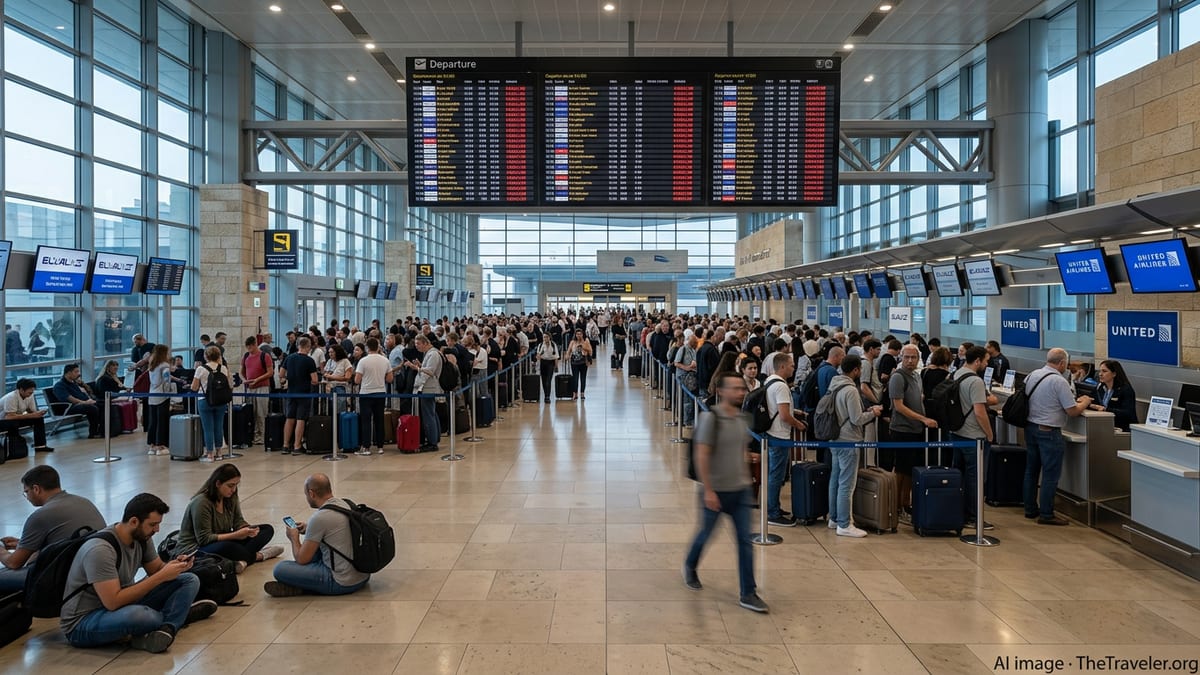
Wave of Cancellations Hits Ben Gurion Airport
Ben Gurion Airport, Israel’s main international gateway, has been operating under severe strain after days of intermittent airspace closures and security alerts tied to the ongoing conflict with Iran and militant groups in the region. Airline schedules that had only just begun to stabilize have again been upended, with a new wave of cancellations affecting both Israeli and foreign carriers.
Airport operations data and airline statements indicate that at least 49 departures and arrivals were scrubbed over a 24-hour period, disrupting travel for thousands of passengers. The affected flights span key routes to Europe, North America and regional hubs, illustrating how quickly Israel’s connectivity can unravel when tensions spike.
Although limited flights continue to operate under tight security protocols and capacity caps, the cancellations have created cascading delays, missed connections and uncertainty for travelers trying to leave or enter the country. Ground staff report long queues at rebooking counters and growing frustration among passengers facing repeated schedule changes.
Israel’s Carriers Under Pressure
National airline El Al, along with Israir and other domestic operators, has once again been thrust into the role of aviation lifeline as many international carriers curtail or suspend operations to Tel Aviv. El Al has resumed limited inbound services in recent days to bring home stranded Israelis, but its ability to expand capacity is constrained by aircraft availability, crew limits and the government’s phased reopening plan for the country’s airspace.
Israir, Arkia and newer player Air Haifa have been juggling a mix of cancellations, rescue flights and diverted operations as authorities periodically halt traffic or redirect arrivals to alternative airports. In some cases, flights have been routed via neighboring countries or secondary airports, adding hours to journeys and complicating logistics for both airlines and passengers.
For Israel’s carriers, the crisis is a double-edged sword. On one hand, reduced competition from foreign airlines means strong demand and high load factors on the flights that do operate. On the other, the stop-start nature of operations, elevated insurance and security costs, and the reputational risk of sudden cancellations are testing business resilience and eroding passenger confidence.
Foreign Airlines Reassess Israel Routes
The latest disruption has also prompted renewed caution from foreign airlines serving Israel. United Airlines, which had previously restored a limited schedule to Tel Aviv from its U.S. hubs, is among the carriers affected by the new cancellations, with several departures scrubbed or postponed as it reassesses the risk environment and airspace availability along its routes.
European and regional carriers have taken similar steps. Some, such as the Lufthansa Group, have suspended Tel Aviv operations during peak periods of tension, while others have implemented rolling cancellations and extended suspensions on affected routes. Greek carrier Aegean Airlines recently confirmed that its flights to and from Tel Aviv will remain canceled until at least March 20, underscoring how long-lasting the disruption may be.
These moves reflect the complex calculations airlines must make when weighing crew safety, aircraft routing, insurance constraints and passenger demand. Even when Israel’s skies technically reopen, many foreign carriers are choosing to wait for a more sustained period of stability before fully restoring their schedules, leaving gaps that local airlines struggle to fill.
Stranded Travelers and Mounting Frustration
For passengers, the numbers tell only part of the story. The cancellation of 49 flights in a compressed window has translated into missed family events, disrupted business trips and unexpectedly extended stays in Israel and abroad. Travelers at Ben Gurion describe crowded terminals, anxious waits at check-in desks and limited information about when flights might actually depart.
Many passengers booked on foreign carriers have been forced to search for seats on El Al or Israir at short notice, often at significantly higher fares and with limited flexibility. Others are opting for circuitous routes via Athens, Larnaca or other regional hubs in hopes of bypassing the bottlenecks at Tel Aviv. Travel agents report a surge in last-minute itinerary changes and inquiries about insurance coverage for conflict-related disruptions.
Israel’s Transport Ministry has urged airlines to offer flexible rebooking and refund options, particularly for travelers whose flights fall within the current period of heightened alert. However, compensation rules are complicated by the fact that many cancellations are related to security decisions and airspace closures, areas where standard passenger rights regulations are often diluted or suspended.
Long-Term Questions for Israel’s Air Connectivity
The latest round of cancellations is reopening broader questions about how Israel secures its international air links in an era of recurring regional crises. The country’s near-total dependence on Ben Gurion as a single hub has been repeatedly exposed, prompting renewed discussion of contingency plans, greater use of diversion airports and more resilient scheduling models.
Policy makers and industry figures are also debating how to entice foreign airlines back and keep them operating reliably. While some carriers have shown willingness to return once periods of acute tension subside, others remain wary of the reputational and financial risks of repeated suspensions. Incentive schemes, security cooperation agreements and clearer protocols around airspace closures are all being floated as tools to rebuild confidence.
For travelers, the immediate message is one of caution. With the security situation fluid and airlines revising schedules on short notice, passengers are being advised to monitor their bookings closely, maintain flexible plans and be prepared for potential last-minute changes. As Israel navigates this latest aviation shock, the experience at Ben Gurion is becoming an emblem of the wider travel uncertainty facing the region.