

More news on this day
Telangana is preparing a large-scale tiger tourism initiative worth more than Rs 800 crore, focusing on forest restoration, new wildlife conservation measures and expanded safari experiences in the Kawal and Mannanur reserve landscapes, according to recent policy documents and regional media coverage.
Get the latest news straight to your inbox!
Big Ticket Investment Tied to New Tourism Policy
Publicly available information on Telangana’s Tourism Policy 2025–2030 indicates that the state is positioning eco and wildlife tourism as a core pillar of its broader plan to attract thousands of crores in tourism-linked investment. Within this framework, Kawal Tiger Reserve in northern Telangana and the Mannanur gateway area of the Amrabad Tiger Reserve in the south are being highlighted as anchor sites for a new circuit of tiger and forest-based experiences.
Policy documents and regional business reporting describe a pipeline of tourism investments in the state that collectively exceed Rs 20,000 crore, with more than Rs 800 crore earmarked for projects tied to nature, wildlife and eco-tourism segments. This includes upgrades to existing safari products, new visitor infrastructure and efforts to integrate lesser-known forest destinations into formal tourism circuits.
The emerging tiger tourism initiative is expected to align with this investment outlook by clustering safari routes, accommodation, transport and interpretation facilities around Kawal and Mannanur. Planning material indicates that both locations are being treated as strategic nodes in an expanded eco-tourism network that stretches from northern Telangana’s dry deciduous forests to the rugged hill tracts south of the Krishna River.
The financial outlay is being framed as a catalyst for private participation, with the state’s tourism corporations and forest agencies tasked with providing core infrastructure and regulatory frameworks. Analysts following the policy suggest that the Rs 800-crore scale reflects an intention to move beyond small, stand-alone projects and instead develop integrated tiger tourism landscapes that can compete with better-known reserves in central and northern India.
Kawal Tiger Reserve to Anchor Northern Safari Circuit
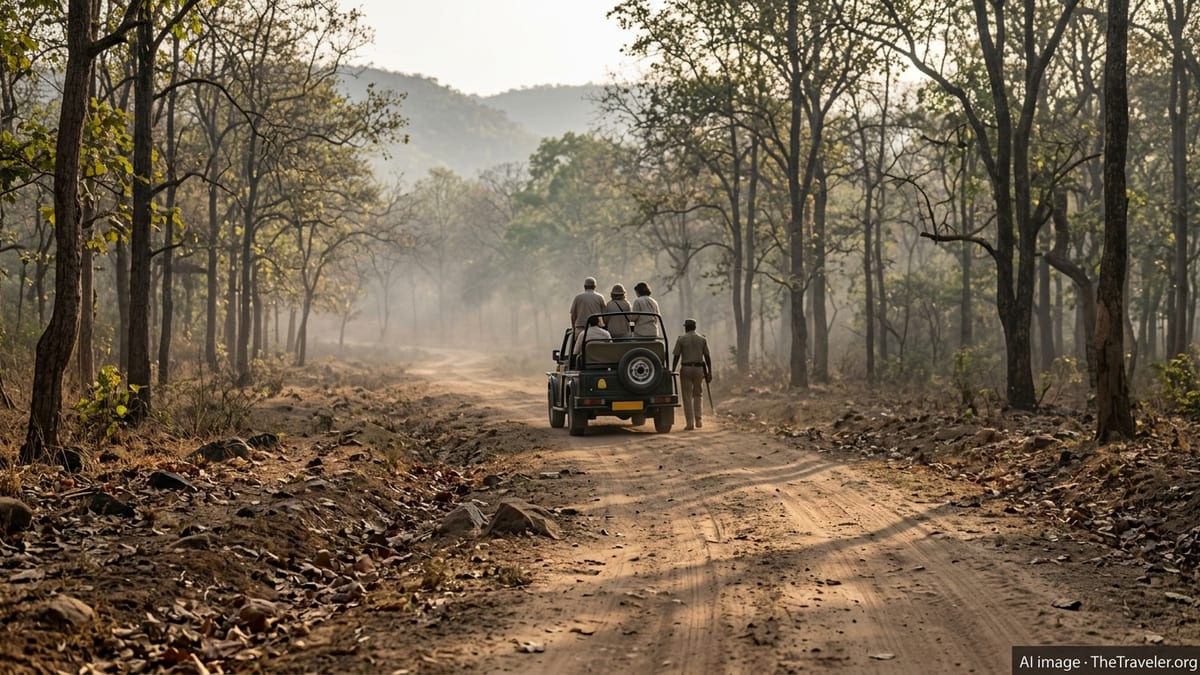
Kawal Tiger Reserve, located in Mancherial district, is already recognized as one of Telangana’s key wildlife destinations. Background notes from state tourism agencies describe dense teak and mixed forests supporting flagship species such as tigers, leopards, sloth bears, gaurs and several deer species, with existing offerings that include jeep safaris, nature treks and basic cottage accommodation near the Jannaram gateway.
Published coverage in regional newspapers over the last two years has highlighted efforts to refine jungle safari operations in Kawal, including seasonal suspensions during the monsoon in line with national tiger conservation guidelines and subsequent re-openings with revised pricing and added visitor features. These steps suggest an administrative focus on balancing visitor demand with habitat protection and safety.
The new tiger tourism initiative is expected to build on this base by improving access roads, expanding safari routes into buffer areas and upgrading accommodation from simple cottages to more diversified options, such as eco-lodges and community-run homestays. Policy presentations on eco-tourism in the state reference enhanced interpretation centers and birdwatching facilities in the Kawal landscape, hinting at a push to broaden the experience beyond tiger sightings alone.
Conservation planners also point to the wider connectivity value of Kawal. Recent notifications and debates around the proposed Kumram Bheem Conservation Reserve underscore the importance of this corridor in linking Kawal’s forests with tiger-bearing areas in neighboring Maharashtra. The tourism-focused investments are therefore being framed as part of a broader strategy to keep the landscape intact, with regulated safaris and visitor flows providing both revenue and a rationale for sustained protection.
Mannanur Gateway Strengthens Access to Amrabad Tiger Reserve
On the southern flank of Telangana’s tiger country, Mannanur functions as a principal entry point into the Amrabad Tiger Reserve, one of India’s larger protected areas. Government training and planning materials on eco-tourism repeatedly mention the Mannanur–Farhabad stretch as a priority corridor for low-impact tourism, with existing activities such as guided drives, viewpoints over the Nallamala hills and basic visitor facilities near the highway.
The new initiative’s focus on Mannanur is expected to consolidate these scattered offerings into a more coherent reserve gateway. Planning documents and tourism policy annexures list Mannanur among key eco and wellness destinations, grouped alongside waterfalls, forest shrines and hill viewpoints. This classification signals that investments will likely target amenities such as improved parking, interpretive signage, sanitary facilities and regulated safari booking systems.
Travel industry commentary notes that Amrabad’s rugged terrain and relatively low visitor density, compared with more famous tiger reserves, present both challenges and opportunities. The Rs 800-crore tiger tourism push is anticipated to support better connectivity from Hyderabad, standardized safari vehicles and trained guides, while keeping core areas shielded from mass tourism pressures.
Stakeholder discussions documented in public forums have emphasized the need to ensure benefits for local communities around Mannanur, many of whom belong to Scheduled Tribes with longstanding cultural and livelihood ties to the forest. Proposals under review include greater participation of local residents in guiding, hospitality and craft sales, alongside capacity-building programs designed to align community enterprises with conservation rules.
Forest Restoration and Conservation Measures at the Core
While the current discourse highlights new safari opportunities, planning material for Telangana’s eco-tourism strategy consistently frames tourism as secondary to forest and wildlife restoration. Technical notes from the state’s forest administration describe recent efforts to reclaim encroached or degraded patches in Kawal’s core area, with examples of barren land being restored to dense vegetation through assisted natural regeneration and protection from grazing and fire.
National and regional media have also reported on a series of tiger movement and sighting events in northern Telangana, reinforcing the case for maintaining strong habitat connectivity. Alerts issued in early 2026 around tiger presence in border mandals referenced individuals moving through the Kawal landscape, illustrating the permeability of the wider forest mosaic and the importance of keeping corridors functional.
Under the expanded tiger tourism initiative, the more than Rs 800-crore allocation is expected to underwrite activities such as habitat improvement, waterhole development, anti-poaching infrastructure and scientific monitoring, alongside visitor-centric spending. Policy language stresses that safari routes will be confined to designated tourism zones, with core habitat areas remaining largely undisturbed except for research and protection work.
Environmental planners following these developments argue that positioning tourism as a tool to finance and justify forest restoration is critical in states experiencing rapid land-use change. In Telangana’s case, the juxtaposition of ambitious economic growth targets with stated commitments to increase green cover suggests that tiger-focused tourism and conservation investments will be used as a flagship example of this balance.
Balancing Community Rights, Access and Visitor Demand
The expansion of tiger tourism in landscapes that are also home to Indigenous and forest-dependent communities has prompted active debate in Telangana. Reporting on the proposed designation of certain forest corridors as conservation reserves has documented objections from tribal groups concerned about potential restrictions on farming, grazing and collection of minor forest produce.
According to coverage of these debates, state authorities have already modified or set aside some earlier conservation orders following protests and consultations, while indicating that future measures would seek a better balance between biodiversity goals and community rights. This context is likely to shape how the new Rs 800-crore tourism and conservation package is implemented on the ground in Kawal, Mannanur and adjoining areas.
Tourism policy documents highlight community participation as a guiding principle, with references to joint eco-tourism committees, revenue-sharing models and training programs. Observers note that the effectiveness of these measures will depend on transparent decision-making, clear communication of land-use rules and tangible livelihood benefits for villages located near safari routes and forest gateways.
As detailed project announcements begin to emerge under Telangana’s tiger tourism initiative, conservationists, travel industry stakeholders and local communities are expected to watch closely how investments are distributed between infrastructure, habitat restoration and social safeguards. The outcomes in Kawal and Mannanur could influence how other Indian states attempt to link high-value wildlife tourism with long-term forest protection and inclusive development.