

More news on this day
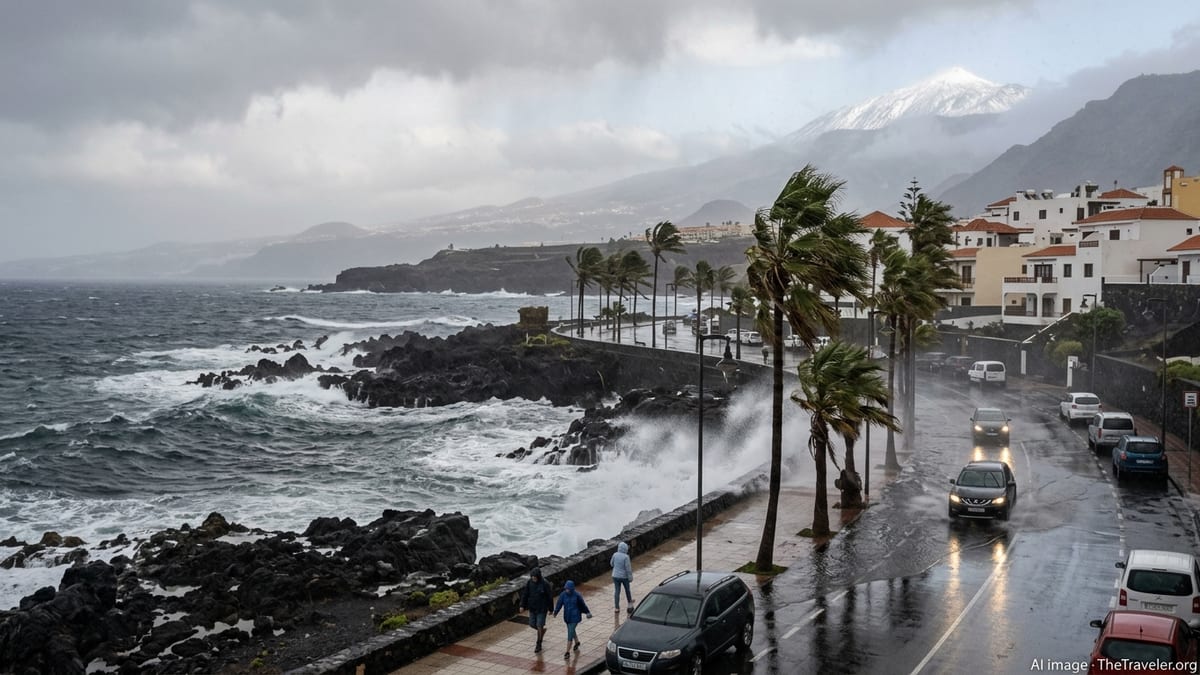
Travel to and around Tenerife is facing growing disruption as Storm Therese brings intense rain, gale force winds, rough seas and fresh snowfall at higher elevations across the Canary Island.
Get the latest news straight to your inbox!
Flights Disrupted as Storm Intensifies Over Canary Skies
Air travel to and from Tenerife has been unsettled since midweek as Storm Therese deepened over the Canary Islands. Publicly available flight data and local media coverage indicate a rising number of delays and cancellations affecting services at Tenerife Norte and Tenerife Sur airports, particularly during periods of the strongest crosswinds and low visibility.
Regional coverage on Thursday reported at least a dozen flights cancelled across the archipelago as the storm crossed the islands, with Tenerife among the most affected hubs. On Friday and into Saturday, airlines have continued to adjust schedules, consolidating or rerouting services when wind gusts and heavy downpours exceed operational limits.
Passengers are being advised in published guidance to monitor airline apps and airport information boards closely and to allow additional time for security and check in, as weather related knock on delays ripple through connections from mainland Spain and other European gateways. Reports from travelers on social platforms describe extended waits in terminals and last minute gate changes as carriers work around shifting weather windows.
While Tenerife’s airports have largely remained open, operations have been intermittently slowed by wind shear alerts, water accumulation on aprons and crew positioning challenges linked to wider disruption across the Canary Islands network.
Snowfall on Teide and Mountain Routes Adds to Road Chaos
Alongside torrential rain at the coast, Storm Therese is bringing late season snowfall to the highest peaks of Tenerife. Forecasts from Spain’s state meteorological service referenced in local reports point to accumulating snow on the upper slopes of Teide and surrounding ridges, combined with powerful gusts and plummeting temperatures.
Mountain highways leading into Teide National Park have seen intermittent closures or traffic restrictions as snow, ice and rockfall hazards increase. Authorities on the island have activated established emergency and maintenance plans, with teams deployed to clear debris and monitor landslide prone sections where saturated ground and runoff are undermining road shoulders.
Drivers heading inland from Santa Cruz, La Laguna and tourist areas in the south are encountering detours, fallen branches and waterlogged stretches, particularly near ravines that are carrying unusually high flows. Public information channels are urging residents and visitors to avoid non essential travel into high altitude areas until conditions stabilize.
For many visitors hoping to combine winter sun with a day trip to the snow on Teide, the storm has forced last minute changes of plan, with tour operators reducing or cancelling excursions due to safety concerns and limited access.
Ferries, Coastal Roads and Seafronts Hit by Rough Seas
Therese is also battering Tenerife’s coastline with heavy swell and strong onshore winds, creating substantial disruption to maritime links and seafront infrastructure. Port authority updates and regional broadcast reports describe rough seas with waves of four to five meters impacting exposed northern and western shores.
Several inter island ferry departures between Tenerife and neighboring islands such as Gran Canaria and La Palma have been cancelled or rescheduled, particularly on Friday and Saturday, as operators respond to adverse sea conditions. Passengers already on multi island itineraries face compressed timetables, overnight changes or extended stays in port cities while services reset.
On land, coastal avenues and promenades have been temporarily closed in some low lying towns as waves and storm surge overtop sea walls, sending water and debris across carriageways. In the north of Tenerife, local coverage has highlighted closures on waterfront streets as a precaution while high tides combine with the strongest swell.
Harborfront businesses and cafes in popular resort areas are contending with slippery pavements, wind driven spray and reduced footfall, as visitors retreat indoors during the most intense squalls. Beach red flag warnings are widely reported, with swimming and many water sports suspended.
Schools, Events and Leisure Activities Scaled Back
The severe weather has rippled well beyond transport, affecting daily life and leisure plans for residents and tourists across Tenerife. Regional outlets have described Therese as one of the most significant storms to affect the Canary Islands in more than a decade, prompting preemptive closures and cancellations from Thursday onward.
Publicly available notices show that classroom teaching has been suspended on parts of the island, with schools and some universities shifting to remote work or bringing forward weekend closures as a safety measure. Sports calendars have also been hit, with reports indicating widespread postponement of regional and grassroots football fixtures scheduled for this weekend in the province of Santa Cruz de Tenerife.
Tourism and cultural programming is being pared back, especially for outdoor concerts, markets and coastal festivals that rely on stable weather. Organizers of island wide events are turning to social networks and local media to update attendees on postponements, revised dates and ticket policies as forecasts are updated.
The combination of strong winds, slippery streets and sporadic power interruptions in some neighborhoods is encouraging people to stay indoors during the worst of the storm, further dampening the usually busy late March social scene at bars, plazas and beachfront promenades.
Advice for Travelers With Imminent Tenerife Plans
For travelers with upcoming trips to Tenerife, published advisories and recent experience on the ground suggest a cautious but measured approach. Commercial flights are still operating, but flexibility has become essential as weather bands move across the islands and carriers adjust their operations day by day.
Prospective visitors are being encouraged by official bulletins and tourism channels to stay closely informed through airlines, ferry companies and local news before starting their journeys. Booking fully flexible tickets where possible, confirming accommodation check in times and considering travel insurance that covers weather disruption can help mitigate inconvenience if schedules have to shift.
On arrival, travelers may find that certain signature experiences such as cable car rides on Teide, mountain hiking routes or boat excursions are temporarily suspended. Alternative plans focused on urban sightseeing, museums, gastronomy and indoor attractions can help salvage itineraries while heavy rain, gusts and snowfall persist in exposed areas.
Forecasts indicate that while the most intense phase of Storm Therese should pass within days, residual impacts such as damaged trails, localized flooding and altered transport timetables could linger beyond the immediate weather window. Visitors planning stays over the coming week are advised to build extra time and flexibility into their schedules as Tenerife gradually returns to more typical late March conditions.