

More news on this day
Growing anger over mass tourism in Tenerife has erupted into fresh street protests just days before the Easter holiday rush, unsettling visitors and exposing deep divisions over the Canary Islands’ dependence on foreign holidaymakers.
Get the latest news straight to your inbox!
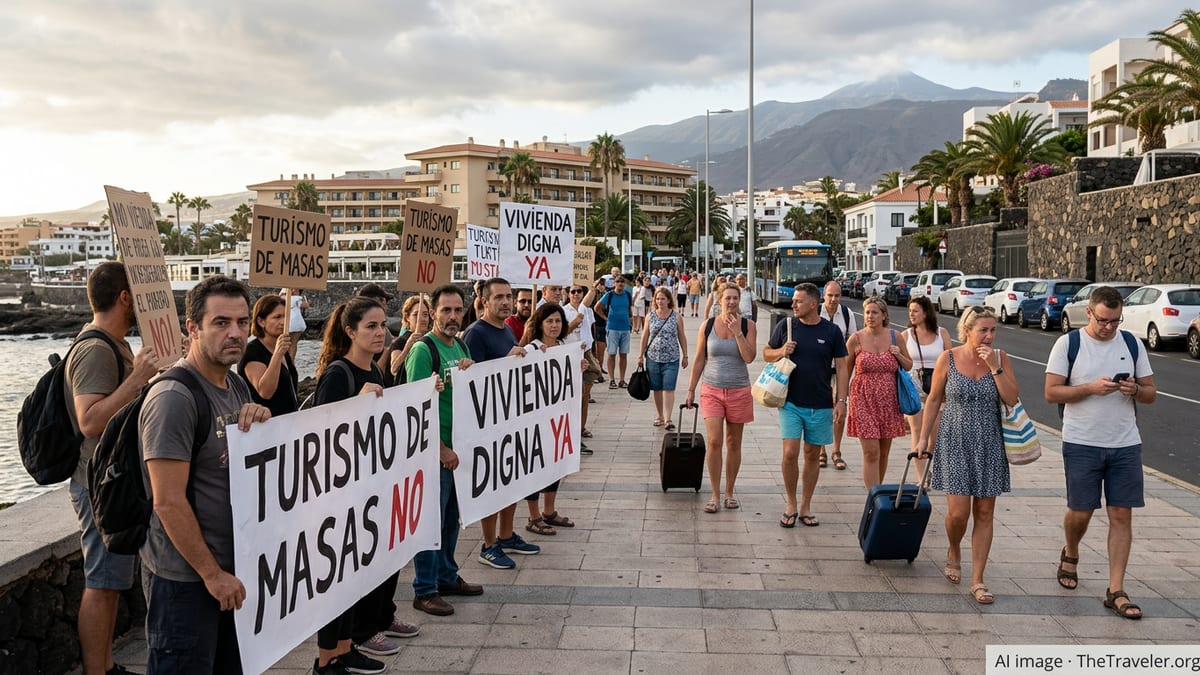
Renewed Protests Hit Tenerife Ahead of Easter Getaways
In the run up to Easter 2026, residents’ groups in Tenerife have stepped up their campaign against what they describe as an unsustainable tourism model, staging marches and noisy rallies in key resort areas and government districts. Demonstrators have carried placards calling for “fewer tourists and more homes,” echoed by loud chants demanding a moratorium on new hotel and holiday-rental developments.
The latest mobilisations follow a series of large-scale anti-tourism protests that began in the Canary Islands in 2024, when tens of thousands took to the streets in Santa Cruz de Tenerife, Las Palmas de Gran Canaria and Lanzarote to demand caps on visitor numbers and tighter regulation of property speculation. Activist networks argue that, despite repeated marches and a widely publicised hunger strike over controversial hotel projects, authorities have moved too slowly to change course.
Officials in the Canary Islands regional government insist they recognise local frustrations and point to forthcoming measures such as an eco-tax on non-residents visiting Teide National Park and new rules on short-term rentals. However, they have also stressed that tourism remains the backbone of the islands’ economy, warning that sudden restrictions could put tens of thousands of jobs at risk.
Holidaymakers Caught Between Beach Breaks and Street Anger
The renewed unrest comes at a sensitive moment, with airlines and tour operators reporting strong bookings for Easter in Tenerife and across the archipelago after several record-breaking seasons for arrivals. Many British, German and northern European visitors landing this week at Tenerife South and Tenerife North airports have found themselves sharing taxi ranks and bus stops with demonstrators handing out leaflets critical of “low-cost” mass tourism.
Some holidaymakers have chosen to cut trips short or switch islands, according to local hoteliers, after seeing images of marches and police cordons circulating on social media. While there have been no reports of serious violence, the sight of banners denouncing “your holidays, our misery” has left some tourists uneasy about spending in heavily protested areas or joining organised excursions.
Visitor reactions on the ground have been mixed. Some travellers interviewed on popular beaches expressed sympathy for residents struggling with rising rents and crowded roads, saying they would support higher local taxes if the money was clearly reinvested in housing and public services. Others voiced frustration that protests were being staged in peak holiday periods, arguing that demonstrations should be directed at politicians and developers rather than visitors who have booked package breaks months in advance.
Housing, Jobs and the Strain of Record Visitor Numbers
At the heart of the tensions in Tenerife is a housing and cost-of-living crisis that locals say has been aggravated by years of rapid tourism growth. The islands received close to 14 million foreign visitors in 2023, with arrivals climbing again in 2024 and 2025, while many residential neighbourhoods in Tenerife’s south have seen long-term rentals converted into lucrative holiday lets. Local unions and social groups report that service workers are increasingly commuting long distances from the interior of the island or sharing overcrowded flats to afford rising rents.
Protesters also highlight the environmental footprint of mass tourism, from traffic congestion and coastal pollution to pressure on scarce water resources. Campaigners have rallied repeatedly against large resort projects on Tenerife’s coastline, arguing that protected habitats are being sacrificed to attract ever more visitors and high-end second-home buyers. Environmental organisations say these developments clash with the islands’ climate targets and the protected status of many natural areas.
Business leaders and tourism associations counter that the sector has been steadily improving wages and investing in greener infrastructure, including energy-efficient hotel refurbishments and better waste management. They argue that the priority should be a shift toward higher-spending visitors and quality-focused development, rather than an abrupt cap on arrivals that could stall investment and undermine the islands’ hard-won reputation as a reliable year-round destination.
Canary Islands Caught in Wider European Backlash
The scenes in Tenerife form part of a broader wave of anti-tourism mobilisations across Spain and southern Europe. In recent years, residents have marched in Barcelona, Palma de Mallorca, Ibiza, San Sebastián and other destinations to protest against what they see as the “touristification” of their cities. The message has been similar from the Canaries to the Balearics: locals feel that record visitor numbers have pushed housing costs and low-paid service-sector jobs to breaking point.
Analysts note that the Canary Islands occupy a particularly exposed position in this debate, relying more heavily on tourism than many mainland regions. Economists warn that if social tensions deter visitors or prompt large-scale cancellations around peak periods such as Easter, the impact could reverberate through airlines, hotels, restaurants and small businesses that depend almost entirely on holiday trade.
Regional politicians are therefore walking a tightrope, trying to reassure anxious residents that reforms are coming while also calming foreign markets spooked by images of street protests. Policy proposals under discussion range from stricter licensing for holiday rentals and new tourism taxes to incentives for diversifying the economy into technology, renewable energy and remote-work hubs aimed at longer-stay visitors.
Future of Tenerife Tourism Hangs in the Balance
As the Easter holiday period begins, all sides in Tenerife appear to agree on at least one point: the current model is under severe strain. Residents’ groups are promising further demonstrations throughout 2026 if concrete steps are not taken to rein in large-scale developments and secure affordable housing. Union leaders are also keeping up pressure after recent strikes by hospitality workers over pay and conditions, warning that low wages will continue to fuel resentment even if new environmental and planning rules are introduced.
For now, most flights and hotel operations across the Canary Islands are continuing as scheduled, and local authorities emphasise that the islands remain open and safe for visitors. Yet the mood on the streets of Tenerife’s resorts and capital is markedly tenser than in past seasons, with banners, graffiti and nightly assemblies reminding tourists that they are at the centre of a fierce local argument about land, livelihoods and the limits of growth.
How quickly that argument can be resolved will shape not only the experience of those arriving for sun-and-sea breaks this Easter, but also the long-term future of one of Europe’s most popular winter-sun destinations. With residents no longer willing to quietly absorb the costs of record visitor numbers, the pressure is on island leaders and Spain’s central government to turn protest slogans into lasting policy changes that can keep both locals and holidaymakers onside.