

More news on this day
Thousands of passengers traveling during Vietnam’s peak Tết holiday rush faced hours of uncertainty this week after a series of illegal drone intrusions forced flight delays, diversions and a temporary runway shutdown at Da Nang International Airport, once again thrusting drone safety into the spotlight at one of the country’s busiest aviation hubs.
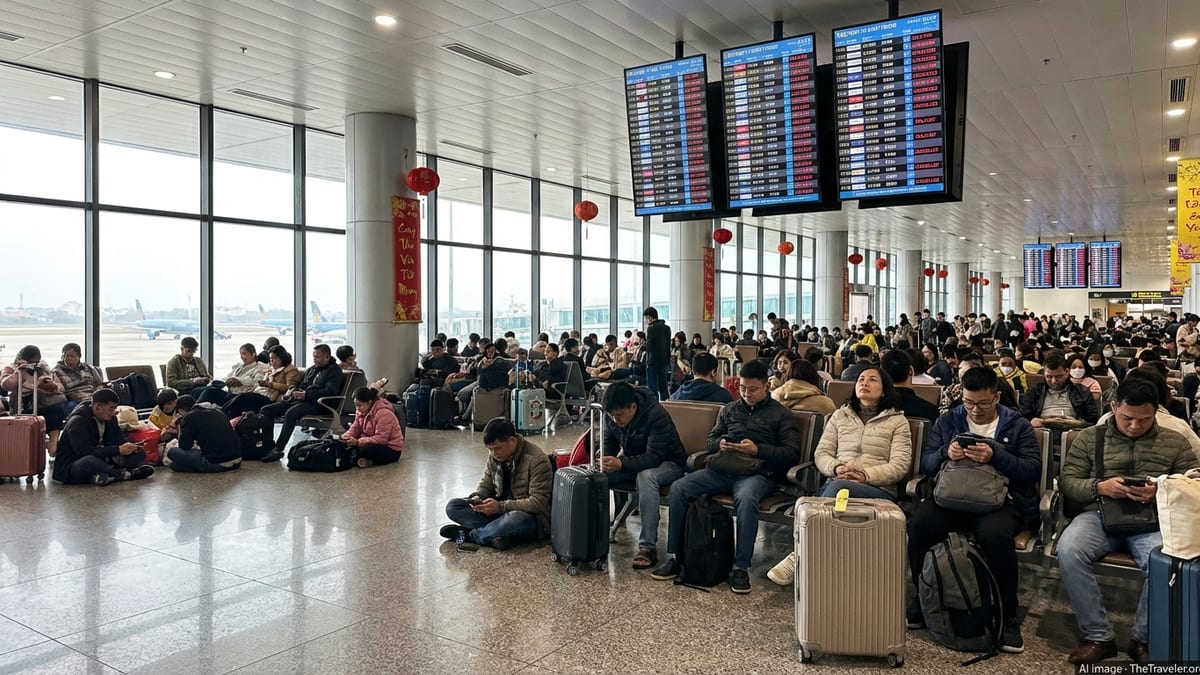
Drone Sightings Trigger Runway Shutdown in Peak Holiday Rush
Da Nang International Airport, the main gateway to Vietnam’s central coast, experienced multiple serious disruptions during the Lunar New Year of the Horse, after unidentified drones repeatedly strayed into restricted airspace around the runways. Authorities confirmed at least three separate incursions between February 17 and February 22, coinciding with some of the busiest travel days of the Tết season.
The most disruptive incident unfolded late on the morning of February 22, the sixth day of Tết, when air traffic controllers detected a drone operating illegally in the northern takeoff and landing area. From roughly 11:45 a.m. to 12:15 p.m., controllers ordered an emergency halt to runway operations to protect aircraft on approach and departure, bringing movements at the airport briefly to a standstill as jets circled overhead or waited on the tarmac.
Data from flight-tracking services and airport reports show that dozens of flights were affected on February 22 alone, including international services from Japan, Hong Kong and Singapore. Aircraft already in the vicinity of Da Nang were forced to fly holding patterns over the city and nearby coastline, while planes queued on the apron for new departure times as controllers gradually reopened the airspace.
Vietnamese aviation officials stressed that while no collision occurred and all flights eventually landed safely, the combination of holiday traffic density and small, hard-to-detect drones created a scenario that left very little margin for error.
Three Incursions, Dozens of Flights Delayed and Diverted
According to information released by Da Nang International Airport and Vietnam’s aviation regulators, the holiday disruptions began on February 17, the first day of Tết, when commercial crews reported two separate drones in the vicinity of established flight paths. In one case, a drone was spotted at an altitude of more than 1,100 meters near the Thu Bon River, south of the airport. A second sighting later the same day involved another drone flying several hundred meters above the ground in the same general area.
Together, the February 17 intrusions forced 30 flights to modify their operations. Some aircraft were instructed to enter holding patterns and wait for confirmation that the airspace was clear, while others were held at the gate until controllers were confident the drones had left the danger zone. Delays ranged from around 20 minutes to more than an hour, compounding the usual congestion associated with Tết homecoming and outbound tourist traffic.
The third major incident came on February 22, when a drone was recorded at roughly 1,700 feet to the side of an aircraft just after takeoff. Airport officials say this intrusion directly disrupted at least 19 flights, including nine that were kept waiting on the ground and 10 that were temporarily suspended in the air. When knock-on effects are counted, local media estimate that upward of 50 flights suffered delays or diversions across the three incursion events.
Flight operations resumed gradually after the February 22 shutdown as controllers switched traffic to a different runway configuration and continued to monitor the skies for any renewed drone presence. Nonetheless, with aircraft bunched up in the air and at the gates, schedules remained out of sync for much of the afternoon, prolonging the ordeal for travelers.
Passengers Stranded, Rerouted and Racing Against Time
For travelers, the drone incidents translated into long waits, missed connections and a scramble for alternative transport at the height of the Lunar New Year travel surge. At Da Nang’s domestic and international terminals on February 22, crowds swelled as loudspeakers issued repeated delay announcements and departure boards filled with revised times.
Some flights that had been scheduled to land in Da Nang were instead rerouted to Phu Bai International Airport in Hue, around 80 kilometers to the north, after drones were detected in their approach paths. Hue’s airport management said it received four unplanned arrivals during the Tết period as a direct result of the drone incursions over Da Nang. Hundreds of passengers were then transported by road back to Da Nang, arriving hours later than planned and, in some cases, too late for onward connections.
Inside Da Nang’s terminals, passengers lined up at service counters seeking rebooking options and clarification, as families with small children and elderly relatives tried to find seats in crowded waiting areas. The airport was already handling around 336 movements on February 22, including 166 international flights, making it one of the busiest days of the holiday season. The forced pause in runway activity and subsequent ripple-effect delays pushed staff and infrastructure to their limits.
Many domestic travelers were returning to major cities for work after family reunions, while international visitors were ending beach breaks in Hoi An and Da Nang or heading inland to Hue and the Central Highlands. The timing of the drone disruptions meant even short delays risked cascading into missed workdays and abandoned travel plans, fueling frustration and calls for tougher enforcement.
Airport Authorities Demand Tougher Action on Drones
In the wake of the incidents, Da Nang International Airport submitted a formal report to the Da Nang City People’s Committee detailing the scope of the disruptions and calling for stronger measures against illegal drone operations. The report underscores that small unmanned aerial vehicles operating within the no-fly zone around the airport constitute not only an aviation safety violation but also a direct threat to the lives of passengers and crews on every affected flight.
Airport management has asked city leaders and relevant agencies to urgently investigate and identify the drone operators involved in all three Tết intrusions, emphasizing that the repeated nature of the violations points to serious gaps in awareness, deterrence or both. Officials argue that current penalties and enforcement efforts are not acting as sufficient deterrents in an urban area where consumer drones and so-called flycams are widely used for filming and photography.
Among the proposals forwarded by the airport are enhanced air-defense monitoring over designated no-fly zones, including Da Nang Bay and densely populated neighborhoods under approach paths. Authorities are also urging local wards and communes surrounding the airport, such as Hai Chau, Thanh Khe and Cam Le, to step up public education campaigns so that residents clearly understand that flying drones, releasing balloons or directing lasers near the runways is strictly forbidden.
Security specialists and aviation experts in Vietnam have additionally called for the use of dedicated detection sensors and signal-jamming systems around major hubs like Da Nang, arguing that airport operators need more tools to quickly locate, track and neutralize unauthorized unmanned aircraft before they stray into conflict with jetliners.
Legal Framework and Rising Concerns Over Airspace Safety
Vietnam’s Law on People’s Air Defense and related aviation regulations already prohibit the operation of drones and other unmanned aerial vehicles within airport safety corridors and specified restricted zones. The rules also ban activities such as releasing sky lanterns or kites, shining lasers and using high-intensity lighting in protected airspace, all of which can interfere with pilot visibility and onboard systems.
Violators face financial penalties and the confiscation of their equipment, and regulators have signaled that criminal prosecution is being considered in serious cases. Officials note that an impact between a drone and an aircraft engine, windshield or control surface at high speed could cause catastrophic damage, particularly during takeoff and landing when pilots have less time and altitude to react.
The Da Nang incidents come amid broader concern about low-level safety hazards in Vietnam’s booming aviation market. In recent years, the Civil Aviation Authority of Vietnam has recorded a rise in minor but potentially serious safety events, many linked to human error or improper use of technology. Drone intrusions have been singled out as an emerging threat, with previous episodes already forcing temporary suspensions at other airports in the country.
Local authorities in Da Nang had previously imposed temporary bans on recreational drones during large events, such as international fireworks festivals, to manage risks in crowded urban airspace. The recurrence of unauthorized drone flights during Tết indicates that similar, more permanent controls may now be required around high-density flight corridors, along with stricter licensing for commercial operators and clearer rules for hobbyists.
Global Pattern of Drone Disruptions at Major Airports
The turmoil at Da Nang fits into a growing global pattern of drone-related disruptions at major airports. In recent years, hubs in Europe, North America and Asia have all experienced temporary closures, diversions and large passenger backlogs after unidentified drones appeared near runways or within controlled airspace. Some of these incidents have grounded flights for hours and affected thousands of travelers in a single day.
Experts say modern consumer drones, many equipped with cameras and advanced navigation, are relatively affordable and easy to fly, which has contributed to a rapid increase in ownership. Yet public awareness of aviation rules has not kept pace. In densely populated cities where airports sit close to residential neighborhoods, like Da Nang, even a well-intentioned hobby flight to capture skyline footage can quickly bring a drone into conflict with commercial traffic.
International aviation bodies have been urging governments to adopt clearer geofencing standards, mandatory registration programs and tougher sanctions for irresponsible drone use. While some manufacturers build software limits into their products that prevent takeoff near airports, older and modified devices often lack such protections. Authorities warn that without a combination of education, regulation and technical countermeasures, drone sightings around runways are likely to become more frequent.
Vietnamese regulators have cited international cases in justifying their push for stronger enforcement, arguing that early, decisive action is needed to prevent a worst-case scenario in which a drone strike leads to a serious accident or a prolonged airport shutdown.
What Travelers Need to Know for Upcoming Trips
For travelers planning journeys through Da Nang in the coming weeks, aviation authorities emphasize that flight operations have returned to normal and that the immediate Tết disruptions have been resolved. However, the incidents serve as a reminder that even short, localized interruptions can have outsized impacts during peak travel periods, where aircraft and crew schedules operate on tight margins.
Industry observers advise passengers flying during busy Vietnamese holidays to monitor airline notifications closely on travel days, arrive at the airport earlier than usual and allow extra time between connecting flights, particularly when traveling on separate tickets. While the drone disruptions were beyond the control of airlines, carriers are under increasing pressure to improve communication at the gate and via mobile apps when sudden airspace restrictions force last-minute changes.
Travelers already in Da Nang or nearby destinations are also being encouraged by authorities to avoid using drones near the coastline and urban areas without proper permits, especially within any radius of the airport. Even seemingly harmless attempts to capture holiday fireworks, beaches or cityscapes from above could unintentionally breach restricted zones and trigger new disruptions.
As investigations into the Tết intrusions continue, Da Nang’s experience is likely to shape how Vietnam manages the intersection of booming tourism, a growing aviation sector and the increasingly widespread use of consumer drones, with airport safety officials warning that the events of this holiday season should be treated as a serious wake-up call rather than a one-off anomaly.