

More news on this day
Texas air travelers are confronting some of the nation’s longest airport security lines as an extended federal government shutdown strains Transportation Security Administration staffing, snarls spring break traffic and raises fresh questions about how long the system can hold.
Get the latest news straight to your inbox!
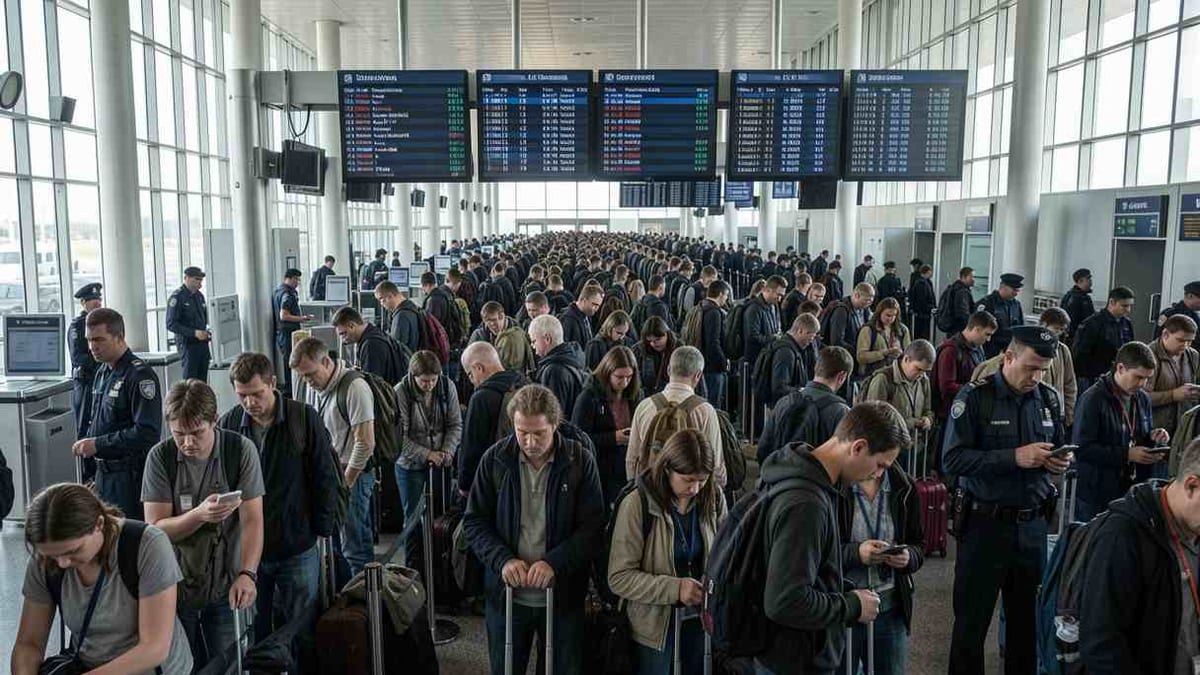
Image by Latest International / Global Travel News, Breaking World Travel News
Shutdown fallout sends TSA wait times soaring in Texas
The current shutdown of funding for the Department of Homeland Security, which began in mid-February, has left Transportation Security Administration officers working without regular pay while passenger volumes climb into the busy spring travel season. Publicly available information shows that staffing shortfalls and increased sick calls are translating into multi hour security lines at some of Texas’s largest airports.
Reports from Houston’s George Bush Intercontinental Airport describe security queues stretching to three hours or more on peak days, with only a fraction of checkpoints open at times. Local coverage indicates that airport advisories have urged passengers to arrive as much as four to five hours before departure to clear screening, particularly for early morning banked departures and international flights.
Houston’s smaller William P. Hobby Airport has also seen significant pressure, with travelers describing hours long waits as TSA crews attempt to cover checkpoints with fewer officers on duty. Regional outlets indicate that the combination of missed paychecks and mandatory overtime has accelerated attrition and callouts, leaving gaps that are hardest to absorb at airports already operating near capacity.
Other major Texas hubs, including Dallas Fort Worth International Airport and Austin Bergstrom International Airport, have so far seen more mixed conditions. Earlier in the shutdown, those airports reported mainly manageable lines but rising numbers of flight delays tied to broader federal staffing constraints, including air traffic control. With the shutdown now stretching past six weeks, analysts warn that even airports that have avoided severe disruptions could see conditions deteriorate quickly if more federal workers leave.
Houston becomes a flashpoint in the national travel crunch
George Bush Intercontinental, one of the nation’s busiest connecting hubs, has emerged as a symbol of the shutdown’s impact on aviation. According to recent coverage from national and local outlets, the airport has repeatedly ranked among the worst in the country for security wait times during the current funding lapse, with some terminals operating only a limited number of lanes for extended periods.
Airport dashboards and social media updates monitored by travel watchers this month have shown standard screening wait times at Bush Intercontinental climbing past two hours during morning and late afternoon peaks, while expedited programs such as TSA PreCheck have not been immune to backups. Federal announcements earlier in the shutdown also temporarily curtailed programs like TSA PreCheck and Global Entry enrollment, removing some of the relief valves frequent travelers rely on.
The strain has spilled over into the broader Texas network. Hobby, which handles much of Houston’s domestic and short haul traffic, has reported rolling surges where lines snake through the terminal concourses. Travel media accounts describe concession areas doubling as overflow queuing space as airport staff attempt to keep passengers indoors and organized during the longest spikes.
Compounding the pressure, Houston’s spring calendar of conventions, sporting events and leisure travel has kept passenger counts elevated. Aviation analysts note that hub airports with high connecting volumes are particularly vulnerable in a shutdown scenario, because a relatively small reduction in screening capacity can cascade into missed connections, rebookings and gate crowding across the day.
Dallas, Austin and San Antonio juggle surging demand and fragile staffing
While Houston has drawn much of the national attention, other Texas airports are also walking a tightrope as the shutdown grinds on. Dallas Fort Worth International, one of the busiest airports in the world, is projecting millions of travelers over the spring break period. Local briefings cited in regional coverage suggest that, for now, lines at most checkpoints have remained within typical ranges, but planners are bracing for potential spikes if federal staffing erodes further.
Earlier phases of the shutdown brought an uptick in flight delays and ground holds tied to air traffic control staffing in North Texas, underscoring how quickly the situation can change. Aviation trackers have noted that even when security lines remain moderate, constrained federal operations in the tower or en route centers can create rolling delays that ripple through departure boards at Dallas Fort Worth and Dallas Love Field.
In Austin, traveler accounts on social platforms describe a patchwork experience. Some report clearing security at Austin Bergstrom International in minutes during off peak periods, while others detail early morning logjams as multiple banked departures funnel through partially staffed checkpoints. Public advisories from travel organizations emphasize that conditions can change hour by hour, urging passengers not to rely on anecdotal reports from previous days.
San Antonio International and other mid sized Texas airports are dealing with their own version of the squeeze. Industry groups have warned throughout the shutdown that smaller and regional facilities can actually face proportionally larger disruptions, because there are fewer spare officers to reassign when someone calls out and less flexibility to open or close lanes dynamically.
New stopgap measures and the risk of further disruption
As travel stress builds, federal and local agencies have begun turning to unusual stopgap measures. Recent reporting out of Houston indicates that Immigration and Customs Enforcement personnel have been deployed to supplement security operations at Bush Intercontinental and Hobby, a move framed as a temporary effort to keep checkpoints functioning while TSA deals with short staffing.
Policy analysts note that the use of personnel from other federal components reflects how stretched the aviation security workforce has become during the shutdown. While these reinforcements can help keep lines moving in the short term, they do not fully replace trained screening officers and raise questions about how long cross agency support can continue without affecting other missions.
At the national level, statements from transportation leaders and security officials in public forums have warned that if the funding impasse continues, some low volume checkpoints or even entire terminals could face temporary closures. That prospect has particular resonance in Texas, where prior federal security actions this year have already led to temporary disruptions at certain airports and airspace sectors, underscoring the fragility of the system.
The White House recently announced an executive action to restore pay for TSA staff even as the broader Homeland Security shutdown continues, a move aimed at slowing attrition and stabilizing the workforce. Travel organizations and aviation labor groups welcomed the pay decision, but caution that morale and retention concerns may persist after weeks of uncertainty, missed checks and intense overtime.
What Texas travelers can do right now
For passengers flying into or out of Texas in the coming days, the most immediate impact of the shutdown remains the possibility of long security waits and schedule disruptions, particularly at peak times. Travel advisories from industry groups recommend arriving significantly earlier than usual, especially at Houston’s airports and other large hubs that have already posted hours long lines.
Consumer guides produced in response to the shutdown also emphasize the limits of traveler protections in this type of disruption. Because delays linked to federal staffing are generally considered outside an airline’s control, carriers are not automatically required to provide vouchers or cash compensation when a missed flight is caused by an overburdened checkpoint or control facility. However, many airlines will work with affected passengers to rebook on later departures when space allows.
Legal analysis published in recent months advises travelers to document their situations carefully, keeping boarding passes, photos of departure boards and any airline messages in case they later seek reimbursement for out of pocket expenses such as hotels or meals. Experts note that while the federal government itself is largely shielded from liability over shutdown related delays, travelers may still have options through travel insurance policies or credit card protections, depending on the terms.
With no firm end date to the shutdown in sight, aviation observers expect Texas to remain a bellwether for how the national air travel system copes with prolonged federal funding lapses. For now, the clearest guidance for travelers is simple but demanding: build in extra time, monitor airport and airline communications frequently on the day of travel, and be prepared for security lines and gate changes that can shift rapidly as the shutdown’s effects continue to ripple through the system.