

More news on this day
Texas is moving more aggressively into identity verification and data sharing, aligning with more than forty states that are tightening ID controls as federal REAL ID enforcement ramps up and debate over the proposed SAVE America Act intensifies, even as underlying U.S. visa rules for foreign visitors remain largely untouched.
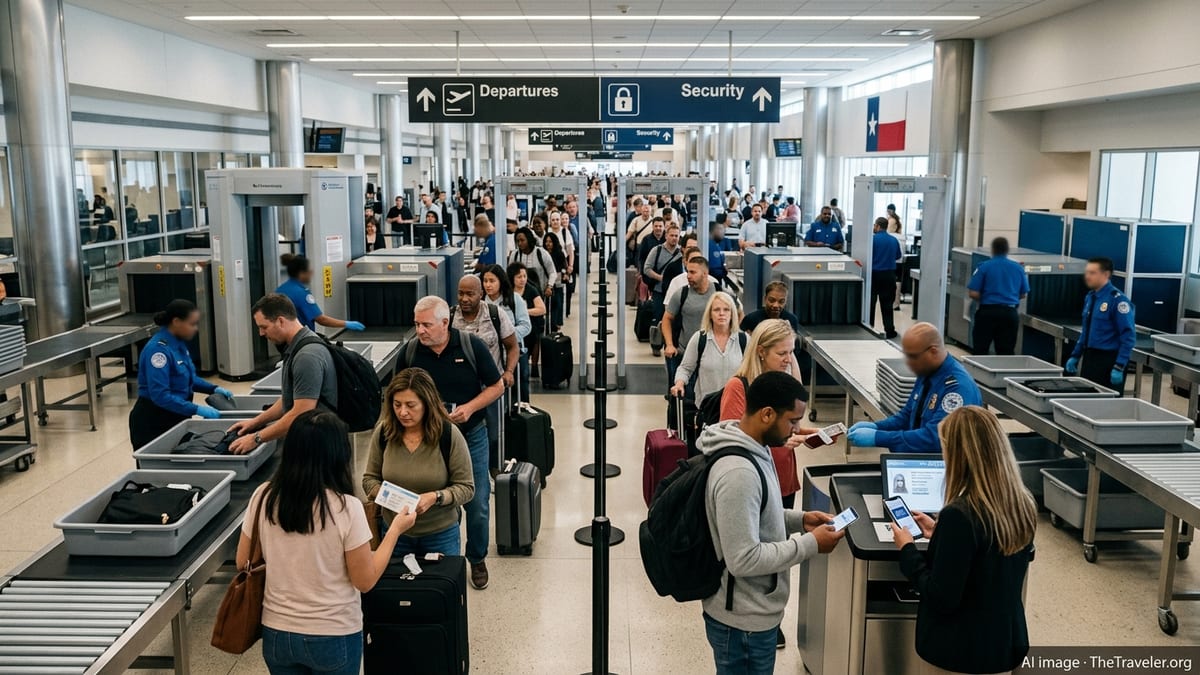
Texas Steps Into the National Identity Spotlight
Publicly available information shows that Texas has expanded its role in federal identity verification systems at the same time REAL ID card-based enforcement has begun reshaping the way Americans move through airports and federal buildings. Driver licensing guidance from state agencies emphasizes that Texas-issued licenses and identification cards now function as key credentials in this new environment, especially for residents who fly frequently or need access to certain federal facilities.
Separate reporting from national outlets indicates that the Department of Homeland Security has approached Texas about using driver license data to support broader identity checks, including citizenship and immigration status verification. Civil liberties groups have raised privacy concerns about how such data could be pooled and reused across federal programs, arguing that the shift effectively turns everyday identity documents into tools of continuous screening.
Travelers in Texas are also adapting to the new Transportation Security Administration ConfirmID process, which allows passengers without compliant IDs to pay a fee for additional screening. Coverage of the new program describes it as a last-resort option that can add both cost and uncertainty to a trip, further nudging residents toward compliant state IDs or passports.
From REAL ID to SAVE: A National Identity Infrastructure
Across the United States, implementation of the federal REAL ID Act has entered a more stringent phase, with card-based enforcement at Transportation Security Administration checkpoints now the central mechanism. Federal notices describe a system in which individual cards, rather than entire states, are checked for compliance, leading to a patchwork of traveler experiences that depend heavily on whether a resident has upgraded their license.
In parallel, Congress has been considering the Safeguard American Voter Eligibility legislation, commonly described in political debate as the SAVE Act or SAVE America Act. The proposal would require documentary proof of citizenship to register for federal elections, elevating U.S. passports, certain specialized state IDs and other citizenship-linked credentials as primary proof. Public analysis notes that many commonly used identification documents, such as standard driver licenses, may not by themselves demonstrate citizenship.
Together, REAL ID implementation and the SAVE proposal are being framed by policy analysts as components of a broader national identity infrastructure. One system is focused on physical security and access control at airports and federal buildings, while the other is aimed at voter eligibility. Yet both rely on a growing web of databases, document standards and interagency information sharing that increasingly links travel, residence and citizenship records.
States Race to Modernize IDs While Travel Rules Hold Steady
State-level initiatives in Georgia, Indiana, Wisconsin, Tennessee, Kansas and dozens of other jurisdictions show a marked shift toward more robust identity management. Legislative testimony and transportation department briefings describe multi-year projects to roll out mobile driver licenses, digital ID wallets and upgraded card security features. Several states report multi-year modernization timelines, underlining the scale of technical and administrative work involved.
Technology companies have responded in parallel, integrating digital IDs into mobile wallets on popular smartphones. Coverage in consumer and technology publications notes that residents of participating states can now store digital versions of their licenses or IDs on their devices, with pilot programs allowing some travelers to pass through certain Transportation Security Administration lanes using only a phone-based credential linked to a verified identity.
Despite these changes, underlying U.S. visa categories and core admission rules for foreign visitors have remained largely stable. Consular processing still revolves around passports, visa stickers and machine-readable travel documents, with no broad roll-out of new visa types as part of the REAL ID or SAVE debates. For most international travelers, the practical impact is felt more in what happens at Transportation Security Administration checkpoints and domestic connections than in the visa process itself.
Privacy, Equity and the Traveler Experience
As more states adopt stringent identity controls, advocacy groups and policy researchers are highlighting concerns about privacy, data retention and equity. Documentation published by federal agencies acknowledges that identity data from multiple sources, including states, may be stored and shared among components responsible for immigration, security and benefit administration. Critics argue that this kind of data fusion risks mission creep, in which information gathered for one purpose is repurposed for another without meaningful transparency.
Equity considerations are also drawing attention. Analyses by voting rights and civil liberties organizations note that the SAVE America Act’s documentary requirements could be challenging for eligible voters who lack passports or certified birth records, including naturalized citizens, older adults and low-income residents. Travel analysts are making similar observations about REAL ID, pointing out that the cost and time required to obtain upgraded credentials or passports may fall hardest on frequent travelers who live far from licensing offices or lack easy access to supporting documents.
For travelers, the new landscape translates into a more layered set of decisions before every trip. Passengers must weigh whether to rely on a REAL ID-compliant driver license, invest in a passport or trusted traveler card, or risk additional screening and fees under TSA ConfirmID. The choices are shaped not only by individual circumstances but also by how their home state has implemented digital IDs, back-office verification systems and coordination with federal databases.
What the Shift Means for Future Mobility in the United States
Analysts who track transportation and identity policy suggest that the current wave of state legislation and federal rulemaking could mark the beginning of a long-term transformation in how identity is managed in American public life. From airport checkpoints to voter rolls, a growing number of routine interactions now rely on documents and systems built around security, data sharing and persistent verification.
For domestic travelers, the near-term reality is a more rule-bound and documented experience, in which having the right card or digital credential can significantly affect the ease and cost of a journey. Residents of states like Texas and Georgia that are investing heavily in both physical and digital IDs may eventually see smoother airport experiences, but they will also be participating in denser networks of data collection and verification.
At the same time, the fact that visa rules and international entry standards remain largely unchanged underscores a central tension: the most dramatic identity changes are occurring within the domestic sphere, not at the border itself. As debates over the SAVE America Act continue and REAL ID enforcement deepens, travelers and voters alike will be navigating a landscape where identity documents function increasingly as the master keys to mobility and civic participation in the United States.