

More news on this day
Air travel across Texas faced a fresh wave of disruption as a convergence of storms, security bottlenecks and air traffic constraints contributed to 395 flight delays affecting major airports in Dallas, Houston and San Antonio, according to live tracking data and recent operational reports.
Get the latest news straight to your inbox!
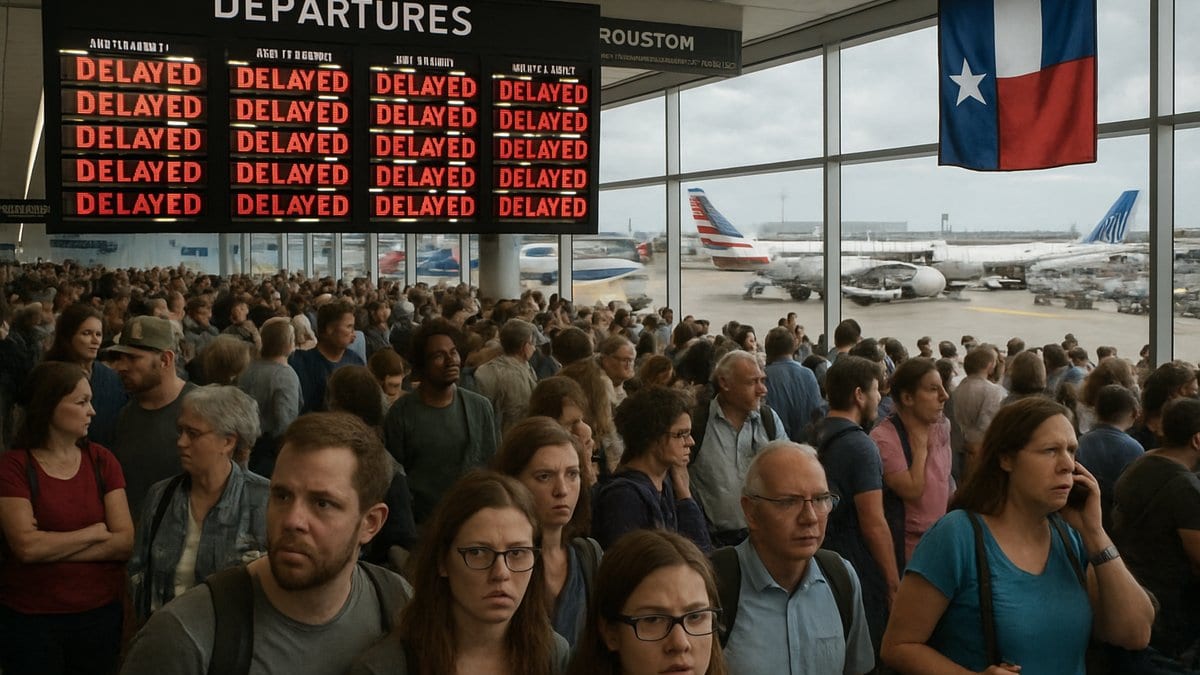
Image by Nomad Lawyer
Storm Systems and Congested Skies Over Texas
Recent storm activity over large portions of Texas has added another layer of disruption to an already strained aviation system, with scattered thunderstorms and low clouds periodically slowing departures and arrivals. Forecast discussions and local coverage indicate that unstable weather patterns between Dallas, Houston and San Antonio have periodically reduced visibility and required increased spacing between aircraft, triggering rolling delays at multiple hubs.
At Houston’s George Bush Intercontinental Airport, federal airport status updates on April 1 pointed to thunderstorms near the field contributing to outbound delays, with some departures facing holds of 15 to 30 minutes as air traffic managers adjusted spacing in congested airspace. Similar weather-related constraints have been reported around Dallas, where intermittent storms have required temporary ground delays and rerouting of flights along the busy north–south corridors that cross the state.
San Antonio International, a smaller hub than Dallas Fort Worth or Bush Intercontinental, has nonetheless felt the ripple effects. When weather systems slow or divert traffic into Texas’ largest airports, San Antonio often absorbs overflow, contributing to gate congestion and knock-on delays for both regional and longer-haul services that rely on tight aircraft and crew rotations.
While no single storm has fully shut down operations this week, the combination of repeated thunderstorm cells, high humidity and rapidly changing conditions has created the kind of intermittent but persistent disruptions that add up quickly across hundreds of daily flights, helping push total delays across the three metro areas to nearly 400 in a single day.
Security Staffing Crunch Amplifies Houston Disruptions
Weather has not been the only pressure point. Publicly available data and local coverage out of Houston indicate that Bush Intercontinental has recently been among the hardest-hit airports in the country when it comes to Transportation Security Administration staffing. A partial federal government shutdown has strained security checkpoints, with some travelers in recent days reporting lines stretching for hours as agents call out from work or relocate to other assignments.
Reports from late March documented security waits at Bush Intercontinental stretching to four hours at peak times, with lines extending outside terminal doors and snaking through public areas as the region headed into a busy spring travel period. Although conditions have eased somewhat on some days, the underlying staffing imbalance has not fully resolved, leaving checkpoints vulnerable to renewed surges in passenger volume.
Nearby William P. Hobby Airport has fared slightly better thanks to temporary deployment of additional officers, according to publicly discussed Homeland Security figures. However, that shift has contributed to a mismatch in staffing between Houston’s two major airports, increasing the risk that even modest spikes in traffic at Bush Intercontinental will translate into missed flights and rolling delays.
When long security waits meet weather-related holds, the impact multiplies quickly. Travelers who arrive at the airport the traditional 90 minutes before departure may find themselves stuck in security lines as boarding begins, prompting last-minute rebookings that in turn reduce on-time performance and add to the growing tally of delayed flights across Texas’ interconnected network of hubs.
Dallas Hubs Struggle With Volume and Air Traffic Constraints
The Dallas region, served primarily by Dallas Fort Worth International Airport and Dallas Love Field, has faced its own set of operational headwinds. While security waits there have generally been more stable than in Houston, heavy traffic volumes, periodic storms and air traffic control constraints have contributed to repeated pockets of disruption.
Dallas Fort Worth, one of the busiest airports in the world, is highly sensitive to even modest slowdowns in air traffic control programs. When thunderstorms develop along key arrival and departure corridors, controllers frequently impose ground delay programs that hold flights at their origin points to prevent gridlock in the skies above North Texas. Travelers have reported a mix of relatively minor delays and more extended disruptions when storms linger over the region.
Dallas Love Field, a smaller but intensely utilized airport dominated by short-haul operations, has also experienced periodic congestion. Past incidents, such as fire alarms that temporarily prompted terminal evacuations and ground stops, highlight how quickly its compact footprint can become overwhelmed. While those earlier episodes were short-lived, they underscore the fragility of operations when weather, technical issues or airspace constraints converge on a single day.
In the current round of delays, Dallas-area congestion has played a central role in the statewide tally. Because both Dallas airports act as key nodes for connecting traffic throughout the central United States, departure holds or reduced arrival rates there can cascade into schedule disruptions for flights touching Houston, San Antonio and dozens of smaller Texas markets.
San Antonio Feels the Ripple Effect
San Antonio International Airport has been less in the national spotlight than the larger hubs in Dallas and Houston, but the airport remains a critical link for domestic travel across Texas and the broader region. Recent operational data show that while San Antonio experiences fewer total delays than its larger counterparts, the airport is highly exposed to disruptions originating elsewhere.
Many of San Antonio’s busiest routes connect directly with Dallas Fort Worth, Dallas Love Field and Houston’s two major airports. When those hubs slow, inbound aircraft often arrive late or out of sequence, complicating gate assignments and turn times in San Antonio. Even a moderate number of delayed inbound flights can lead to clusters of late departures as ground crews, baggage handlers and gate agents adjust on the fly.
Public tracking data during the latest Texas flight crisis indicate that a meaningful share of San Antonio delays are categorized as reactionary, meaning they stem from late-arriving aircraft rather than local weather or airport-specific issues. This pattern mirrors experiences at secondary airports across the country that depend heavily on large hub operations for both passengers and aircraft.
As Texas travelers have learned across multiple recent disruptions, a delay that begins with a ground stop in Dallas or a security logjam in Houston can quickly grow into a statewide issue, with San Antonio and other airports absorbing the downstream effects long after the original problem has eased.
Travelers Face Growing Uncertainty as Spring Peak Nears
The accumulation of 395 delays across Dallas, Houston and San Antonio highlights the growing fragility of air travel in Texas at the outset of the busy spring and early summer season. Airlines, federal agencies and local airport operators are entering a period when leisure travel typically surges, even as staffing levels at some security checkpoints and air traffic facilities remain under pressure.
Publicly available schedules suggest that flight volumes through Texas hubs will remain elevated in the coming weeks, with airlines adding capacity on popular domestic and near-international routes. At the same time, meteorologists are pointing to an active pattern of spring storms across the Central United States, raising the prospect of additional days when thunderstorms, low ceilings or high winds hinder operations.
For travelers, the latest disruptions serve as a reminder that even routine trips can encounter multiple stress points. A typical journey might involve a tightly timed connection through Dallas Fort Worth, a pre-dawn security line in Houston or an evening arrival into San Antonio that depends on aircraft cycling through several other cities first. Each link in that chain is now more vulnerable to weather, staffing or technical problems than in previous years.
Industry observers note that while the current 395-delay episode is significant, it is not an isolated event. Texas airports have weathered multiple rounds of disruption tied to winter storms, government funding disputes and infrastructure constraints in recent months, suggesting that volatility rather than stability may define the travel experience for many passengers as the year progresses.