

More news on this day
Thousands of air travelers moving through North Texas and the Houston region are facing fresh disruptions as airports in Dallas and Houston report over a dozen flight cancellations and hundreds of delays across multiple carriers, including PSA Airlines, Southwest Airlines and Spirit Airlines, according to flight-tracking data and recent industry reports.
Get the latest news straight to your inbox!
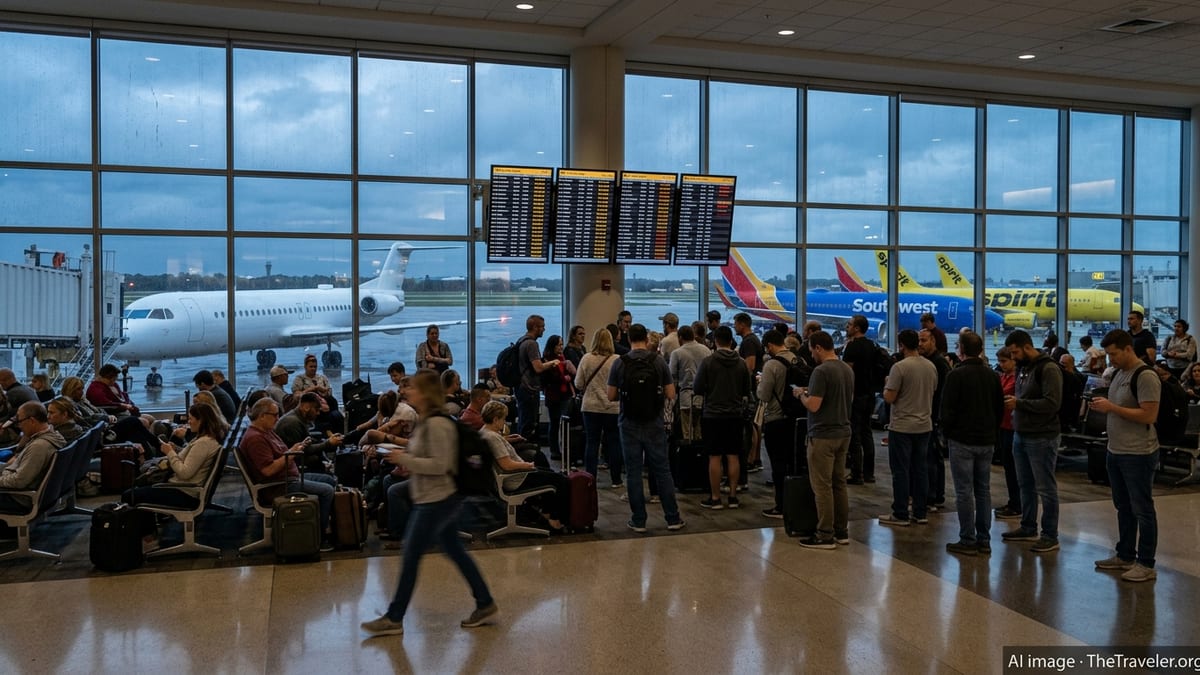
Dallas and Houston Hubs Struggle With Prolonged Disruptions
Major Texas hubs in Dallas and Houston continue to experience significant schedule disruptions as domestic carriers work through a new wave of delays and cancellations. Publicly available tracking data and recent coverage from aviation observers indicate that flights touching both regions have been especially vulnerable, affecting passengers departing from and connecting through Dallas Fort Worth International Airport, Dallas Love Field, George Bush Intercontinental Airport and William P. Hobby Airport.
The latest disruptions follow a turbulent winter season and a mid-March storm system that created operational challenges across the central United States. Weather patterns, strong winds and residual congestion elsewhere in the national airspace system are contributing to the instability that travelers are now seeing in Texas, even on routes that are operating under clear skies.
While the number of outright cancellations at Dallas and Houston airports is measured in the dozens on a given day, reports indicate that the far larger impact is among delayed departures and arrivals. Rolling delays of 30 minutes to several hours are forcing missed connections, overnight stays and last-minute itinerary changes for passengers across the country who rely on Texas as a connecting gateway.
For many travelers, the cumulative experience is one of uncertainty: schedules appear to change repeatedly throughout the day as airlines adjust aircraft and crew assignments in response to conditions that began well outside of Texas.
PSA Airlines, Southwest and Spirit Among Most Affected Carriers
Regional operator PSA Airlines, which flies under the American Eagle brand, is among the carriers with notable disruption levels in recent days. Industry discussion boards tracking operational performance point to PSA cancellations that represent a significant share of its daily schedule, complicating connections onto American Airlines mainline services at Dallas Fort Worth and other hubs.
Southwest Airlines, the dominant carrier at Dallas Love Field and a major operator at Houston Hobby, has also faced heightened scrutiny over its performance in Texas. Travelers sharing their experiences on public forums describe a pattern of rolling delays and same-day cancellations across Southwest routes linking New Orleans, Houston, Dallas and onward destinations, with some reporting multiple consecutive days of disrupted journeys.
Low cost carrier Spirit Airlines, which operates into the Houston area and feeds traffic into and through Texas, has similarly been affected. Recent accounts from passengers describe weather-related disruptions that have cascaded into staffing and aircraft availability challenges, contributing to additional delays and last-minute schedule changes on subsequent days.
Other airlines serving Dallas and Houston, including legacy and ultra-low-cost competitors, appear to be sharing in the disruption. Comparisons of cancellation percentages circulating among travelers show PSA, Spirit and several regional operators with some of the highest rates on key days, while larger mainline carriers contend with substantial but relatively lower proportional impacts.
Weather, Staffing and Network Complexity Drive Cascading Delays
Recent storm systems in March, layered on top of a disruptive winter, have played a central role in the latest wave of problems. A powerful mid-March storm complex brought severe weather, high winds and hazardous conditions across large sections of the central United States, prompting thousands of flight cancellations and diversions over several days. Aviation analysts note that when major events like this intersect with already busy spring schedules, the recovery period can extend well beyond the original weather window.
As aircraft and crews fall out of position due to earlier cancellations and diversions, airlines are forced to reshuffle entire networks. This can leave later flights departing from otherwise calm airports without the required crew complement or an available aircraft. For hub cities like Dallas and Houston, which are deeply integrated into national route structures, the knock-on effects are particularly visible, with disruptions on one coast quickly rippling into Texas-bound services.
Staffing remains another point of pressure. Public coverage of carrier operations throughout early 2026 has highlighted tight staffing among both pilots and flight attendants at several airlines, especially those flying dense schedules with limited reserve capacity. Spirit, for example, has moved to recall furloughed pilots and trim its schedule in an effort to stabilize operations for the coming months, according to recent business reporting and industry commentary.
Regional carriers like PSA, which are responsible for a large share of short-haul connectivity into big hubs, can be especially sensitive to these factors. When regional flights are cancelled or delayed, passengers may lose onward connections through Dallas Fort Worth or Houston, adding to the perception of broader network instability even when long-haul services are operating closer to schedule.
Travelers Confront Missed Connections, Overnight Stays and Longer Journeys
For passengers, the operational statistics translate directly into disrupted plans. Travelers posting about recent trips through Texas describe sequences of missed connections and cascading delays, including itineraries that involve multiple rebookings in a single day and unexpected overnight stays when last flights of the evening are cancelled or excessively delayed.
Reports from travelers connecting through Houston and Dallas highlight situations where a single cancellation or lengthy delay on a feeder flight leads to a chain reaction of complications. In some cases, passengers have opted to abandon multi-stop routings and purchase new one-way tickets on alternative airlines to avoid being stranded for an additional day. Others have compared total travel time against driving and concluded that overland journeys might be more predictable for certain regional trips while disruptions remain elevated.
Publicly available guidance from airlines emphasizes tools such as mobile apps, airport display boards and customer service channels as the primary means of monitoring day-of-travel changes. However, some travelers note that rapid-fire schedule adjustments and late-breaking cancellations can still be difficult to manage, especially when flights are fully booked and alternative options are limited.
Frequent flyers in Texas, particularly those based in Dallas and Houston, are increasingly weighing the reliability of different carriers and connection strategies. Some have shifted loyalty to airlines they perceive as more resilient, while others stress that no major carrier has been completely immune to the recent waves of weather and staffing disruptions.
What Passengers Can Expect in the Coming Days
With the mid-March storm system now moving away from the central United States, operational trends are expected to improve gradually, although residual delays and equipment imbalances may linger for several days. Airlines operating in and out of Dallas and Houston are likely to continue adjusting schedules, consolidating lightly booked flights and repositioning aircraft as they work to restore normal patterns before the busy late-spring and summer travel periods.
Aviation analysts following published data suggest that passengers should remain prepared for day-of-travel changes, particularly on regional and low-cost carriers that have less flexibility to absorb irregular operations. Early departures, nonstop options when available and generously timed connections may offer a buffer against missed flights while disruption levels remain elevated.
Consumer advocates continue to point travelers toward existing protections for significant delays and cancellations, including rebooking options, potential refunds on cancelled segments and travel credits where applicable. The exact remedies vary by airline and ticket type, and passengers are encouraged to review their carrier’s published policies before departure.
For now, flyers passing through Dallas and Houston can expect a gradually stabilizing picture, but one in which over a dozen cancellations and hundreds of daily delays remain a realistic possibility. As carriers like PSA Airlines, Southwest and Spirit refine their schedules and rebuild staffing depth, travelers across Texas will be watching closely to see whether reliability improves before the next round of severe weather tests the resilience of the system once again.