

More news on this day
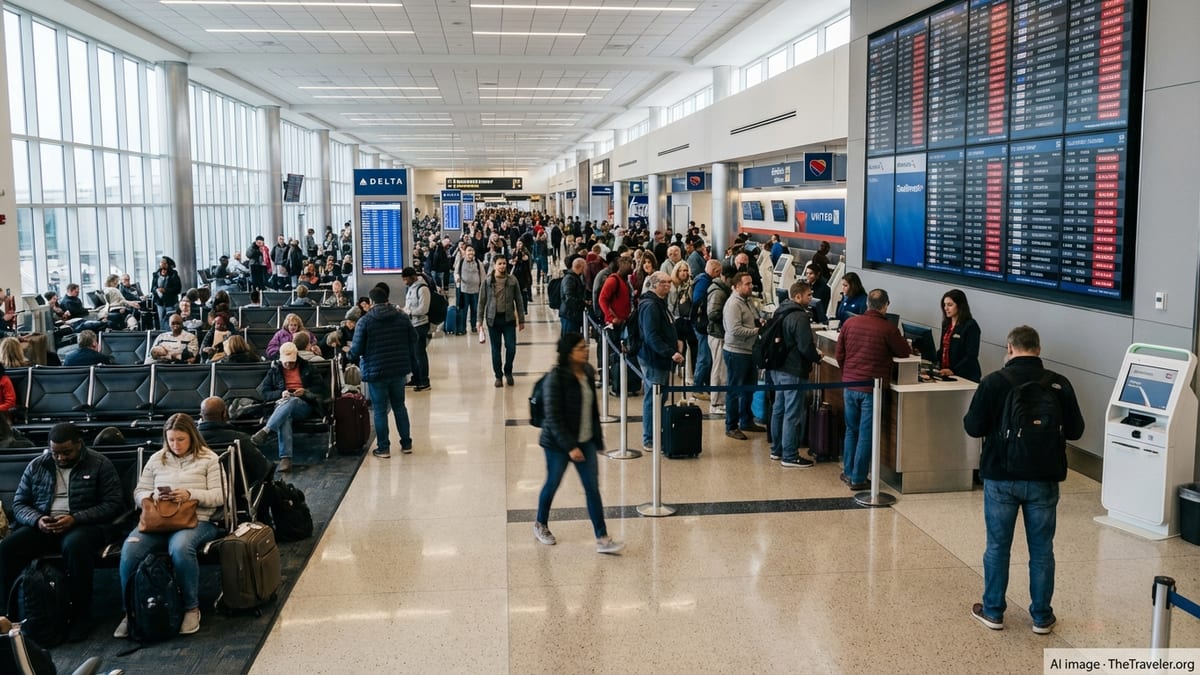
Air travel across Texas faced fresh turbulence this week as major airports collectively recorded 395 delayed departures and 11 flight cancellations, straining already fragile schedules during a busy spring travel period.
Get the latest news straight to your inbox!
Delays Ripple Across Major Texas Hubs
The latest disruption affected passengers at the state’s largest airports, including Dallas Fort Worth International, Dallas Love Field, Houston’s George Bush Intercontinental and William P. Hobby, as well as Austin-Bergstrom International. Publicly available tracking data and industry reports indicate that the combined impact reached 395 delayed flights and 11 outright cancellations, with knock-on effects for travelers connecting through Texas to destinations across the United States and overseas.
The imbalance between delays and cancellations suggests that airlines attempted to preserve most departures, even at the cost of extended waits at the gate and on the tarmac. For many passengers, that meant missed connections, rebooked itineraries and late-night arrivals as aircraft departed out of sequence or were held while ground operations worked through congestion.
Published coverage of recent Texas flight performance shows that single-day totals in the hundreds of delays have become more common during peak periods, particularly when multiple hubs experience operational pressure at the same time. The latest figures add another difficult day to a month already marked by weather interruptions, crew shortages and heavy demand tied to spring break and early holiday travel.
Travel data analysts note that even a relatively small number of cancellations can have an outsized effect when they are concentrated at large connecting hubs. With Texas playing a central role in several domestic and international airline networks, cancellations at one airport can quickly cascade through schedules in other regions.
Shutdown Fallout, Staffing Gaps and Security Bottlenecks
The disruption unfolded against the backdrop of a partial federal government shutdown that has strained airport staffing in recent weeks. Reporting from Texas-focused and national outlets describes Transportation Security Administration checkpoints at some state airports stretching far beyond typical queue areas, with waits at times running into multiple hours for standard screening lanes.
When security staffing falls short, airlines are often forced to hold departures to accommodate passengers stuck in line, or to proceed with partially boarded flights while rebooking late-arriving travelers. Industry observers point out that these delays rarely appear isolated; instead, they accumulate throughout the day as early-morning disruptions ripple into afternoon and evening departure banks.
Air traffic control staffing has also come under pressure during the shutdown period, contributing to flow-control measures that slow arrivals and departures even when local weather is clear. Publicly available information from aviation agencies and airline advisories shows that carriers have issued multiple flexible travel notices for Texas routes in recent days, acknowledging the likelihood of “lingering delays” as schedules remain fragile.
The combination of long security lines, slower traffic management and full flights has left little margin for recovery. Once operations begin to slip, even modest additional challenges such as minor technical checks or late-arriving crews can tip an on-time departure into yet another delay added to the day’s tally.
Spring Weather Adds to an Already Strained System
Alongside staffing and shutdown-related issues, seasonal weather has played a significant role in Texas flight disruptions. Recent systems have brought strong winds, low clouds and thunderstorms to parts of North and Southeast Texas, conditions that typically trigger ground delays, reroutings and occasional ground stops at the busiest hubs.
Air traffic management reports and airline updates describe instances in which gusty crosswinds and passing storm lines prompted spacing restrictions on arrivals and departures at airports such as Dallas Fort Worth and George Bush Intercontinental. Even when runways remain open, controllers often must increase the separation between aircraft in poor weather, reducing the number of flights that can be handled per hour.
When capacity drops below schedule, a backlog builds quickly. Flights destined for Texas airports may be held at origin or slowed en route, while departures wait on taxiways for gaps in the arrival stream. On peak travel days, this can translate into dozens or even hundreds of delayed flights within a single state, as reflected in the latest total of 395 delays.
Regional knock-on effects can extend beyond Texas as well. Published coverage of recent storms has documented slowdowns across interconnected hubs, meaning that a weather system in one part of the country can strand aircraft and crews needed for flights elsewhere, including in Texas, later in the same day.
Which Airlines and Routes Were Most Affected
Based on recent operational patterns at Texas hubs, the latest wave of delays and cancellations appears to have hit large network carriers and their regional partners particularly hard. Airlines with major connecting operations in Dallas and Houston typically operate dense schedules of short- and medium-haul routes, which are especially vulnerable when the system loses time early in the day.
Publicly available flight tallies from prior disruption days in March show dozens of delayed departures for leading U.S. airlines flying from Texas to major cities such as New York, Chicago, Atlanta, Denver, Los Angeles and international destinations. When operations slow, these trunk routes tend to experience a mix of moderate departure delays and occasional cancellations as airlines prioritize aircraft for the highest-demand flights.
Regional jets serving smaller markets in Texas and neighboring states are often among the first to be trimmed when airlines need to free up aircraft and crews. Travel industry analysts note that passengers on those routes may face limited same-day rebooking options, extending the impact of a cancellation beyond a single missed departure.
Low-cost carriers that operate point-to-point services from Texas have also been swept up in the broader disruption pattern, though in some cases they are able to maintain more stable operations by avoiding complex banked hub schedules. Still, once airports themselves become constrained, no carrier is fully shielded from the knock-on effects.
What Passengers Can Do When Delays Mount
Consumer advocates emphasize that travelers caught in large-scale disruption events like the one that produced 395 delays and 11 cancellations across Texas are not entirely without recourse. Publicly available guidance from the U.S. Department of Transportation and airline customer-service commitments outlines what passengers can request when flights are significantly delayed or canceled.
When delays are within an airline’s control, many carriers offer meal vouchers, hotel accommodations or transportation assistance, particularly when an overnight stay becomes necessary. These policies vary by airline and situation, so passengers are encouraged to review the specific terms of their carrier’s customer service plan and to document expenses related to extended waits.
In cases where weather or air traffic control constraints are the primary drivers, compensation is less common, but airlines generally allow customers to rebook on the next available flight without additional change fees. During widespread disruptions, some carriers also issue flexible travel waivers that permit passengers to adjust their plans within a defined window.
Travel planners suggest several practical steps for minimizing disruption risk: booking earlier flights in the day, allowing longer connection times at major hubs, monitoring real-time flight status through official channels and arriving at the airport well ahead of departure, especially while security lines in Texas remain unpredictable. While such precautions cannot eliminate the chance of delay, they can provide more options on days when operations across the state are as strained as they were during this latest wave of disruptions.