

More news on this day
Thailand’s fast-evolving air links with South Korea are entering a new phase as Thai AirAsia quietly reshapes its Bangkok–Seoul offering and steps up capacity to key Thai leisure hubs including Phuket, Chiang Mai and Ubon Ratchathani, sharpening competition for global travelers flowing through the two countries.
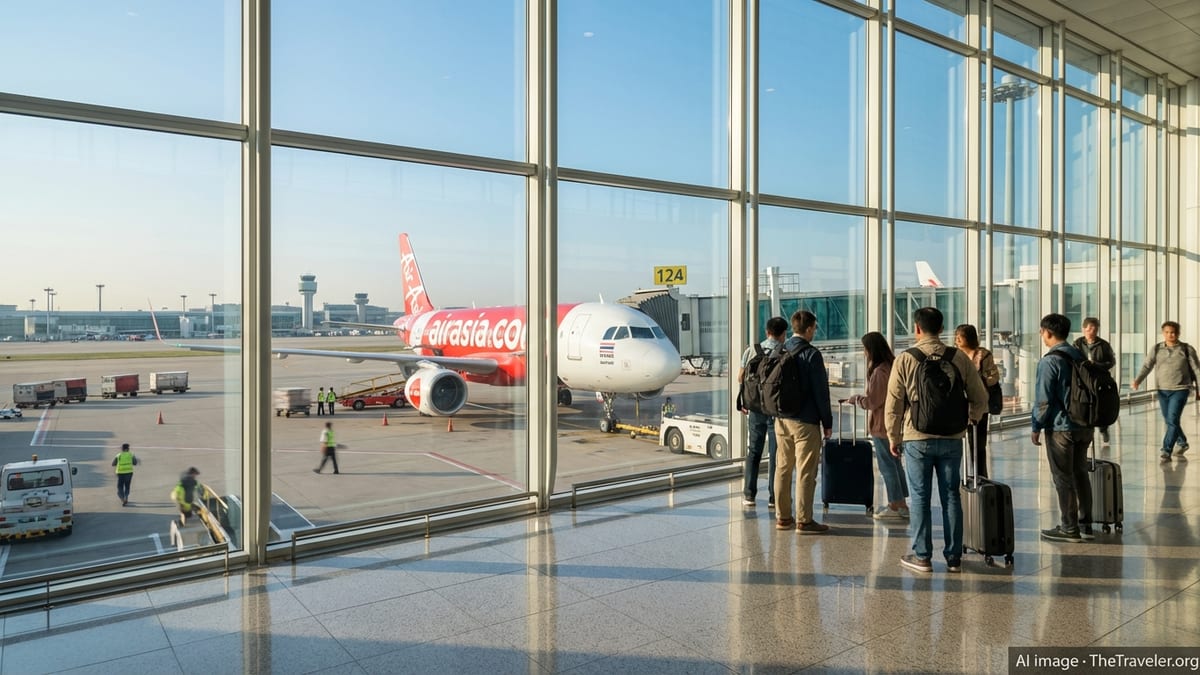
Bangkok–Seoul Corridor Enters a New Competitive Cycle
The air bridge between Bangkok and Seoul has become one of the most hotly contested corridors in the Asia Pacific region, as surging international demand through South Korea’s Incheon hub collides with Thailand’s push to revive and diversify inbound tourism. Korean government data show that international passenger volumes hit fresh records in 2025, reinforcing Incheon’s role as a super-connector for routes linking Southeast Asia, North Asia and long-haul markets.
Within this context, Thai AirAsia’s decision to reposition its Bangkok services to Seoul Incheon marks a strategic shift in how the carrier taps that demand. Moving capacity between Don Mueang and the capital’s broader Bangkok system allows the airline to better align schedules with connecting banks in Seoul, as well as with its own expanding network within Thailand. For global flyers, the changes translate into more same-day connection options in both directions, particularly for those using Incheon to reach North America and Northeast Asia.
The repositioning also reflects a broader recalibration of Thailand–South Korea traffic after a softening in Korean arrival numbers to Thailand during 2025. Even as visitor counts eased, air services between the two countries remained dense, with Incheon ranking among Thailand’s top international airport pairs. Thai AirAsia appears to be betting that improved timing, sharper fares and stronger domestic connectivity will help recapture demand from Korean leisure travelers who are increasingly price sensitive but still keen on Thai beach and city breaks.
Industry analysts note that low-cost carriers now exert outsized influence on pricing in the Seoul–Bangkok market, often setting the floor for full-service competitors. Thai AirAsia’s capacity realignment could therefore ripple beyond its own network, nudging rivals to rethink schedules, aircraft deployment and fare strategies in what remains a volume-driven leisure corridor.
Domestic Hubs Strengthened: Phuket, Chiang Mai and Ubon Ratchathani
Parallel to its Incheon moves, Thai AirAsia is intensifying services to major and emerging Thai cities, using both of Bangkok’s airports as dual gateways. The carrier has steadily ramped up domestic frequencies from Don Mueang and Suvarnabhumi to Phuket and Chiang Mai, reinforcing their status as key spoke hubs that distribute international traffic deeper into Thailand’s regions.
Phuket continues to serve as Thailand’s flagship resort gateway, feeding beach destinations along the Andaman coast and acting as a mini-hub for international low-cost routes into South Asia and Indochina. Additional rotations from Bangkok mean shorter connection times for Seoul-origin passengers heading straight to the islands, particularly during peak winter and school holiday periods when Korean demand for sun-and-sea travel spikes.
Chiang Mai, meanwhile, has emerged as a cultural and nature-focused alternative to the capital, attracting repeat visitors from Korea who are already familiar with Bangkok and Phuket. Increased frequencies from both Bangkok airports give airlines more flexibility to time northbound departures shortly after inbound Korea flights arrive, allowing travelers to clear immigration in Bangkok and continue domestically with minimal layover.
In the country’s northeast, Ubon Ratchathani is gaining prominence on Thai AirAsia’s map. More services from Bangkok to this gateway city bring the lesser-known Isan region closer to international markets, including Korean visitors intrigued by rural culture, riverside landscapes and cross-border routes into Laos and Cambodia. For the airline, building out Ubon Ratchathani services helps diversify demand beyond the classic triangle of Bangkok, Phuket and Chiang Mai.
What the Network Changes Mean for Global Flyers
For international travelers using Thailand and South Korea as part of wider itineraries, Thai AirAsia’s adjustments offer a mix of opportunities and new planning considerations. The repositioning of Incheon services within the Bangkok airport system can alter ideal connection points, with some routings now favoring Don Mueang for point-to-point low-cost transfers and others leaning toward Suvarnabhumi for interline or self-connecting itineraries.
Passengers originating in North America or Europe and connecting through Seoul into Thailand will see denser schedules into Bangkok paired with more robust same-day links onward to Phuket and Chiang Mai. This effectively shortens total journey times to popular Thai resort areas and opens up more red-eye-plus-morning-connection combinations, which are especially attractive to time-pressed holidaymakers.
Travelers based in Korea also gain from the reinforced domestic network at the Thai end. Rather than backtracking through Bangkok for every side trip, they can route multi-stop holidays more efficiently, for example combining a few nights in Chiang Mai with a direct hop to Phuket, or pairing Bangkok with a culturally focused excursion to Ubon Ratchathani. As Thai AirAsia adds frequencies, such combinations become easier to schedule without overnight layovers.
At the same time, the corridor’s growing reliance on low-cost carriers means that ancillaries such as checked baggage, seat selection and onboard meals continue to play a bigger role in total trip cost. Global flyers stitching together self-made itineraries via Incheon and Bangkok are likely to find headline fares extremely competitive, but will need to pay close attention to fare families, airport transfers between Don Mueang and Suvarnabhumi, and minimum connection times for separate tickets.
Korea–Thailand Tourism Dynamics in Flux
The airline maneuvers unfold against a backdrop of shifting tourism flows between Korea and Thailand. After a strong rebound in 2024, Korean visitor numbers to Thailand dipped in 2025 amid domestic economic headwinds and concerns around regional security and crime. Yet aviation data show that the air corridor between the two countries remains one of Thailand’s busiest international pairings by flight count, underlining the structural depth of the market.
Seoul’s airports, led by Incheon, have seen record overall passenger traffic, driven in part by pent-up outbound leisure travel from Korean residents. Thailand remains a preferred mid-haul destination thanks to visa facilitation measures, competitive package pricing and a well-established ecosystem catering to Korean tastes, from language support to food and nightlife.
Thai tourism authorities and carriers, including Thai AirAsia, are responding with targeted campaigns and new route combinations designed to refresh Thailand’s image among Korean travelers. Greater emphasis is being placed on secondary destinations such as Chiang Mai, Chiang Rai, Ubon Ratchathani and inland national parks, selling experiences beyond the classic Bangkok and beach formula and encouraging longer, more varied stays.
For the airline industry, the evolving demand picture underscores the importance of nimble capacity management. Adjusting the balance between trunk routes like Bangkok–Incheon and domestic feeders allows carriers such as Thai AirAsia to chase emerging trends, whether that is rising interest in northern cultural circuits or renewed appetite for Andaman and Gulf coast resorts.
Practical Takeaways for Itinerary Planning
For global flyers eyeing Thailand and South Korea on the same ticket or trip, the latest network changes reinforce the need to plan around both hubs, not just one. Checking whether Thai AirAsia’s Bangkok–Incheon services line up more conveniently with domestic departures from Don Mueang or Suvarnabhumi can shave hours off total travel time, particularly when connecting onward to Phuket, Chiang Mai or Ubon Ratchathani.
Travel experts advise considering time of arrival in Seoul as well, especially for passengers transiting via Incheon to long-haul flights. As Korean airports handle record passenger volumes, peak-time congestion at security and immigration can lengthen connection times, pushing some travelers to favor off-peak arrivals from Bangkok even if it means departing Thailand at less conventional hours.
In Thailand, the thicker web of Thai AirAsia services makes it easier to craft open-jaw itineraries, such as arriving in Bangkok from Korea, flying domestically to Chiang Mai and exiting the country via Phuket. This approach can reduce backtracking and allows travelers to experience more of the country without significantly higher airfare outlay.
Ultimately, Thai AirAsia’s repositioning of its Incheon flights and its heavier investment in domestic Thai connectivity illustrate how carriers are fine-tuning networks to capture value in one of Asia’s most dynamic leisure corridors. For passengers, the outcome is greater choice, more ways to link South Korea and Thailand in a single journey, and a fresh set of options when planning complex multi-stop trips across the region.