

More news on this day
Thai airlines are tightening their route networks across Asia in 2026 as soaring jet fuel prices and regional turmoil squeeze operating margins, creating a patchwork of suspensions, trimmed frequencies, and higher fares that travelers are already feeling in their wallets and itineraries.
Get the latest news straight to your inbox!
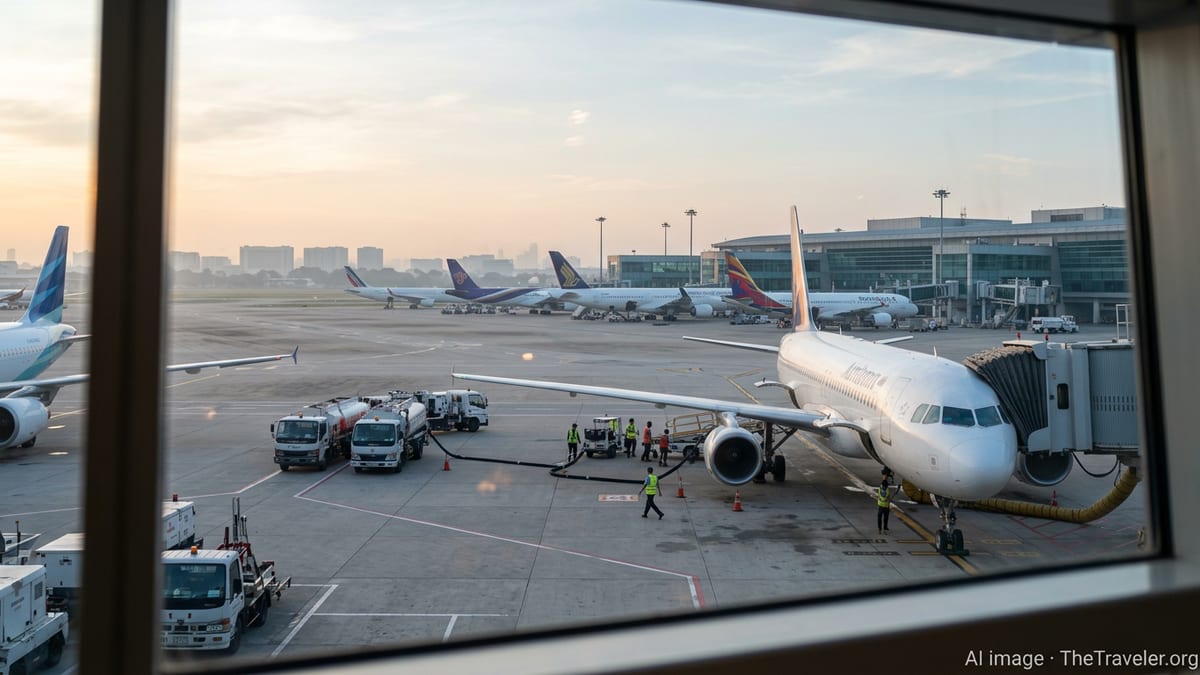
Fuel Shock Ripples Through Thailand’s Airline Sector
The sharp jump in global oil and jet fuel prices linked to conflict in the Middle East and disruptions around key shipping lanes has pushed operating costs for Thailand-based carriers sharply higher this year. Publicly available information shows that fuel, already one of the largest line items for most airlines, has become significantly more expensive in early 2026, with domestic fuel prices in Thailand rising steeply over the first quarter.
Industry data and corporate filings indicate that Thai carriers entered 2026 after several years of restructuring and recovery, with Thai Airways emerging from court-supervised rehabilitation and low-cost operators rebuilding networks. The fuel shock has arrived just as fleets and schedules were expanding again to meet strong demand across Asia and Europe, leaving airlines with limited room to absorb higher costs without adjusting capacity.
Aviation analysts report that many Thai airlines are responding on multiple fronts: pushing through fare increases, introducing or expanding fuel surcharges, and revisiting route economics across their Asian networks. While outright cancellations remain selective, frequency cuts, seasonal suspensions, and equipment downgrades on marginal routes are becoming more common as carriers try to protect profitability.
For travelers, this means that the range of options that existed in late 2025 between Thailand and neighboring Asian destinations is narrowing, especially on thinner point-to-point routes and certain off-peak services.
Where Routes Are Being Cut or Thinned in Asia
Reports from aviation trackers, booking platforms, and traveler communities show that the initial impact is being felt on shorter regional links where yields are relatively low and competition is intense. In several cases, Thai airlines have reduced the number of weekly flights rather than abandoning destinations entirely, a tactic that allows them to maintain a presence while concentrating passengers onto fewer departures.
On some intra-Asia routes, particularly secondary city pairs, travelers are seeing former double-daily services consolidated into a single daily or near-daily flight. Industry commentary points to reductions on select connections involving Japan, Korea, and secondary Chinese cities, as well as adjustments on Southeast Asian routes where alternative carriers can still provide connecting options through other hubs.
Low-cost and hybrid carriers appear to be moving fastest to trim capacity where fuel burn per passenger is highest and fare levels cannot easily be raised. Travel forums have highlighted examples of early-morning or low-demand flights being removed from schedules, leaving only peak daytime services in operation. These changes are often framed as “schedule optimization” or “seasonal adjustment,” but they are closely tied to fuel economics.
Larger network carriers based in Thailand are generally preserving key trunk routes to major Asian hubs such as Singapore, Hong Kong, Tokyo, and Seoul, while being more aggressive with frequency adjustments on secondary destinations. Some services that were slated for expansion in 2026 are now being delayed or scaled back as planners revisit demand and cost projections.
Higher Fares, Fuel Surcharges, and Tighter Inventory
Alongside route rationalization, Thai airlines are lifting fares and fuel surcharges on many Asian routes to offset higher costs. Local business media and airline statements show fare hikes in the range of 10 to 20 percent on selected routes, with surcharges adjusted to reflect the new fuel environment. These increases are being layered onto already-strong post-pandemic pricing, particularly during peak travel periods.
Travelers booking from Thailand to other Asian destinations in 2026 are reporting fewer low-priced seats in economy and more rapid fare escalation as departure dates approach. Revenue management systems are tightening lower fare buckets, favoring higher-yield bookings. Promotional fares that briefly reappeared in 2024 and 2025 have become less common and more restricted in terms of travel dates and routing.
Published coverage indicates that some Thai carriers continue to see robust demand on core regional and long-haul routes, especially those tied to tourism flows from East Asia and Europe. Strong load factors are giving airlines confidence to hold pricing even as costs rise. However, they are also contributing to the perception among travelers that flights are fuller and flexibility is declining, particularly during school holidays and festival periods across the region.
In practical terms, passengers can expect to pay more for peak-time departures on popular Asia routes from Bangkok and other Thai gateways, while off-peak and shoulder-period bargains become harder to find. The overall trend points toward structurally higher airfare levels for much of 2026 if fuel prices remain elevated.
What Travelers Need to Watch in 2026
For those planning trips into, out of, or within Thailand’s Asian network this year, schedule volatility and pricing pressure are likely to remain defining features. Travelers are being advised by industry observers to monitor bookings closely, particularly on routes that are served by a single Thai carrier or have only one daily frequency, as these are more vulnerable to timetable adjustments.
Experts in the sector suggest that travelers consider building longer connection windows when using Bangkok or other Thai airports as hubs, as thinner schedules can reduce rebooking options in the event of disruption. Where practical, choosing flights earlier in the day may improve the chances of same-day reaccommodation if a service is canceled or retimed.
Travel insurance policies that cover schedule changes and missed connections are drawing renewed attention in this environment. Publicly available guidance from consumer groups notes that not all policies treat fuel-related disruptions and airline-initiated timetable changes in the same way, making it important for travelers to review terms carefully before purchase.
Passengers who are flexible on dates and times may still find relative value by avoiding weekends, major holidays, and peak tourist seasons in Thailand and neighboring countries. However, even flexible travelers should be prepared for higher baseline prices across much of the Asia network compared with recent years.
Longer-Term Shifts: Efficiency, New Aircraft, and Sustainable Fuel
Behind the immediate route cuts and fare increases, Thai airlines are pushing longer-term strategies to cope with a world of more volatile fuel prices. Corporate disclosures describe ongoing fleet renewal programs that bring in newer, more fuel-efficient aircraft, which can help lower unit costs and support thinner routes that might otherwise be uneconomic.
At the same time, Thai carriers and policymakers are exploring wider use of sustainable aviation fuel, with initiatives aimed at developing local production and gradually blending SAF into the fuel mix on commercial flights. While these measures are primarily framed as climate and emissions policies, they are also being positioned as tools to reduce exposure to geopolitical supply shocks over time.
Industry outlook reports suggest that if fuel prices stabilize or retreat later in 2026, some of the capacity now being trimmed from Asian routes could return, especially where demand remains strong. However, airline planners are likely to remain cautious after this year’s price shock, focusing on routes and schedules that can withstand future cost spikes.
For travelers, the message from the Thai aviation sector in 2026 is one of adaptation rather than retreat. The network map may temporarily shrink at the margins, and fares may stay elevated, but Thailand’s role as a regional aviation hub is expected to persist, even as airlines recalibrate to a new fuel reality.