

More news on this day
Thailand’s airlines are rapidly trimming Asian routes and pushing up fares in response to a sharp jet fuel price surge in early 2026, creating a fast-moving wave of schedule changes that is already disrupting regional travel plans.
Get the latest news straight to your inbox!
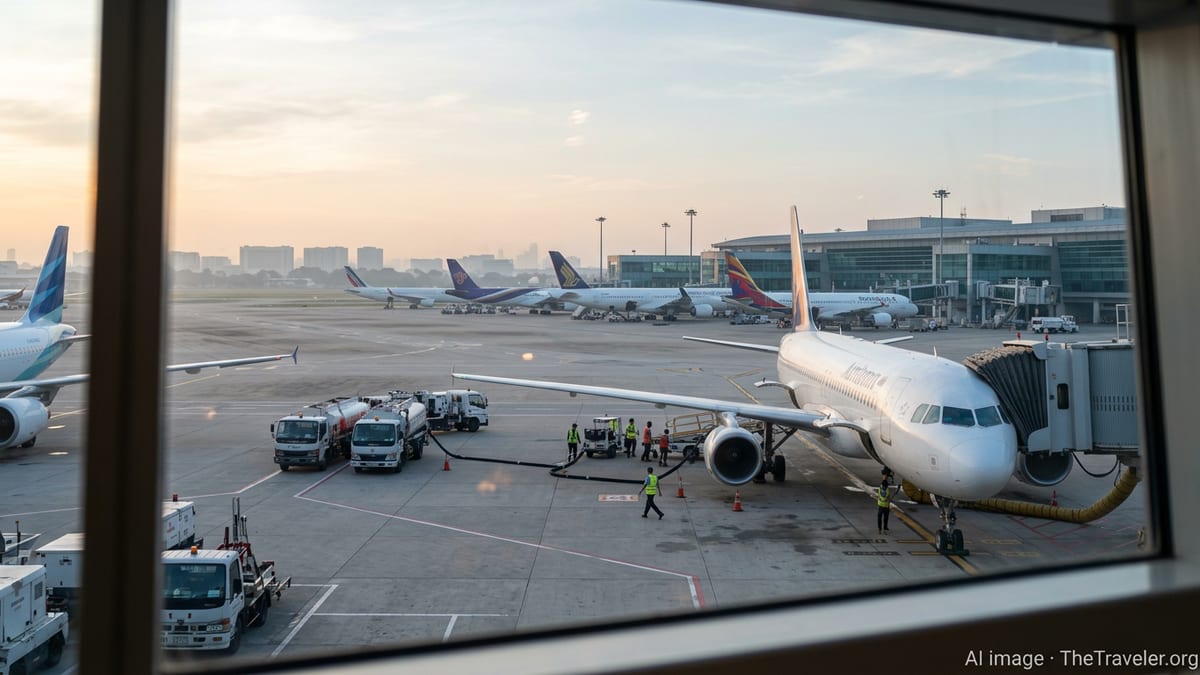
Fuel Shock Hits Thailand’s Aviation Hub Status
Thailand’s role as a regional aviation gateway is under pressure as soaring jet fuel costs filter through to airline balance sheets and route maps. Publicly available information shows that regional jet fuel prices in Asia have more than doubled compared with typical benchmarks, with the spike linked to supply constraints and wider energy market turmoil across the Middle East. For Thailand-based carriers that rely heavily on short-haul flying around Asia, the result is a scramble to cut unprofitable services and conserve fuel on core routes.
Recent coverage of the aviation sector indicates that Thai airlines are responding on several fronts at once: raising ticket prices, adding fuel surcharges, and selectively suspending flights on thinner routes within Thailand and across neighboring countries. Industry commentary notes that the economics of many regional services have flipped in a matter of weeks, with higher kerosene costs wiping out margins on price-sensitive routes where passengers are unwilling or unable to absorb large fare increases.
The shift comes at an awkward moment for Thailand’s tourism recovery. Visitor numbers from Europe and other long-haul markets have been rebuilding, and Bangkok’s Suvarnabhumi and Don Mueang airports were preparing for a strong high-season carryover into mid-2026. Instead, airlines are now reworking their summer timetables to cope with a cost shock that analysts compare with some of the most volatile fuel periods of the past two decades.
For travelers, the immediate impact is most visible in the short-haul Asia network that underpins Thailand’s appeal as a hub. Fewer frequencies, route suspensions and tighter capacity on remaining flights are already being reported on connections linking Bangkok and Chiang Mai to secondary cities in China, Vietnam, Malaysia and within Thailand itself.
Which Routes Are Being Cut or Reduced
According to recent reports from Thai business and travel outlets, several carriers serving Thailand have started to prune their schedules for the northern summer 2026 season. Budget operators, which typically run on thinner profit margins, are among the first movers. Publicly available reporting indicates that Thai AirAsia and its long-haul affiliate Thai AirAsia X have announced temporary suspensions on selected domestic and international services under the Summer 2026 timetable, targeting routes where demand and yields no longer justify elevated fuel bills.
Coverage in Thai media and regional aviation trackers points to a pattern: airlines are focusing cuts on secondary city pairs rather than trunk routes. Examples cited include the suspension of links such as Chiang Mai to Udon Thani within Thailand, as well as reductions on cross-border flights from Bangkok and Chiang Mai to smaller destinations in mainland China and around Southeast Asia. Carriers are also trimming flight frequencies rather than exiting some markets entirely, shifting from multiple daily departures to a single daily or several-times-weekly operation to conserve fuel and crew resources.
Flag carrier Thai Airways is, for now, concentrating on maintaining its main long-haul and primary regional routes, but has signaled that overall capacity growth will be slower than previously planned in 2026. Financial research and airline statements reviewed by analysts suggest that the company is prioritizing aircraft and fuel on high-yield routes to Europe, Australia and key Asian hubs, while taking a more cautious approach to marginal regional services. This means that while outright cancellations by the national carrier may be limited, travelers could still see reduced options and less flexibility on some Asia routes.
At the same time, other Thai-based airlines, including low-cost and boutique carriers, are revising networks around popular leisure destinations such as Phuket, Krabi and Koh Samui. Reports indicate that some point-to-point links bypassing Bangkok have quietly disappeared from booking systems for parts of 2026, likely reflecting internal profitability reviews under the new fuel price reality.
Rising Fares, Fuel Surcharges and Capacity Squeeze
Route cuts are only one part of the response. Published coverage from Thai and regional outlets shows that airlines are implementing a range of pricing measures designed to pass some of the fuel shock on to passengers. Thai Airways has previously indicated that ticket prices could climb by around 10 to 15 percent because of higher fuel costs, while low-cost rival AirAsia has flagged potential fare increases of up to 40 percent on certain services originating in Thailand.
In addition to headline fare hikes, several carriers operating in and out of Thailand have introduced or raised explicit fuel surcharges. Aviation news digests covering Asia’s fuel market note that surcharges of around 10 to 34 percent have appeared on tickets across the region, including on flights touching Thai airports. These surcharges are typically presented as separate line items during the booking process, with the exact amount varying by route length and cabin class.
Domestic-focused airlines are also adjusting. Bangkok Airways has publicly disclosed a 15 to 20 percent increase in average domestic fares from April 2026, citing a roughly 20 percent rise in fuel-related operating costs. Similar moves are anticipated from other carriers if current fuel prices persist into the second half of the year. For travelers, this means that even where routes remain in place, they are likely to be more expensive and potentially fuller, as airlines cap capacity growth to avoid burning loss-making fuel.
The combination of higher prices and fewer seats is already creating pressure points on popular regional corridors. Travel industry observers report that advance-booking inventories on peak travel dates are tightening more quickly than usual, particularly around Thai holidays and major festivals in neighboring countries. As airlines hold capacity steady or trim frequencies, standard economy seats on remaining flights are selling out earlier, leaving late bookers facing only premium cabins or indirect routings.
Knock-On Effects Across Asia Travel in 2026
The impact of Thailand’s route adjustments is radiating across wider Asia travel patterns. Publicly available information on airline schedules and reservation systems suggests that some travelers who previously used Bangkok as a convenient hub between South Asia, Indochina and the wider Asia Pacific are now being re-routed through alternative hubs such as Singapore, Kuala Lumpur or Hong Kong when Thai carriers reduce frequencies or pull back from secondary cities.
Regional analyses of the 2026 fuel situation indicate that Thailand’s airlines are not acting in isolation. Airlines in Vietnam, the Philippines, South Korea and other markets are also cutting select regional services and raising surcharges as jet fuel costs rise. For multi-stop itineraries, this can create complex ripple effects, where a canceled Thai domestic leg or a reduced Bangkok link to a secondary city in China suddenly makes a broader Asia trip logistically harder or more expensive to piece together.
There are also timing implications. Aviation data platforms and travel blogs tracking on-time performance have noted an uptick in delays at major Southeast Asian airports as carriers juggle revised schedules, equipment changes and fuel management constraints. Aircraft rotations are becoming tighter as airlines try to maximize utilization of the most fuel-efficient jets, which can increase knock-on delays when a single flight runs late. Passengers connecting in Bangkok or elsewhere in Thailand may find that minimum connection times that once felt comfortable now offer less margin if upstream disruptions occur.
For Thailand itself, there is a broader economic angle. Tourism officials have been counting on robust visitor growth through 2026 and 2027, but a sustained period of elevated airfares and reduced regional connectivity could temper that momentum. Economists following the sector warn that smaller provincial destinations, which depend heavily on low-cost carriers and secondary routes, could feel the pinch most acutely if airlines continue to retrench around their strongest city pairs.
What Travelers Should Do Now
For travelers planning trips to or through Thailand in 2026, the main message from current developments is to build in more flexibility and vigilance. Travel advisers and consumer advocates reviewing the situation recommend booking key legs earlier than usual, particularly domestic flights that connect major international gateways such as Bangkok, Phuket and Chiang Mai with secondary or resort destinations. With capacity restrained and some routes suspended, waiting for last-minute deals is increasingly risky.
Passengers are also being encouraged by industry commentators to monitor existing bookings closely. When airlines reshape schedules, they often make quiet changes to departure times, aircraft types or even routing, sometimes without prominent notifications. Regularly checking reservations on airline websites or in mobile apps in the weeks leading up to departure can help travelers spot alterations early and request rebooking on alternative flights before seats disappear.
Another theme emerging from published coverage is the value of routing flexibility. Where non-stop options between Thai cities and regional destinations have been scaled back, it may be worth considering one-stop itineraries through larger hubs, even if it means a slightly longer journey. In some cases, combining full-service and low-cost carriers on separate tickets can still produce workable, if more complex, routings across Asia, provided passengers allow extra time for connections and understand the risks of missed onward flights.
Finally, travel planners suggest paying close attention to fare rules and travel insurance coverage. With fuel-driven disruptions and schedule shifts likely to continue at least through the 2026 summer season, products that cover schedule changes, missed connections and significant delays may offer more value than in calmer periods. While Thailand remains open and busy as a tourism destination, the fuel shock has altered the calculus of getting around Asia, and travelers who adapt their planning to the new reality will be better positioned to keep their itineraries on track.