

More news on this day
Thai Airways will restore nonstop flights between Bangkok and Amsterdam in July 2026 and expand its China network to include Shenzhen, Wuhan and resumed services to Chongqing, underscoring the Thai flag carrier’s post-rehabilitation growth strategy.
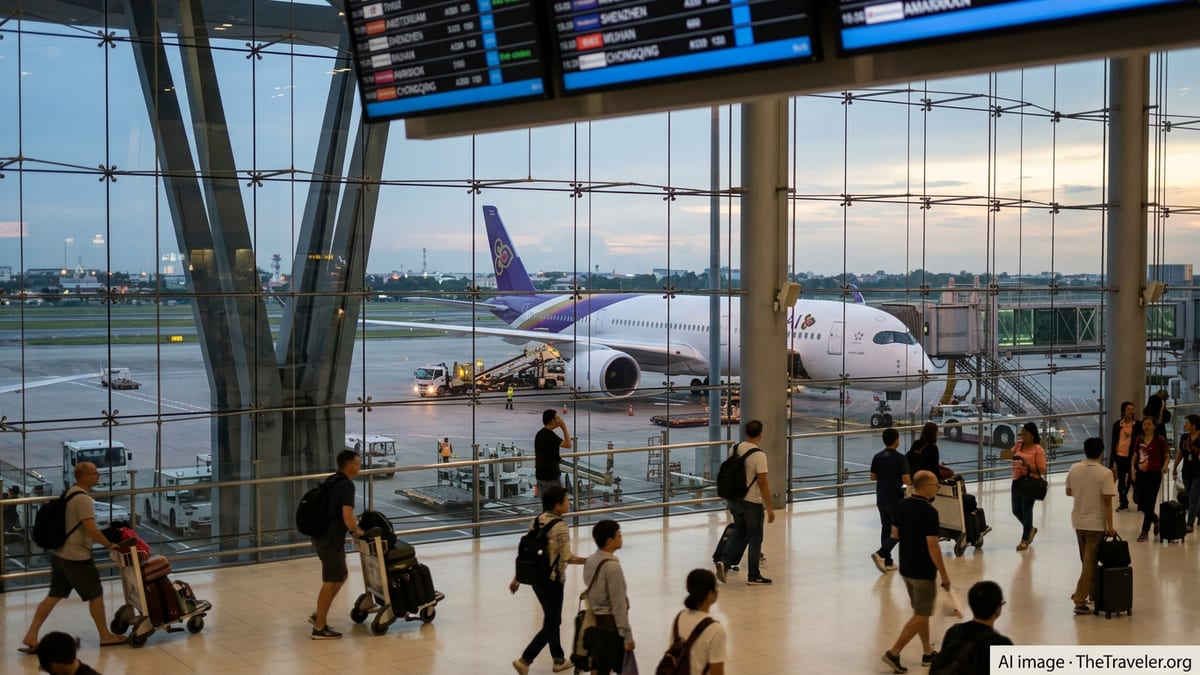
Amsterdam Returns to Thai Airways’ European Map
Thai Airways will resume daily nonstop flights between Bangkok Suvarnabhumi and Amsterdam Schiphol from 1 July 2026, marking its return to the Dutch capital after an absence that has stretched for nearly three decades. The airline has confirmed that the route will be operated with Airbus A350-900 aircraft, reflecting its focus on fuel-efficient widebodies for long-haul growth.
According to recent company disclosures and network announcements, the Bangkok–Amsterdam service is part of a broader European expansion that also includes increased capacity on existing routes and potential new destinations later in the decade. Amsterdam, a major Star Alliance hub and one of Europe’s busiest transfer airports, is expected to play a central role in reconnecting Thailand with high-yield traffic from across the continent.
The revival of the Amsterdam route follows Thai Airways’ emergence from a multi-year court-supervised rehabilitation, during which the carrier restructured debt, simplified its fleet and rationalised its network. With passenger demand to and from Europe recovering strongly, the airline is now positioning itself to compete more aggressively on key trunk routes linking Bangkok with major European gateways.
Industry analysts note that Amsterdam offers Thai Airways both strong origin-and-destination demand and a deep pool of connecting traffic via codeshare and interline partners. The decision to relaunch with a daily frequency from the outset signals confidence in long-term demand between Thailand and the Netherlands, supported by tourism flows, business travel and cargo.
Shenzhen, Wuhan and Chongqing Strengthen the China Strategy
Alongside its European comeback, Thai Airways is moving to reinforce its presence in mainland China, one of Thailand’s most important tourism and trade partners. The carrier has outlined plans to introduce new routes from Bangkok to Shenzhen and Wuhan while resuming flights to Chongqing, building on earlier network statements made as part of its 2025 and 2026 outlook.
Shenzhen and Wuhan, both major economic and population centres, have been singled out as high-potential markets as Thailand seeks to capture more inbound visitors from second-tier Chinese cities. Thai Airways has indicated that each of these new routes is being planned with at least daily frequencies, using a mix of widebody and narrowbody aircraft depending on the season and demand.
Chongqing, which the airline previously served before restructuring, is due to return to the network with regular scheduled flights from Bangkok. The resumption aligns with broader efforts to deepen connectivity between Thailand and western and central China, where rising incomes and relaxed travel policies are fuelling outbound tourism.
The trio of Chinese routes will complement Thai Airways’ existing services to major coastal hubs such as Beijing, Shanghai and Guangzhou. Combined with new capacity from aircraft deliveries expected through 2026, the airline is aiming to secure a greater share of the fast-growing China–Thailand market, particularly in leisure and group travel segments.
Silk Hub Vision Drives Network Rebuild
The new and resumed routes are being framed by Thai Airways as core components of its “Silk Hub” strategy, a long-term plan to reposition Bangkok Suvarnabhumi as a premium connecting hub linking Europe, Asia and the Pacific. After exiting rehabilitation and returning to profit, the airline has moved swiftly to lock in new aircraft orders and secure airport slots for 2026 and beyond.
Recent management reports highlight a fleet expansion that includes additional Airbus A321neo and Boeing 787-9 aircraft, as well as leased widebodies to bridge capacity gaps. These aircraft will support higher frequencies on existing high-demand routes and enable the launch of new destinations such as Amsterdam, as well as the expansion into cities like Shenzhen and Wuhan.
By pairing long-haul services to Europe with a denser network in China, Thai Airways aims to rebuild Bangkok’s role as a natural stopover point for travellers connecting between Europe and emerging Asian markets. The strategy also leverages Thailand’s strong inbound tourism appeal, with the carrier expecting robust passenger volumes from European holidaymakers and Chinese visitors.
Industry observers say the airline’s route decisions reflect a more disciplined, data-driven approach than before the restructuring. Rather than chasing marginal routes, Thai Airways is concentrating on destinations where it can achieve sustainable yields and exploit strong partnership opportunities, particularly within the Star Alliance network.
Tourism and Trade Set to Benefit in 2026
The restoration of Thai Airways’ Amsterdam service and its expanding Chinese footprint are expected to deliver tangible benefits for Thailand’s tourism and export sectors from mid-2026. Nonstop connectivity to Amsterdam will once again give Dutch travellers and those from neighbouring countries a direct link to Bangkok, with convenient onward access to Thai beach destinations and regional cities.
For the Netherlands, the return of the Thai flag carrier strengthens air links to Southeast Asia at a time when demand for both leisure and business travel is rebounding. The daily Bangkok–Amsterdam flights will also support cargo movement, particularly high-value and time-sensitive goods such as electronics, perishables and pharmaceuticals.
The anticipated new links to Shenzhen, Wuhan and Chongqing are equally significant for Thailand’s visitor economy. Chinese travellers remain one of the largest source markets for Thailand, and direct flights from additional inland cities are expected to boost arrivals outside traditional peak seasons. Tour operators are already preparing new itineraries tailored to these markets in anticipation of the added capacity.
Thai Airways’ 2026 route map, headlined by Amsterdam’s return and deeper penetration into China, signals a decisive step in the airline’s transformation from a rehabilitating legacy carrier to a growth-focused regional hub airline. As new aircraft arrive and routes come online, Bangkok is poised to reclaim a stronger position on the global aviation map.